

Peach & Lily Hydrobubble Deep Foam Cleanser Review
BeautyBrief™
Brand
Peach & Lily
Product
Hydrobubble Deep Foam Cleanser
Claims check
You get a deeply foaming cleanser with papain and physical exfoliating powders plus supportive humectants, but the brand's blackhead and breakout percentages lack published objective finished-product verification.
Shopper fit
- Normal
- Combination
- Oily
Formula flags
- Enzymatic and physical exfoliation
Shopper preferences
- Cruelty-Free
Key ingredients
| Glycerin | High in the formula and adds hydration support. |
|---|---|
| Papain | A proteolytic enzyme contributing rinse-off exfoliation, with no independent evidence of acne treatment in this cleanser. |
| Hydrolyzed Hyaluronic Acid | Adds water-binding support within the rinse-off formula. |
| Polyglutamic Acid | Adds hydration support alongside glycerin and hyaluronic acid. |
| Rice Bran | Rice bran is a conditioning and powder-component context in this rinse-off cleanser, not proof of lasting barrier repair. |
Price tier
$$ Mid-Range
Value check
At the Mid-Range tier, you pay for foaming cleansing combined with enzyme-and-powder exfoliation and conditioning ingredients rather than proven acne treatment.
Where to buy
We may earn a commission through these links at no additional cost to you. This does not affect our BeautyBrief.
Bottom line
If you enjoy rich foam and built-in gentle exfoliation, Hydrobubble offers a differentiated Mid-Range cleansing option. If your skin is reactive or you already exfoliate regularly, a simpler wash is a more suitable purchase.
If you enjoy a substantial foam and want a cleanser with some built-in exfoliation, Peach & Lily Hydrobubble Deep Foam Cleanser combines sodium cocoyl isethionate, potassium cocoyl glycinate and glycerin with papain and finely milled plant powders. It is designed for normal, combination and oily skin rather than a routine that requires the least possible exfoliation.
The key distinction is what the formula actually does: surfactants handle cleansing, while an enzyme and particles supply a potential exfoliating effect. The brand reports positive study percentages for blackheads and breakouts, but has not published sufficient methods to establish measured acne-treatment results.
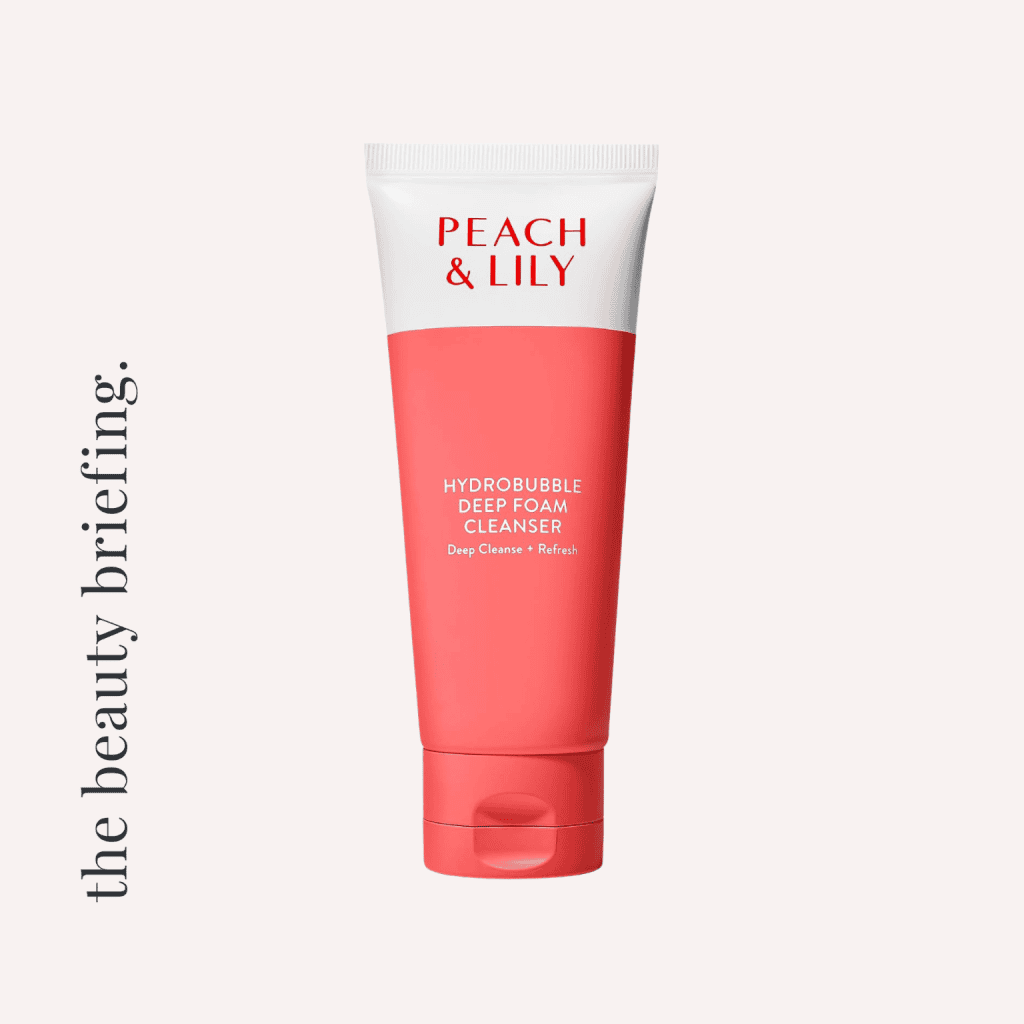
What it claims
Peach & Lily describes Hydrobubble as a sulfate-free deep-foam cleanser that removes oil, makeup and sunscreen without stripping. It also claims gentle exfoliation, brighter-looking skin and barrier support. Its product page reports that 100% of surveyed users agreed it removed everyday residue without stripping, 94% perceived reduced sebum, blackheads and breakouts, and 100% reported refreshed, softer-feeling skin.[1]
The brand labels these as brand-study results but does not provide a readily available sample size, control group, instrumental blackhead count or detailed study duration for this cleanser. They are descriptions of participants’ perceptions, not independently demonstrated reductions in acne lesions.
Claims vs. formula
Sodium cocoyl isethionate, potassium cocoyl glycinate, lauryl betaine and sodium methyl cocoyl taurate provide the cleansing and foaming system. Research on cleansers emphasizes the importance of surfactant combinations and the complete formula for preserving skin comfort; the surfactant names alone do not prove the wash never strips skin.[2]
Papain is a proteolytic enzyme. Apricot seed powder, rice powder and coix seed powder are also listed, making the exfoliation story both enzymatic and physical rather than the action of an exfoliating acid. Particle size, amount used and friction affect how this wash feels; stronger rubbing is not required to cleanse effectively.
Hydrolyzed hyaluronic acid, polyglutamic acid, glycerin, glyceryl glucoside and allantoin supply hydration and conditioning context. The product is rinsed away, so their benefits cannot be equated with separately tested leave-on moisturizers.
Rice bran and various root and fruit extracts contribute to the brand’s brightening narrative, but no finished-product measurement isolates the effect of a particular extract or demonstrates sustained brightening. The brand’s 94% response is not equivalent to a clinical test of acne clearance.
Ingredients that matter
The surfactants are what remove dirt, surface oil and sunscreen. Papain and plant powders add a more active cleansing profile, which may appeal if you like a polished after-feel but may be unnecessary if your skin is already sensitive or you use stronger exfoliating treatments.
Glycerin and the other humectants complement the foam system by helping the product feel less drying. They cannot guarantee no tightness after rinsing, especially when cleansing time and exfoliating friction vary.
The published INCI includes a component named collagen extract. Peach & Lily maintains broad vegan claims for its collection, but the source of this exact ingredient is not clarified on the product page. Do not assume the finished cleanser is vegan without confirmation of that ingredient’s origin.

Glycerin
If your skin feels dry or tight, glycerin helps your skin hold moisture. You don't need a high percentage or a separate serum when your moisturizer already works well.
Read the IngredientBrief
Hyaluronic Acid
If your skin feels dry or tight, hyaluronic acid helps your skin hold moisture. You don't need several HA forms or a separate serum when your moisturizer already hydrates well.
Read the IngredientBrief
Polyglutamic Acid
Polyglutamic acid is a water-binding polymer with early evidence for short-term hydration in specific topical formulas. Independent human research is limited, and the complete moisturizing formula matters more than PGA…
Read the IngredientBriefSafety and regulatory context
Because this rinse-off cleanser contains both an enzyme and powdered exfoliating ingredients, it is worth distinguishing from a basic non-exfoliating daily wash. If your skin is already irritated, or you regularly use other exfoliants, over-scrubbing can undermine the goal of comfortable cleansing.
Peach & Lily states that its brand does not test on animals and describes Leaping Bunny cruelty-free certification. That supports the cruelty-free shopping preference, which concerns testing policy rather than the separate question of whether a collagen-named ingredient is animal-derived.[3]
What to expect in the short term
You get a dense foam intended to rinse away daily buildup and leave a refreshed feel. Papain and powders contribute exfoliating action, so using light pressure rather than scrubbing is a sensible way to evaluate the texture.
What to expect over time
Regular use may help you maintain a clean-feeling surface, but a consumer-perception result about fewer blackheads or blemishes does not establish an acne-treatment effect. How frequently you tolerate this cleanser will depend on the rest of your routine and your skin’s response.
Who it fits
This is most relevant if you have normal, combination or oily skin, enjoy rich foam and want exfoliation built into your wash step. If your skin reacts to physical exfoliation, or you already use strong leave-on acids and retinoids, a simpler cleanser is easier to fit.
Vegan status remains uncertain for this exact ingredient list because of the unspecified collagen extract; cruelty-free status is supported by the brand’s policy. Neither attribute determines how the exfoliating ingredients will feel on your skin.
Compare before you buy
Choose Hydrobubble if you value a Mid-Range foam cleanser with papain and powders in one step and do not need a completely non-exfoliating wash. Its consumer results give some support for perceived freshness but are not a clinical comparison against a basic cleanser.
Choose a gentler non-exfoliating cleanser if sensitivity or active overlap is a concern, and compare dedicated acne products if fewer breakouts are your objective rather than a smoother cleansing feel.
Final Assessment
Peach & Lily Hydrobubble Deep Foam Cleanser offers a differentiated Mid-Range option for normal-to-oily skin if you enjoy rich lather and mild enzyme-and-powder exfoliation. Its moisturizing ingredients provide useful conditioning context, but the brand-study results do not establish verified acne treatment or superiority to a simpler wash; your exfoliation tolerance and routine overlap determine whether its added complexity justifies the price.
Where to buy
Choose a retailer to view current pricing and availability.
We may earn a commission through these links at no additional cost to you.
Last reviewed: October 2026
Sources
- Peach & Lily. Hydrobubble Deep Foam Cleanser. Current official U.S. INCI, use directions and brand-study percentages. Accessed October 15, 2026.
- Ananthapadmanabhan KP et al. Cleansing without compromise: the impact of cleansers on the skin barrier and the technology of mild cleansing. Dermatologic Therapy. 2004. General cleanser research, not a Hydrobubble study.
- Peach & Lily. The Peach & Lily Standard. Brand-wide cruelty-free policy and vegan-positioning context; the product’s collagen-extract source remains unspecified.


