

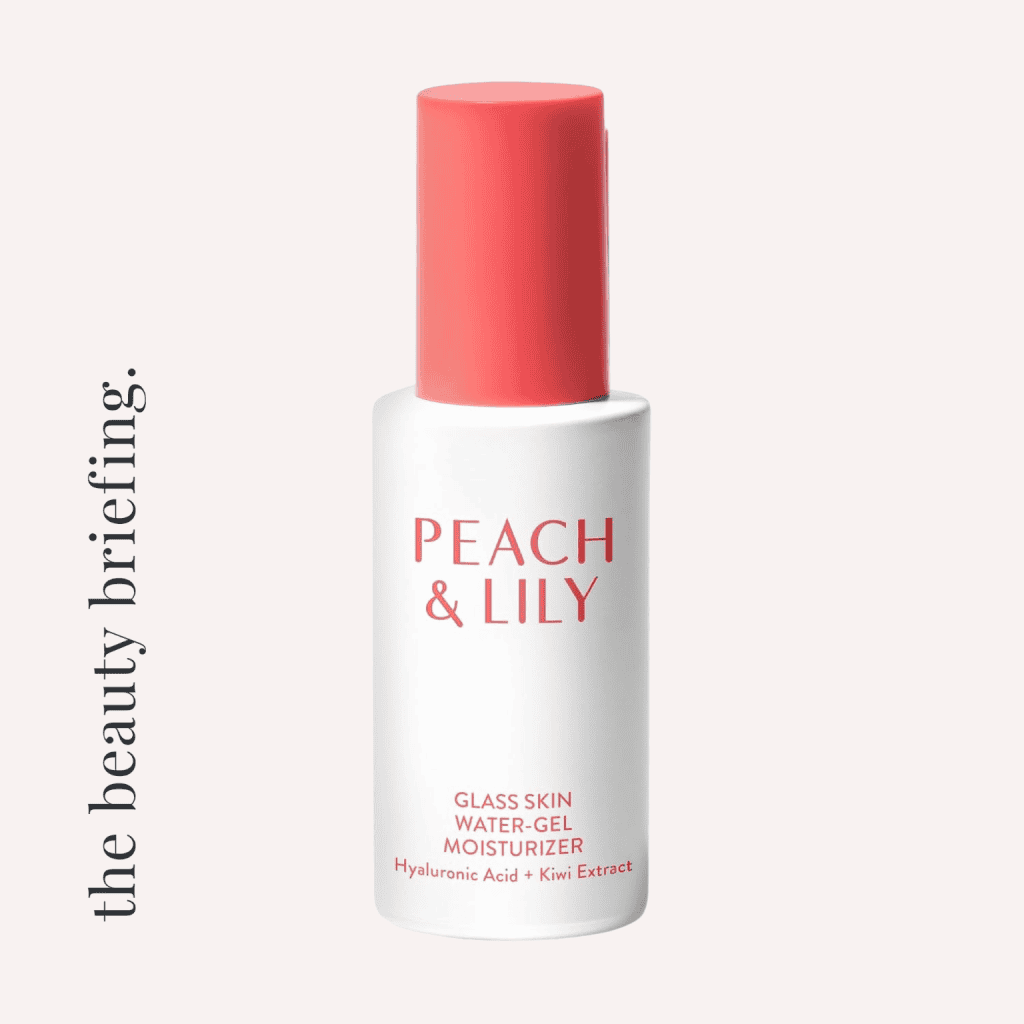
Peach & Lily Glass Skin Water-Gel Moisturizer Review
BeautyBrief™
Brand
Peach & Lily
Product
Glass Skin Water-Gel Moisturizer
Claims check
You get an oil-free humectant gel suited to lightweight daily hydration, but the prebiotic and botanical ingredients do not establish finished-product microbiome or acne treatment benefits.
Shopper fit
- Normal
- Combination
- Oily
- Sensitive
- Acne-Prone
Formula flags
- None identified
Shopper preferences
- Vegan
- Cruelty-Free
Key ingredients
| Glycerin | Helps attract water to the outer layers of skin. |
|---|---|
| Sodium Hyaluronate | Helps bind water without adding weight. |
| Hydrolyzed Hyaluronic Acid | Adds another water-binding form of hyaluronic acid. |
| Beta-Glucan | Adds hydration and soothing support. |
| Glycyrrhiza Glabra (Licorice) Root Extract | Provides botanical conditioning and a plausible tone-related ingredient role; this gel has no isolated brightening study. |
Price tier
$$ Mid-Range
Value check
At the Mid-Range tier, you pay for a light oil-free texture and a broad humectant system rather than clinically established microbiome improvement.
Where to buy
We may earn a commission through these links at no additional cost to you. This does not affect our BeautyBrief.
Bottom line
If you prefer light oil-free hydration, Glass Skin Water-Gel offers a practical Mid-Range fit for combination or oily skin. If you need a richer sealing layer, another moisturizer will suit you better.
If your skin gets shiny under richer creams, Peach & Lily Glass Skin Water-Gel Moisturizer gives you an oil-free, lightweight alternative based on glycerin, propanediol and three named hyaluronic-acid ingredients. The formula is oriented toward water binding and a refreshed-looking finish rather than substantial oil-based occlusion.
What it claims
Peach & Lily markets Glass Skin Water-Gel as a lightweight, oil-free moisturizer for hydrated, glowing skin without excess shine. The page highlights chamomile, kiwi and peach extracts, plus a vegan prebiotic complex for microbiome-related positioning. Its claims describe appearance and ingredient functions; no published finished-product microbiome measurement establishes a change in microbial diversity.[1]
Claims vs. formula
Glycerin and propanediol follow water, and sodium hyaluronate, hydrolyzed hyaluronic acid and sodium acetylated hyaluronate broaden the humectant system. The gel does not contain a substantial plant-oil or butter base, so it is better aligned with shoppers avoiding heavy finishes.
Ingredient-level hyaluronic-acid research supports the water-binding rationale, but studies of other products cannot establish that this gel delivers lasting improvements in radiance, oil production or skin structure.[2]
Fructooligosaccharides, lactobacillus ferment and radish-root ferment explain the marketed prebiotic concept. Their presence is not direct proof that the finished gel corrects a skin-microbiome imbalance.
Ingredients that matter
Glycerin and the hyaluronic-acid derivatives supply complementary moisture retention, while beta-glucan provides conditioning. Licorice root, kiwi and peach extracts broaden the botanical component, without demonstrating independent acne, pigmentation or wrinkle treatment.
The oil-free texture is a genuine formulation distinction. A gel without added oils still cannot guarantee no breakouts or irritation in every acne-prone routine.

Glycerin
If your skin feels dry or tight, glycerin helps your skin hold moisture. You don't need a high percentage or a separate serum when your moisturizer already works well.
Read the IngredientBrief
Hyaluronic Acid
If your skin feels dry or tight, hyaluronic acid helps your skin hold moisture. You don't need several HA forms or a separate serum when your moisturizer already hydrates well.
Read the IngredientBrief
Beta-Glucan
Beta-glucan is a family of skin-conditioning ingredients with some human support for hydration and comfort. Source, form, and the complete formula matter more than a large beta-glucan percentage or broad…
Read the IngredientBriefSafety and regulatory context
The official formula does not list added fragrance, essential oils, silicones, retinoids or exfoliating acids. The brand identifies its Peach & Lily formulas as vegan and cruelty-free, including this water-gel moisturizer; those are shopping attributes rather than evidence of clinically demonstrated acne prevention.[3]
What to expect in the short term
You get a refreshing water-gel texture intended to absorb without a greasy finish. It can provide immediate cosmetic hydration, but the brand does not publish a comparator demonstrating reduced sebum production.
What to expect over time
With consistent use, expect continued hydration when the gel feels sufficient for your skin. Do not infer long-term pore clearing, acne treatment, permanent brightening or microbiome restoration from the botanical list.
Who it fits
This is most relevant if your skin is normal, combination or oily and you prefer light moisture; acne-prone shoppers may appreciate the oil-free finish. For very dry or flaky skin, a richer cream offers more substantive emollient support.
Compare before you buy
At the Mid-Range tier, choose this for its oil-free water-gel texture and broad humectant system, not for unmeasured probiotic effects. A simpler gel moisturizer may provide basic hydration for less.
Final Assessment
Peach & Lily Glass Skin Water-Gel Moisturizer provides useful Mid-Range value if you want oil-free hydration with glycerin and several hyaluronic-acid ingredients in a light finish. Its vegan and cruelty-free positioning is supported, but the botanical and microbiome story does not prove acne or skin-aging benefits; persistent dryness calls for a richer texture.
Where to buy
Choose a retailer to view current pricing and availability.
We may earn a commission through these links at no additional cost to you.
Last reviewed: October 2026
Sources
- Peach & Lily, Glass Skin Water-Gel Moisturizer official ingredients and claims. Source. Accessed October 15, 2026.
- Topical hyaluronic acid literature and clinical evidence (2022). Source. Accessed October 15, 2026.
- Peach & Lily Standard, vegan and cruelty-free policy. Source. Accessed October 15, 2026.


