
Niacinamide in Skincare
If your skin feels dry or uncomfortable, niacinamide can support hydration and reduce water loss in a well-formulated product. It also has evidence for uneven tone and visible oiliness, but a higher percentage isn't automatically better.
- Aliases
- Nicotinamide, 3-Pyridinecarboxamide, Pyridine-3-carboxamide
- Ingredient category
- Barrier-Supporting Ingredient, Brightening Ingredient
- Most relevant for
- Dryness, Dullness, Hyperpigmentation, Oiliness and Shine, Skin Barrier Support
- Evidence strength
- Well Supported for Improving hydration and reducing water loss in dry skin
- Formula matters
- Concentration, pH, vehicle, delivery, and the supporting moisturizing system all affect results; higher percentages are not automatically better.
- Separate product needed?
- Usually No. A separate niacinamide serum is usually unnecessary when a moisturizer, sunscreen, or treatment already provides it in a formula that works well.
BB takeaway
Niacinamide is a dependable multitasker, especially for hydration and barrier support. Choose the complete product for your concern rather than chasing a higher percentage.
Ingredient evidence does not prove the performance of every finished product containing it.
What is niacinamide?
Niacinamide is a water-soluble form of vitamin B3 used widely in skincare. It is also known as nicotinamide, 3-pyridinecarboxamide, and pyridine-3-carboxamide.[1]
Niacinamide is not the same ingredient as niacin, even though both belong to the vitamin B3 family. In cosmetics, niacinamide appears in moisturizers, serums, sunscreens, cleansers, eye products, body lotions, and acne-focused formulas.
Its value comes from versatility rather than one dramatic effect. Niacinamide has human evidence for hydration and barrier support, uneven pigmentation, some signs of photoaging, and visible oiliness, but the strength of evidence differs by concern and formula.
What does niacinamide do for skin?
Niacinamide helps support the outer skin barrier and improve how the stratum corneum manages water. That makes it especially useful in products for dryness and barrier support.
It can also improve the appearance of uneven pigmentation and dull-looking skin. Some formulas reduce visible oiliness, and controlled studies report modest improvements in fine lines, blotchiness, and elasticity.
Those benefits do not make niacinamide a cure-all. It does not permanently shrink pores, stop sebum production, cure acne, erase melasma, replace sunscreen, or repair every form of barrier damage by itself.
What the evidence says about niacinamide skincare
Niacinamide is well supported for improving hydration and reducing water loss in dry skin with topical niacinamide-containing formulas.
A controlled left-right study in 28 people with atopic dry skin compared a 2% nicotinamide cream with white petrolatum on opposite forearms. The niacinamide cream reduced transepidermal water loss and increased stratum-corneum hydration, with greater hydration improvement than petrolatum in that study.[2]
That does not mean every niacinamide serum moisturizes better than petrolatum. The result belongs to a specific 2% cream used on dry atopic skin.
A 2024 review of topical niacinamide research concluded that the ingredient has meaningful clinical evidence across barrier support, pigmentation, and other cosmetic uses while emphasizing that delivery and formulation affect performance.[3]
For photoaging and uneven tone, a 12-week split-face trial in 50 women found that a 5% niacinamide formula improved fine lines, hyperpigmented spots, red blotchiness, sallowness, and elasticity more than vehicle.[4] All authors were affiliated with Procter & Gamble, so the result is best treated as evidence for that tested formula rather than a promise for every 5% product.
For oiliness, a 2% niacinamide study found reduced sebum-excretion rate in the Japanese study group and reduced casual surface sebum in the U.S. group, while the U.S. sebum-excretion rate did not change significantly.[5] That supports a possible visible-oil benefit, not a claim that niacinamide reliably shuts down oil production.
Niacinamide is often marketed for acne, but the 2024 American Academy of Dermatology acne guideline found the evidence insufficient to recommend topical niacinamide as acne therapy.[6] It can still be useful in an acne routine for barrier comfort and post-blemish discoloration.
How niacinamide form and formulation affect results
Most consumer products use the same core niacinamide ingredient, but concentration, pH, vehicle, delivery, and supporting ingredients still affect performance.
Many classic human studies use about 2% to 5% niacinamide. There is little direct evidence showing that 10% or 20% works better for ordinary cosmetic goals.
A 2025 laboratory study using isolated stratum corneum found that niacinamide altered keratin spacing, water distribution, and lipid organization without a simple dose-response across the tested conditions.[7] This is mechanistic evidence, not proof that every higher-percentage formula is unnecessary, but it reinforces that more is not automatically better.
A 2026 permeation study using full-thickness human skin and reconstructed epidermis found roughly twofold greater niacinamide permeation at pH 7.4 than at pH 5.0 under the laboratory conditions tested.[8] This does not mean shoppers should seek a neutral-pH product. It shows that delivery depends on the finished formula, not percentage alone.
If dryness or barrier support is your goal, a moisturizer containing niacinamide can be more useful than a concentrated serum because it also provides water, humectants, emollients, and occlusives.
Who may benefit from niacinamide skincare?
Niacinamide can make sense when dryness, a stressed-feeling skin barrier, uneven tone, dullness, post-blemish marks, or visible oiliness are mild-to-moderate concerns.
It is especially practical when it is already built into a moisturizer or sunscreen you need, because that can eliminate a separate treatment step.
You can use niacinamide with dry, oily, combination, sensitive, or acne-prone skin, but the complete formula determines whether a product actually suits you.
If acne, melasma, rosacea, or significant barrier disease is your main concern, niacinamide is usually a supporting ingredient rather than the primary treatment.
Niacinamide side effects and irritation risk
Niacinamide is generally well tolerated in cosmetic use, but higher-strength or more complicated formulas can still sting, burn, dry, or redden the skin.
The cause may be the niacinamide concentration, solvents, fragrance, preservatives, exfoliating acids, retinoids, or another ingredient in the finished product.
Niacinamide does not cause a true acne “purge.” New bumps after starting a product may reflect irritation, the product texture, another ingredient, or the normal acne pattern.
Persistent burning, swelling, severe itching, blistering, or a worsening rash is a reason to stop using the product.
How to use niacinamide in your skincare routine
Use niacinamide according to the product format. A niacinamide moisturizer simply serves as the moisturizing step, while a serum usually goes before moisturizer.
Once- or twice-daily use is common, but more frequent application is not proven to work faster.
You do not need to separate niacinamide from vitamin C. Modern formulas can be used in the same routine when the products are stable and your skin tolerates them.
If you already use retinoids, exfoliating acids, benzoyl peroxide, or another potentially irritating treatment, choose a niacinamide product that simplifies the routine rather than adding another aggressive layer.
How long does niacinamide take to work?
Immediate softness or plumping usually comes from the complete moisturizer or serum rather than from a rapid structural effect of niacinamide.
Barrier and oil-related studies report changes over roughly two to eight weeks, while tone and photoaging studies commonly assess results over about 10 to 12 weeks.[2][4][5]
Those timelines are useful context, not promises for every product. Formula, concentration, concern, routine, and consistency all matter.
What can you use with niacinamide?
Niacinamide fits easily with moisturizing ingredients such as glycerin, hyaluronic acid, ceramides, panthenol, squalane, dimethicone, and petrolatum.
It can also be used with vitamin C, retinoids, salicylic acid, and azelaic acid when the routine remains comfortable.
The practical issue is usually cumulative irritation from the whole routine rather than niacinamide chemically “cancelling” another active.
How to choose a niacinamide product
Start with the job the product needs to do.
For dryness or barrier support, a moisturizer containing niacinamide plus humectants, emollients, and occlusives is usually more useful than a watery high-percentage serum.
For visible oiliness, prioritize a lightweight finish you will actually wear. For uneven tone, look at sunscreen use and the complete brightening system rather than relying on niacinamide alone.
Do not assume 10% or 20% is superior to 2% to 5%. The strongest classic human evidence sits largely in the lower-to-moderate range, and newer formulation research reinforces that delivery is more complicated than percentage alone.
Be cautious with “pore eraser,” “oil control all day,” “barrier repair in 24 hours,” and “clinical strength” claims unless the finished product has evidence matching the wording.
Niacinamide alone does not justify Premium or Luxury pricing. Pay more only when the complete product offers a meaningful advantage in texture, supporting ingredients, tolerability, packaging, or credible finished-product testing.
Do you need a separate niacinamide serum?
Usually, no.
Niacinamide is already common in moisturizers, sunscreens, and treatment products. If one of those products is doing its main job well, a separate serum may simply duplicate the ingredient.
A dedicated serum can make sense when niacinamide directly matches a concern, you prefer a lightweight extra step, and the product adds something your current routine does not provide.
For you, the better value is usually one complete product that uses niacinamide well rather than several overlapping niacinamide layers.
The BB Perspective
Niacinamide deserves its reputation as a useful multitasker, but not as an ingredient that needs to be in every step.
The evidence is strongest for practical benefits such as hydration and barrier support, with additional support for uneven tone and visible oiliness. It does not show that higher percentages are automatically better, and current acne guidelines do not support treating topical niacinamide as a primary acne therapy.
Choose niacinamide when it improves the formula you already need. A well-made moisturizer with a moderate amount of niacinamide can be a smarter purchase than a separate 10% or 20% serum chosen mainly for the number on the bottle.
Last reviewed: September 2026
Sources
National Library of Medicine PubChem. Nicotinamide.
PubChem identifies niacinamide and nicotinamide as the same compound and lists 3-pyridinecarboxamide and pyridine-3-carboxamide among recognized names. “Vitamin B3” describes the vitamin family and can also refer to niacin, so it is not used here as a precise alias. Return to citation.
Soma Y, Kashima M, Imaizumi A, et al. Moisturizing effects of topical nicotinamide on atopic dry skin. International Journal of Dermatology. 2005;44(3):197-202. doi:10.1111/j.1365-4632.2004.02375.x. PMID: 15807725.
This left-right comparison study enrolled 28 people with atopic dermatitis and compared 2% nicotinamide cream with white petrolatum for four or eight weeks. Niacinamide reduced transepidermal water loss and increased stratum-corneum hydration, with greater hydration improvement than petrolatum in the study. The population had atopic dry skin, so the result supports hydration and barrier function rather than proving that every niacinamide product treats eczema. Return to citation.
Ong RR, Goh CF. Niacinamide: a review on dermal delivery strategies and clinical evidence. Drug Delivery and Translational Research. 2024;14(12):3512-3548. doi:10.1007/s13346-024-01593-y. PMID: 38722460.
This review consolidates topical niacinamide evidence across barrier support, pigmentation, acne, dermatitis, and other uses while emphasizing skin delivery and formulation. It includes clinical and preclinical evidence, so individual claims still need to stay attached to the relevant studies. Return to citation.
Bissett DL, Oblong JE, Berge CA. Niacinamide: A B vitamin that improves aging facial skin appearance. Dermatologic Surgery. 2005;31(7 Pt 2):860-865. doi:10.1111/j.1524-4725.2005.31732. PMID: 16029679.
This double-blind randomized split-face study included 50 white women with facial photoaging who used 5% niacinamide and vehicle for 12 weeks. The niacinamide side improved several appearance measures including hyperpigmented spots, fine lines, red blotchiness, sallowness, and elasticity. All authors were affiliated with Procter & Gamble, and the findings belong to the tested formula and population. Return to citation.
Draelos ZD, Matsubara A, Smiles K. The effect of 2% niacinamide on facial sebum production. Journal of Cosmetic and Laser Therapy. 2006;8(2):96-101. doi:10.1080/14764170600717704. PMID: 16766489.
This study evaluated 2% niacinamide in separate Japanese and U.S. groups. Sebum-excretion rate decreased in the Japanese group, while casual surface sebum decreased in the U.S. group without a significant reduction in sebum-excretion rate. The mixed findings support a possible oiliness benefit rather than a universal sebum-suppression claim. Two of the three authors were affiliated with Procter & Gamble research divisions. Return to citation.
Reynolds RV, Yeung H, Cheng CE, et al. Guidelines of care for the management of acne vulgaris. Journal of the American Academy of Dermatology. 2024;90(5):1006.e1-1006.e30. doi:10.1016/j.jaad.2023.12.017. PMID: 38300170.
The guideline reviewed topical and oral niacinamide among complementary or alternative acne approaches and concluded that the available evidence was insufficient to develop a recommendation. This does not mean niacinamide cannot appear in useful acne-prone-skin products; it means it should not be presented as a guideline-supported primary acne treatment. Return to citation.
Sjöberg T, Fsahaye A, Nilsson EJ, et al. Niacinamide and its impact on stratum corneum hydration and structure. Scientific Reports. 2025;15:4953. doi:10.1038/s41598-025-88899-0. PMID: 39929949.
This laboratory study used isolated stratum corneum to examine water sorption, keratin spacing, and lipid organization after niacinamide exposure. It found humidity-dependent effects and no simple dose-response across the investigated conditions. Several authors were affiliated with Oriflame Cosmetics. The work provides mechanistic context rather than direct proof of visible benefit from a retail product. Return to citation.
Sjöberg T, Letasiova S, Jankovskaja S, et al. Effect of pH on niacinamide skin permeation. Scientific Reports. 2026;16:9821. doi:10.1038/s41598-026-41992-4. PMID: 41872243.
This laboratory study used full-thickness human skin and reconstructed epidermal models and found approximately twofold greater niacinamide permeation at pH 7.4 than at pH 5.0 under the experimental conditions. It shows that formulation pH can affect delivery but does not establish an ideal consumer-product pH or prove that greater penetration always means better results. Several authors were affiliated with Oriflame Cosmetics. Return to citation.
Products featuring Niacinamide
These evaluated products list Niacinamide among the Key Ingredients that meaningfully shape the formula. Inclusion here reflects ingredient relevance, not an endorsement or rating.

Schaf
Moisturizer 3.0
If you prefer a fragrance-free cream, Schaf Moisturizer 3.0 offers rich emollience alongside niacinamide and bakuchiol. Its Premium value rests on how the texture and ingredient blend suit you, not established retinoid-level…
Read the BeautyBrief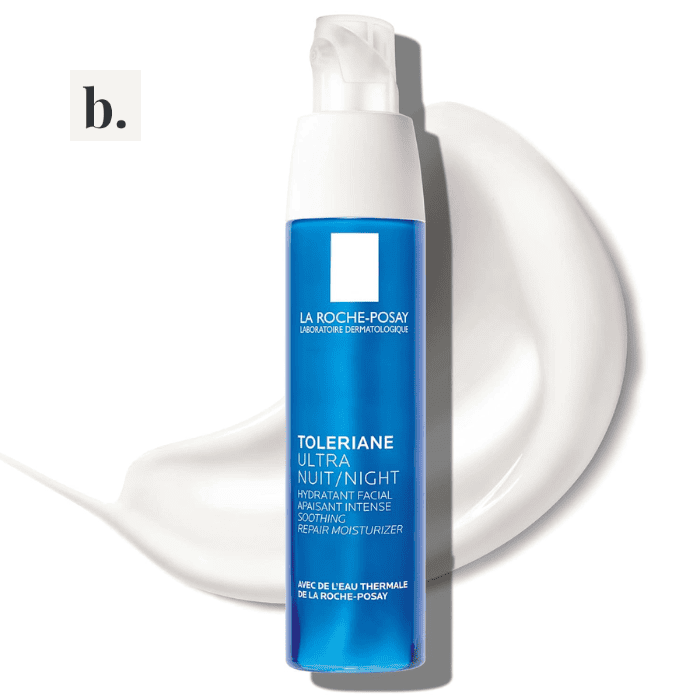
La Roche-Posay
Toleriane Dermallergo Night Moisturizer
If your skin is easily unsettled by fragranced products, Dermallergo Night offers a useful Mid-Range moisturizing option with gentle-feeling texture and protective packaging. Its four-week consumer test supports reported comfort, not treatment…
Read the BeautyBrief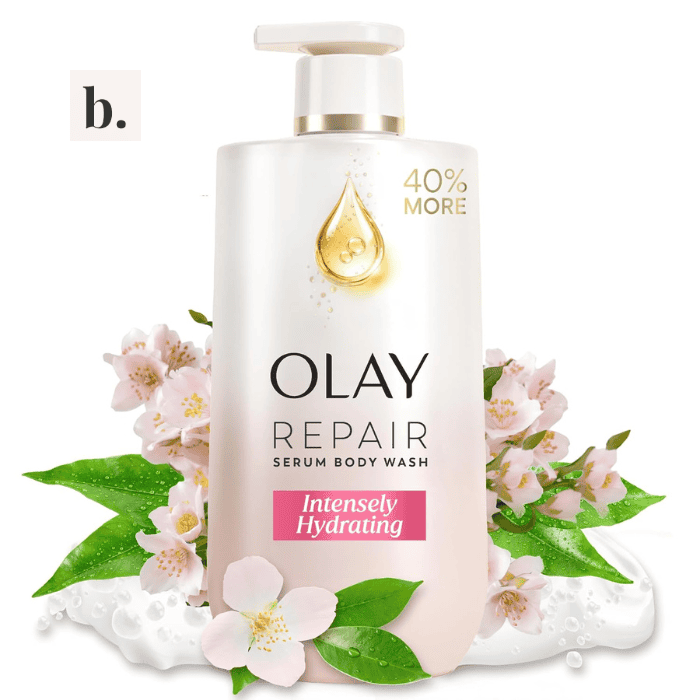
Olay
Intensely Hydrating Body Wash with Hyaluronic Serum Complex
If you want a conditioning body wash for skin that feels dry after showering, Olay Intensely Hydrating Body Wash provides petrolatum and other skin-softening ingredients in a rinse-off formula. Fragrance and isothiazolinone…
Read the BeautyBrief
Neutrogena
Clear Face Sunscreen Acne-Prone Skin Broad Spectrum SPF 60 with BEMT
If you have acne-prone skin and want broad-spectrum protection without a heavy finish, Neutrogena Clear Face SPF 60 with BEMT offers a brand-labeled non-comedogenic sunscreen. That claim does not guarantee you will…
Read the BeautyBrief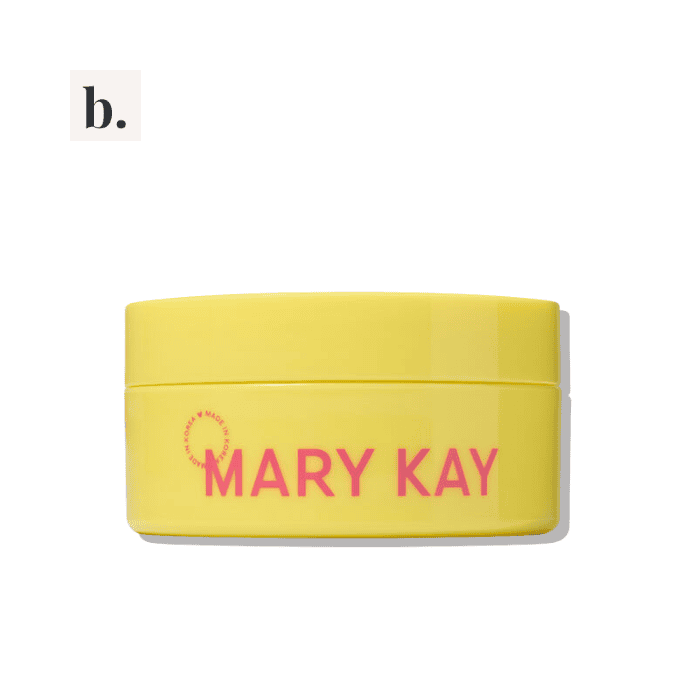
Mary Kay
Special-Edition Mary Kay Snail Gel Face Patches
If you want a short hydrogel mask step, Mary Kay Snail Gel Patches offer temporary hydration. Their animal-derived mucin excludes vegan fit, and their Mid-Range value rests on convenience rather than lasting…
Read the BeautyBrief
Mary Kay
Special-Edition Mary Kay Collagen Moisturizing Gel
If you want a lightweight jelly moisturizer, Mary Kay Collagen Moisturizing Gel has a credible hydrating formula with niacinamide and squalane. Its collagen does not establish dermal collagen rebuilding, and animal-derived ingredients…
Read the BeautyBrief