
Bisabolol in Skincare
Bisabolol is a skin-conditioning ingredient used in sensitive-skin formulas for soothing support. Human evidence is mixed, so the complete formula matters more than the ingredient callout alone.
- Aliases
- Alpha-Bisabolol, α-Bisabolol, Levomenol
- Ingredient category
- Conditioning Agent, Skin-Soothing Ingredient
- Most relevant for
- Sensitive Skin
- Evidence strength
- Mixed Evidence for Reducing irritation-related skin discomfort
- Formula matters
- The moisturizer base, other soothing ingredients, potential irritants, and amount used matter more than a bisabolol callout alone.
- Separate product needed?
- Usually No. A separate bisabolol product is usually unnecessary because other well-formulated soothing or moisturizing products can fill the same routine need.
BB takeaway
Bisabolol is a useful supporting soothing ingredient, but human evidence does not establish it as a stand-alone redness or barrier-repair active. Judge the complete formula rather than the ingredient name alone.
Ingredient evidence does not prove the performance of every finished product containing it.
What is bisabolol?
Bisabolol is a skin-conditioning ingredient used most often in moisturizers, sunscreens, serums, and other formulas marketed for sensitive or easily irritated skin. On a U.S. ingredient list, the INCI name is simply Bisabolol.
It is a sesquiterpene alcohol that can come from botanical sources or be manufactured for cosmetic use. One form that appears in research is (-)-alpha-bisabolol, also called levomenol.[1] That distinction matters because research on one specific form should not automatically be treated as proof for every bisabolol raw material or finished product.
Bisabolol is associated with chamomile because the (-)-alpha form occurs in German chamomile, but purified Bisabolol is not the same thing as chamomile extract, chamomile water, or chamomile essential oil. Judge the ingredient actually listed in the formula rather than assuming all chamomile-related materials behave the same way.
What does bisabolol do for skin?
Bisabolol is used mainly to support skin comfort. It is commonly added to formulas positioned for redness, sensitivity, or recovery from dryness and irritation.
The important limit is that a soothing role inside a formula is not the same as proving that bisabolol by itself reduces redness, repairs the skin barrier, treats eczema, or makes an irritating product gentle. The moisturizer base, sunscreen film, surfactant system, fragrance, stronger actives, and other soothing ingredients can matter more than the bisabolol callout.
Bisabolol also has some direct human research around pigmentation, but that evidence is too limited to make it a first-choice brightening ingredient. Shoppers targeting dark spots have better-supported options such as niacinamide and other dedicated discoloration ingredients.
What the evidence says about bisabolol skincare
The human evidence for bisabolol as an anti-irritant is mixed. That is the most useful starting point for shoppers because the ingredient is often marketed as though its calming effect is automatic.
Two controlled studies tested (-)-alpha-bisabolol in healthy volunteers after researchers deliberately irritated the skin. In the acute-irritation study, bisabolol did not produce a significant benefit and did not show a dose-response effect; glycerol was the only tested ingredient that showed a potentially meaningful advantage.[2] In the cumulative-irritation study, glycerol again was the only treatment statistically better than both no treatment and vehicle.[3]
A larger randomized double-blind study in 278 people with atopic dermatitis found a more favorable signal, but it does not establish ordinary cosmetic performance. Participants received a cream containing levomenol plus heparin, levomenol alone, heparin alone, or the cream base for eight weeks. The combination performed best overall. The levomenol-only group showed a mean 13.3 mm reduction in itch on a 100 mm scale, compared with a 0.6 mm increase with the vehicle, but the paper’s main conclusion supported the combination rather than levomenol as a stand-alone treatment.[4] Atopic dermatitis treatment also differs from routine use of a cosmetic moisturizer or serum.
For your routine, bisabolol is a reasonable supporting soothing ingredient when the rest of the formula is designed for comfort, but its presence does not establish meaningful redness or irritation reduction.
There is also one small randomized study in 28 women showing that an alpha-bisabolol cream lightened experimentally pigmented skin on the back after eight weeks compared with vehicle.[5] That finding is interesting, but it is too small and too narrowly studied to make bisabolol a reason to choose a dark-spot product over better-established brightening approaches.
How bisabolol form and formulation affect results
The finished formula matters more than a bisabolol percentage.
A Cosmetic Ingredient Review update reported that bisabolol use had increased substantially in U.S. cosmetic reporting by 2015 and that surveyed leave-on products used it at concentrations up to 1%.[6] That range describes reported cosmetic use, not an evidence-based target concentration. There is no good reason for shoppers to assume that 1% is automatically better than a lower amount.
Look at what surrounds bisabolol. A moisturizer that combines it with humectants, emollients, and barrier-supportive ingredients can do more for dry, reactive-feeling skin than a thin serum that spotlights bisabolol but provides little moisture support. Ingredients such as panthenol, allantoin, glycerin, ceramides, and squalane can make the overall formula more useful depending on the product’s job.
The same logic applies in sunscreen. Bisabolol can be a nice supporting feature, but broad-spectrum protection, tested SPF, film formation, wear, and tolerability determine whether the sunscreen succeeds.
Be cautious when a product turns bisabolol into a broad “barrier repair” or “anti-inflammatory” story without finished-product evidence. A well-designed formula may improve comfort or redness, but the ingredient name alone cannot tell you which component produced the result.
Who may benefit from bisabolol skincare?
Bisabolol makes the most sense if you are already choosing a moisturizer, sunscreen, serum, or treatment for sensitive or irritation-prone skin and want several comfort-supporting features.
It can also be a useful supporting ingredient in routines that include retinoids, exfoliating acids, or benzoyl peroxide, provided the finished product is genuinely comfortable and moisturizing. Bisabolol should not be used as a reason to keep pushing through an overly irritating routine.
You probably do not need to seek it out if your current moisturizer already keeps your skin comfortable. Dryness may be better addressed by a complete moisturizing system, while persistent redness, eczema, rosacea, or recurring rashes may require a more specific approach than adding another soothing ingredient.
Bisabolol side effects and irritation risk
Cosmetic Ingredient Review reaffirmed that bisabolol is safe as used in cosmetics under the reviewed practices and concentrations.[6] That safety conclusion does not mean every bisabolol-containing product will suit your skin.
Allergic contact dermatitis to bisabolol has been documented. In a small clinical series involving children with difficult-to-control atopic dermatitis and moisturizer intolerance, several had positive patch-test reactions to bisabolol.[7] A rare allergy report should not be turned into a claim that bisabolol is broadly irritating, but it does mean “soothing” is not the same as allergy-proof.
If a bisabolol-containing product repeatedly causes itching, swelling, burning, or a rash, stop using the product rather than assuming the reaction must come from a stronger active. Fragrance, preservatives, botanical extracts, acids, retinoids, and other formula components can also be responsible.
How to use bisabolol in your skincare routine
Bisabolol does not require a special application step. Use the finished product according to its main purpose.
A bisabolol-containing serum generally goes before moisturizer. A moisturizer can serve as the main hydration step, and sunscreen remains the final morning skincare step. A cleanser should be rinsed off as directed.
There is usually no reason to layer several bisabolol products. If the same formula contains a retinoid, exfoliating acid, benzoyl peroxide, or another potentially irritating active, base frequency on that active and your tolerance rather than on the presence of bisabolol.
How long does bisabolol take to work?
A comfortable moisturizer or serum can make skin feel softer or less tight soon after application, but that immediate effect belongs to the complete formula and cannot usually be credited to bisabolol alone.
There is no dependable bisabolol-specific timeline for reducing routine facial redness or repairing the skin barrier. The human irritation studies do not support promising a predictable calming timeline.
The small pigmentation study measured change after eight weeks, but one study duration should not be turned into a universal dark-spot timeline for bisabolol products.[5]
What can you use with bisabolol?
Bisabolol is easy to formulate alongside most common skincare ingredients.
For dryness and sensitivity, it commonly makes sense beside humectants and conditioning ingredients such as panthenol, allantoin, glycerin, hyaluronic acid, ceramides, squalane, and colloidal oatmeal.
It can also appear in formulas with vitamin C, niacinamide, retinoids, exfoliating acids, or acne treatments. The practical question is not whether bisabolol is compatible with those ingredients; it is whether the complete routine is tolerable. A soothing ingredient cannot cancel out too much exfoliation or an active that your skin does not tolerate.
How to choose a bisabolol product
Start with the product’s main job. If you need a moisturizer, choose the moisturizer that gives your skin enough hydration and moisture retention. If you need sunscreen, choose one with appropriate broad-spectrum protection that you will apply generously. If you need a treatment, evaluate the treatment active first.
For sensitive or easily irritated skin, look beyond the bisabolol callout and check the rest of the formula for fragrance, essential oils, strong exfoliants, drying surfactants, or other features that may work against the soothing positioning.
Do not use a highlighted bisabolol percentage as a quality score. Reported cosmetic use reaches up to 1% in the CIR data, but the human evidence does not establish a “best” percentage for routine soothing.[6]
Bisabolol alone does not justify Premium pricing. Paying more makes sense only when the finished product offers a meaningful advantage in texture, tolerability, sunscreen performance, packaging, delivery, or credible finished-product testing.
Do you need a separate bisabolol serum?
Usually, no.
Bisabolol is most useful as a supporting ingredient inside a product that already has a clear job in the routine. A separate serum rarely adds something essential if a good moisturizer, sunscreen, or treatment already keeps skin comfortable.
A dedicated serum can make sense only when the complete formula fills a real gap—for example, when you specifically want a lightweight soothing step and the serum offers useful hydration and tolerability beyond the bisabolol name itself.
The BB Perspective
Bisabolol is a credible supporting ingredient for sensitive-skin and comfort-focused formulas, but the human evidence does not support treating it as a stand-alone redness or barrier-repair active.
The most useful shopping signal is the whole formula. A moisturizer or sunscreen that is well designed for sensitive skin can be a good choice with or without bisabolol, while a product does not become gentle simply because bisabolol appears on the label.
You do not need a separate bisabolol product or to pay extra for it. Treat bisabolol as a nice supporting feature, then decide whether the product itself earns its place.
Last reviewed: September 2026
Sources
National Center for Biotechnology Information. PubChem Compound Summary for Levomenol. Accessed September 2026.
PubChem identifies levomenol as (-)-alpha-bisabolol, a sesquiterpenoid. This source is used only for chemical identity and naming; it does not establish cosmetic efficacy. Return to citation.
Andersen F, Hedegaard K, Petersen TK, et al. Anti-irritants I: Dose-response in acute irritation. Contact Dermatitis. 2006;55(3):148-154. doi:10.1111/j.1600-0536.2006.00752.x.
Healthy volunteers had experimentally induced irritation treated with several proposed anti-irritants at multiple concentrations. (-)-Alpha-bisabolol did not show a significant treatment effect or dose-response advantage; glycerol was the only tested ingredient with potentially better effects than no treatment. Several authors were affiliated with LEO Pharma, which is relevant industry context. Return to citation.
Andersen F, Hedegaard K, Petersen TK, et al. Anti-irritants II: Efficacy against cumulative irritation. Contact Dermatitis. 2006;55(3):155-159. doi:10.1111/j.1600-0536.2006.00756.x.
This follow-up human study used repeated sodium lauryl sulfate and nonanoic acid exposure to create cumulative irritation. Glycerol was the only tested treatment statistically better than both vehicle and no treatment, so the study does not support a dependable stand-alone anti-irritant effect for bisabolol in this model. Several authors were affiliated with LEO Pharma. Return to citation.
Arenberger P, Arenbergerová M, Drozenová H, Hladíková M, Holcová S. Effect of topical heparin and levomenol on atopic dermatitis: a randomized four-arm, placebo-controlled, double-blind clinical study. Journal of the European Academy of Dermatology and Venereology. 2011;25(6):688-694. doi:10.1111/j.1468-3083.2010.03950.x.
The trial randomized 278 people with atopic dermatitis to levomenol plus heparin, levomenol alone, heparin alone, or vehicle for eight weeks. The combination performed best; the levomenol-only arm showed some itch improvement, but this medical-population study does not establish the effect of ordinary cosmetic bisabolol formulas. Funding information was not available in the PubMed abstract reviewed. Return to citation.
Lee J, Jun H, Jung E, Ha J, Park D. Whitening effect of alpha-bisabolol in Asian women subjects. International Journal of Cosmetic Science. 2010;32(4):299-303. doi:10.1111/j.1468-2494.2010.00560.x.
In 28 women, an alpha-bisabolol cream used on experimentally pigmented back skin for eight weeks produced significant lightening compared with vehicle. The small sample, body site, and limited replication make this insufficient to position bisabolol as a primary facial hyperpigmentation treatment. The authors were affiliated with Biospectrum Life Science Institute, which is relevant industry context. Return to citation.
Fiume MM. Bisabolol. International Journal of Toxicology. 2017;36(5_suppl2):24S-25S. doi:10.1177/1091581817716644.
This Cosmetic Ingredient Review update reaffirmed bisabolol as safe in the reviewed practices of cosmetic use. It also reported 999 cosmetic uses in 2015 versus 184 in 1997 and surveyed leave-on concentrations up to 1%. These figures describe historical reported use and safety review, not an efficacy threshold. The article states that the supplement was sponsored by Cosmetic Ingredient Review, which is financially supported by the Personal Care Products Council. Return to citation.
Jacob SE, Matiz C, Herro EM. Compositae-associated allergic contact dermatitis from bisabolol. Dermatitis. 2011;22(2):102-105.
This retrospective clinical report described positive patch-test reactions to bisabolol in selected children with difficult-to-control atopic dermatitis and moisturizer intolerance. It documents that allergy can occur but does not estimate how often bisabolol allergy occurs among ordinary cosmetic users. Return to citation.
Products featuring Bisabolol
These evaluated products list Bisabolol among the Key Ingredients that meaningfully shape the formula. Inclusion here reflects ingredient relevance, not an endorsement or rating.
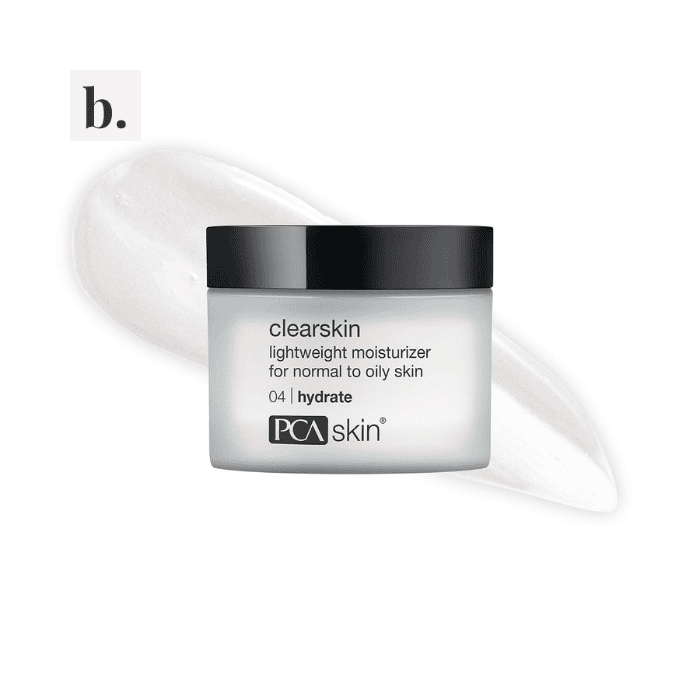
PCA SKIN
Clearskin
If your skin is oily or breakout-prone and you want a light moisturizer, Clearskin offers a useful Premium formula with disclosed 4% niacinamide. Its post-breakout tone benefits are plausible rather than proven…
Read the BeautyBrief
Obagi
Hydrate® Hydrating Facial Moisturizer
If you prefer a medium-rich cream, Obagi Hydrate provides a practical combination of humectants, butters and silicones for everyday dryness. Its Premium price is most defensible when its texture suits your skin…
Read the BeautyBrief
PCA SKIN
ReBalance
If your skin prefers a light cream, PCA SKIN ReBalance offers practical moisture and skin-conditioning support. Its Premium value depends on the finish you prefer rather than proven pH correction.
Read the BeautyBrief
ALASTIN Skincare
ALASTIN Gentle Cleanser
If you like a foaming gel and tolerate essential oils, ALASTIN delivers a Premium cleansing experience. If your skin is fragrance-reactive or you need only everyday washing, a simpler cleanser offers better…
Read the BeautyBrief
HYDRINITY
HYDRI-C Daily Vitamin C Moisturizer
If you want vitamin C and moisturization in one step, this Premium formula has useful brand-reported pigmentation evidence. Its citrus oils narrow sensitive-skin fit, and you should not pay extra on the…
Read the BeautyBrief
ALASTIN Skincare
ALASTIN Ultra Nourishing Moisturizer with TriHex Technology®
If your skin is dry and likes a rich finish, Ultra Nourishing provides Premium moisturizing comfort. If collagen rebuilding is your goal, its exact-product evidence does not establish that outcome.
Read the BeautyBrief