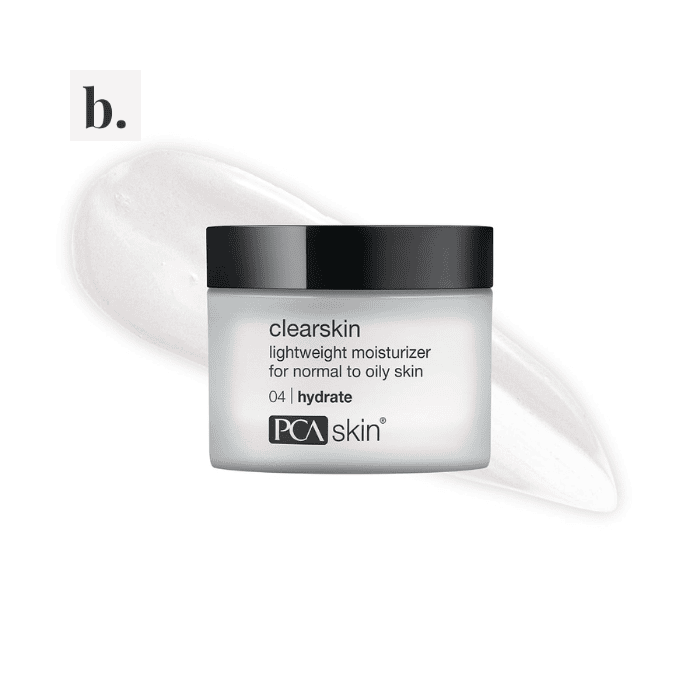
PCA SKIN ReBalance Review
BeautyBrief™
Brand
PCA SKIN
Product
ReBalance
Claims check
The humectant, niacinamide, bisabolol, botanical-oil, and antioxidant formula supports lightweight hydration and skin comfort, while the public evidence does not establish a unique corrective advantage or quantify the product's pH-balancing claim.
Shopper fit
- Dry
- Normal
- Combination
- Oily
- Sensitive
- Acne-Prone
Formula flags
- None identified
Shopper preferences
- None Found
Key ingredients
| Niacinamide | Adds barrier, hydration, skin-conditioning, and tone-support value within the lightweight formula. |
|---|---|
| Glycereth-26 | Provides lightweight humectant hydration near the top of the ingredient list. |
| Bisabolol | Adds skin-comfort support that fits the moisturizer's calming positioning. |
| Evening Primrose Oil | Adds emollience and fatty-acid support without turning the formula into a heavy balm. |
| Sodium Hyaluronate | Adds another water-binding pathway to the hydration-focused formula. |
Price tier
$$$ Premium
Value check
At the Premium tier, the formula provides comfortable lightweight hydration but is not unusually differentiated from lower-tier niacinamide moisturizers; the strongest value is the feather-light texture and PCA SKIN routine fit.
Where to buy
We may earn a commission through these links at no additional cost to you. This does not affect our BeautyBrief.
Bottom line
This is a comfortable lightweight moisturizer with a sensible combination of humectants, niacinamide, and soothing ingredients. Its main limitation is value: the formula is useful but not unusually differentiated for the Premium tier.
PCA SKIN ReBalance is a lightweight moisturizer built around glycereth-26, butylene glycol, niacinamide, bisabolol, evening primrose oil, borage seed oil, aloe, sodium hyaluronate, and vitamin E.[1]
Its strongest use case is light hydration and skin comfort for shoppers who dislike richer creams. The formula is coherent and easy to layer, but its Premium positioning rests more on texture and professional-skincare branding than on a uniquely differentiated treatment system.

What it claims
PCA SKIN says ReBalance restores pH balance while antioxidants help calm, smooth, hydrate, and defend against environmental stress.[1] The brand highlights borage seed oil, evening primrose seed oil, vitamin E, and niacinamide as key ingredients and positions the moisturizer as suitable across skin types.[1]
Claims vs. formula
The hydration and comfort story is well aligned with the formula. Glycereth-26, butylene glycol, sodium hyaluronate, and aloe support water binding, while niacinamide, bisabolol, evening primrose oil, borage seed oil, and vitamin E add skin-conditioning and soothing context.[1]
Topical niacinamide has clinical support for barrier function, hydration, and some visible tone benefits, while formulation and delivery still affect real-world performance.[2] That supports ReBalance’s moisturizer role, but it does not establish a unique finished-product advantage over other niacinamide moisturizers.
The pH-balancing language is broader than the public evidence. PCA SKIN does not publish the finished-product pH, a comparative pH study, or product-specific clinical data showing that ReBalance produces a distinct corrective effect beyond moisturization and comfort.
Ingredients that matter
Niacinamide: Adds barrier, hydration, skin-conditioning, and tone-support value within the lightweight formula.
Glycereth-26: Provides lightweight humectant hydration near the top of the ingredient list.
Bisabolol: Adds skin-comfort support that fits the moisturizer’s calming positioning.
Evening Primrose Oil: Adds emollience and fatty-acid support without turning the formula into a heavy balm.
Sodium Hyaluronate: Adds another water-binding pathway to the hydration-focused formula.

Niacinamide
If your skin feels dry or uncomfortable, niacinamide can support hydration and reduce water loss in a well-formulated product. It also has evidence for uneven tone and visible oiliness, but…
Read the IngredientBrief
Bisabolol
Bisabolol is a skin-conditioning ingredient used in sensitive-skin formulas for soothing support. Human evidence is mixed, so the complete formula matters more than the ingredient callout alone.
Read the IngredientBrief
Hyaluronic Acid
If your skin feels dry or tight, hyaluronic acid helps your skin hold moisture. You don't need several HA forms or a separate serum when your moisturizer already hydrates well.
Read the IngredientBrief
Sodium Hyaluronate
Sodium hyaluronate is a well-established humectant and skin-conditioning form of hyaluronic acid for surface hydration and temporary plumping. Molecular weight and the complete formula matter more than the ingredient name…
Read the IngredientBriefWhat to expect in the short term
Expect a feather-light moisturizer that spreads easily and layers well with serums or sunscreen. The formula is best suited to shoppers who want hydration without a dense or occlusive finish.
What to expect over time
Regular use should mainly maintain hydration and skin comfort. Niacinamide and antioxidant ingredients add useful support, but ReBalance is still a moisturizer rather than a targeted treatment for wrinkles, discoloration, or acne.
Who it fits
Dry, normal, combination, oily, sensitive, and acne-prone skin can all have a use case when a light moisturizer is preferred. The clearest fit is normal-to-sensitive skin that wants low-weight hydration; very dry skin may need a richer cream or an additional occlusive layer.
Compare before you buy
At the Premium tier, ReBalance is harder to justify on formula differentiation alone because familiar humectants, niacinamide, soothing ingredients, and lightweight emollients are widely available. The value is strongest for shoppers who specifically prefer the feather-light texture and PCA SKIN routine experience.
Final Assessment
PCA SKIN ReBalance is a comfortable, lightweight moisturizer with a sensible combination of humectants, niacinamide, and soothing ingredients. Its main limitation is value: the formula is useful but not unusually differentiated for the Premium tier, so the strongest fit is a shopper who specifically prefers this professional-skincare texture and finish.
Where to buy
Choose a retailer to view current pricing and availability.
We may earn a commission through these links at no additional cost to you. This does not affect our BeautyBrief.
Last reviewed: October 2026
Sources
PCA SKIN. ReBalance. Current official U.S. product page. Accessed October 7, 2026.
Used to verify current product identity, 1.7 oz size, complete ordered U.S. ingredient list, claims, directions, key-ingredient positioning, current status, and brand-direct Price Tier context.
Ong RR, Goh CF. Niacinamide: a review on dermal delivery strategies and clinical evidence. Drug Delivery and Translational Research. 2024;14(12):3512-3548.
The review summarizes clinical evidence for topical niacinamide, including barrier, hydration, and tone-related uses, while emphasizing the importance of formulation and delivery. It does not test PCA SKIN ReBalance.
Bluemercury. PCA SKIN ReBalance. Current U.S. retail listing. Accessed October 7, 2026.
Used to corroborate the current 1.7 oz product identity, formula, and UPC.