
Meadowfoam Seed Oil in Skincare
Meadowfoam seed oil is a stable plant-derived emollient and occlusive that softens dry-feeling skin and adds richness to moisturizing formulas. Its basic moisturizing role is established, but stronger treatment claims are not.
- Aliases
- Limnanthes Alba Seed Oil, Limnanthes Alba (Meadowfoam) Seed Oil, Meadowfoam Oil
- Ingredient category
- Emollient, Occlusive
- Most relevant for
- Dryness, Skin Barrier Support
- Evidence strength
- Well Supported for Softening dry-feeling skin and supporting moisture retention in moisturizing formulas
- Formula matters
- Concentration, refining, the other emollients and humectants, and whether the product is a nearly pure oil or a balanced moisturizer matter more than the meadowfoam name alone.
- Separate product needed?
- Usually No. Most routines do not need a dedicated meadowfoam oil; choose one only if you want extra richness or enjoy facial and body oil textures.
BB takeaway
Meadowfoam seed oil is a useful, stable moisturizing ingredient rather than a must-have treatment active. Choose the complete formula and do not pay more for the meadowfoam name alone.
Ingredient evidence does not prove the performance of every finished product containing it.
What is meadowfoam seed oil?
Meadowfoam seed oil is the fixed oil obtained from the seeds of Limnanthes alba. Cosmetic ingredient references identify it as Limnanthes Alba Seed Oil or Limnanthes Alba (Meadowfoam) Seed Oil.[1]
Its main cosmetic jobs are straightforward. Health Canada’s ingredient database lists topical meadowfoam seed oil as an emollient and occlusive skin-conditioning ingredient.[2]
Meadowfoam seed oil is not the same material as hydrogenated meadowfoam seed oil, meadowfoam seed oil ethyl esters, meadowfoam seedmeal extracts, or isolated compounds derived from the plant. Evidence for those materials should not automatically be applied to ordinary meadowfoam seed oil.
What does meadowfoam seed oil do for skin?
Its most dependable job is emollience. Meadowfoam seed oil helps soften the skin surface, smooth rough-feeling areas, and give moisturizers, balms, and facial oils a richer, more cushioned feel.
As part of an oil-rich formula, it can also help reduce moisture loss from the skin surface. That makes it relevant to dryness and skin-barrier support, although the complete moisturizer matters more than the oil alone.
Meadowfoam seed oil is not established as an acne treatment, pigment corrector, wrinkle treatment, collagen stimulant, or sunscreen. A finished product containing it may address one of those concerns because of other ingredients or product-level testing, but the oil itself does not prove the claim.
What the evidence says about meadowfoam seed oil skincare
The basic moisturizing role of meadowfoam seed oil is well established through its use as an emollient and occlusive. Stronger treatment claims are a different story.
Direct human efficacy research on meadowfoam seed oil itself is limited. The strongest published human information summarized in the Cosmetic Ingredient Review assessment is primarily safety-focused. A facial product containing 71.3% meadowfoam seed oil was evaluated in a repeat-insult patch test with 109 participants. Seven people had a barely perceptible reaction on the first induction day, no further reactions were reported, and the tested finished product was judged neither irritating nor sensitizing under the study conditions.[3]
That is useful tolerability evidence for one high-oil formula. It does not show that meadowfoam seed oil improves wrinkles, pigmentation, acne, or long-term barrier repair.
A 2024 review of natural oils in skincare supports the broader use of plant oils as emollient and occlusive moisturizing ingredients while also emphasizing that different oils can behave differently depending on composition, skin condition, and formulation.[4]
For your routine, meadowfoam seed oil has a credible moisturizing role, but dramatic anti-aging, acne, redness, or brightening claims need finished-product evidence.
How meadowfoam seed oil form and formulation affect results
One of meadowfoam seed oil’s most distinctive formulation features is oxidative stability.
Laboratory research comparing meadowfoam oil with other vegetable oils found unusually high resistance to oxidation under the test conditions.[5] That can help formulators build oil-rich products that are less prone to rancidity.
This is mainly a formulation advantage. Oxidative stability does not mean meadowfoam seed oil is a clinically proven antioxidant treatment for skin.
Refining, extraction method, concentration, fatty-acid composition, supporting emollients, and the rest of the formula can all change texture and performance. A nearly pure facial oil will behave differently from a moisturizer containing a modest amount of meadowfoam seed oil.
Ingredient-list position may hint at how much the oil contributes to a product’s texture, but it does not reveal the exact percentage or prove better results.
Who may benefit from meadowfoam seed oil skincare?
Meadowfoam seed oil can make sense when skin feels dry, tight, or rough and you prefer a smoother, more emollient finish.
It can be especially useful in a moisturizer that also contains humectants such as glycerin and broader barrier-supporting ingredients such as ceramides. That kind of formula can address hydration, softness, and moisture loss at the same time.
Oily or acne-prone skin does not need to avoid meadowfoam seed oil automatically, but the ingredient does not prove that a finished product is non-comedogenic or breakout-proof.
If you prefer very lightweight textures or your moisturizer already leaves your skin comfortable, a meadowfoam-rich facial oil may simply be unnecessary.
Meadowfoam seed oil side effects and irritation risk
Meadowfoam seed oil has a favorable cosmetic safety record. The 2017 Cosmetic Ingredient Review assessment included it among plant-derived fatty-acid oils concluded safe in the practices of use and concentration described in that review.[3]
As of October 2026, CIR continues to list a Draft Report for meadowfoam seed oil within its Plant-Derived Edible Oil Group. Its ingredient page now identifies October 5–6, 2026 as the most recent Expert Panel meeting.[6] Because that reassessment remains a draft, it should not be treated as a newer final safety conclusion.
A finished product can still cause stinging, itching, redness, or breakouts because of fragrance, preservatives, essential oils, other actives, or simply a texture that does not suit your skin.
Stop using a product that causes persistent burning, swelling, severe itching, blistering, or a worsening rash.
How to use meadowfoam seed oil in your skincare routine
Use the product according to its format. A moisturizer containing meadowfoam seed oil simply serves as your moisturizing step.
If you use a separate facial oil, apply a small amount after thinner water-based steps or after moisturizer when you want more softness and richness.
More oil is not automatically better. Too much can feel greasy or interfere with sunscreen and makeup.
Meadowfoam seed oil can be used in routines containing retinoids, exfoliating acids, or benzoyl peroxide. It cannot make an overly irritating routine harmless.
How long does meadowfoam seed oil take to work?
Its most predictable cosmetic effects are immediate. Skin can feel softer, smoother, and less tight soon after an emollient formula is applied.
There is no well-established meadowfoam-seed-oil-specific timeline for wrinkles, pigmentation, acne, redness, or long-term barrier repair.
If dryness is why you are using the product, judge the finished moisturizer by whether your skin stays comfortable over repeated use rather than waiting for the oil itself to produce a dramatic treatment effect.
What can you use with meadowfoam seed oil?
Meadowfoam seed oil fits easily with most skincare ingredients.
It works particularly well in moisturizing systems containing glycerin, ceramides, humectants, emollients, and occlusives because those ingredients perform complementary jobs.
It can also be used with retinoids, benzoyl peroxide, exfoliating acids, and vitamin C when the routine remains comfortable.
If a treatment is causing persistent burning, peeling, or redness, reducing the irritating treatment matters more than adding another oil.
How to choose a meadowfoam seed oil product
Start with the job you need the product to do.
If dryness is the concern, compare the complete moisturizer rather than choosing a product simply because meadowfoam seed oil appears high on the ingredient list.
Look at humectants, other emollients, occlusives, fragrance, texture, packaging, and whether the richness suits your skin and climate. A well-designed cream often offers more complete moisturization than a single-oil product.
Do not assume that “100% meadowfoam oil,” cold-pressed sourcing, or a higher percentage creates a stronger skin treatment. Those claims may describe source, processing, or texture without proving better visible results.
Be cautious with anti-aging, antioxidant, UV-protection, or dramatic barrier-repair claims that rely mainly on the meadowfoam name.
Meadowfoam seed oil alone does not justify Premium pricing. Pay more only when the finished product gives you a meaningful advantage in texture, formula design, sourcing transparency, stability, packaging, tolerability, or credible product-level testing.
Do you need a separate meadowfoam seed oil product?
Usually, no.
Meadowfoam seed oil is a supporting emollient and occlusive, not an ingredient you need to build a dedicated step around.
A separate facial or body oil can make sense if you enjoy oil textures or still want more softness after moisturizer. Otherwise, a balanced moisturizer can provide the same practical role while also supplying water-binding and other moisture-supporting ingredients.
If your current moisturizer already keeps your skin comfortable, there is little reason to replace it simply to get meadowfoam seed oil.
The BB Perspective
Meadowfoam seed oil is a useful, unusually stable plant oil with a straightforward role: soften skin, add richness, and support a moisturizing formula.
Its oxidative stability is a genuine formulation advantage. What it does not have is a strong body of direct human evidence showing that the oil itself treats wrinkles, acne, pigmentation, or other visible skin concerns.
For your routine, this is a good formula component rather than a must-have. Choose the product for the complete moisturizing system, texture, tolerability, stability, and value—not because meadowfoam seed oil sounds more special than another well-chosen emollient.
Last reviewed: September 2026
Sources
COSMILE Europe. Limnanthes Alba Seed Oil.
This cosmetic ingredient reference identifies the material as oil obtained from meadowfoam seeds and lists skin conditioning as a cosmetic function. It supports ingredient identity and role rather than treatment-level efficacy. Return to citation.
Health Canada. Natural Health Products Ingredients Database: Limnanthes Alba (Meadowfoam) Seed Oil.
Health Canada’s ingredient database lists topical meadowfoam seed oil as a non-medicinal emollient and occlusive skin-conditioning ingredient. This supports its established cosmetic function but does not establish treatment-level efficacy or an ideal concentration. Return to citation.
Burnett CL, Fiume MM, Bergfeld WF, et al. Safety Assessment of Plant-Derived Fatty Acid Oils. International Journal of Toxicology. 2017;36(3 Suppl):51S-129S.
The Cosmetic Ingredient Review Expert Panel assessed 244 plant-derived fatty-acid oils, including meadowfoam seed oil, and concluded the group was safe in the practices of use and concentrations described. The report also summarizes an unpublished 109-person repeat-insult patch test of a facial product containing 71.3% meadowfoam seed oil. The tested formula was judged neither irritating nor sensitizing under the study conditions. CIR is financially supported by the Personal Care Products Council. This is safety evidence rather than proof of moisturizing or anti-aging efficacy. Return to citation.
Vaughn AR, Clark AK, Sivamani RK, Shi VY. The benefits and challenges of treating skin with natural oils. International Journal of Cosmetic Science. 2024. PMID:39113309.
This review discusses plant and other fixed oils as moisturizing agents, including their emollient and occlusive roles, while emphasizing that barrier effects vary by oil composition, formulation, and skin condition. It provides category-level context and should not be read as direct meadowfoam-seed-oil efficacy evidence. Return to citation.
Isbell TA, Abbott TP, Carlson KD. Oxidative stability index of vegetable oils in binary mixtures with meadowfoam oil. Industrial Crops and Products. 1999;9(2):115-123.
This laboratory study compared the oxidative stability of meadowfoam oil with several other vegetable oils. Meadowfoam oil showed unusually high oxidative stability under the test conditions. The result supports its value as a stable formulation oil rather than proving antioxidant treatment effects on human skin. Return to citation.
Cosmetic Ingredient Review. Limnanthes Alba (Meadowfoam) Seed Oil. Current ingredient review page, accessed August 2026.
As of October 2026, CIR lists a Draft Report for meadowfoam seed oil within the Plant-Derived Edible Oil Group and identifies October 5–6, 2026 as the most recent Expert Panel meeting. Because the reassessment is still presented as a draft, it is current-status information rather than a newer final safety conclusion. Return to citation.
Products featuring Meadowfoam Seed Oil
These evaluated products list Meadowfoam Seed Oil among the Key Ingredients that meaningfully shape the formula. Inclusion here reflects ingredient relevance, not an endorsement or rating.
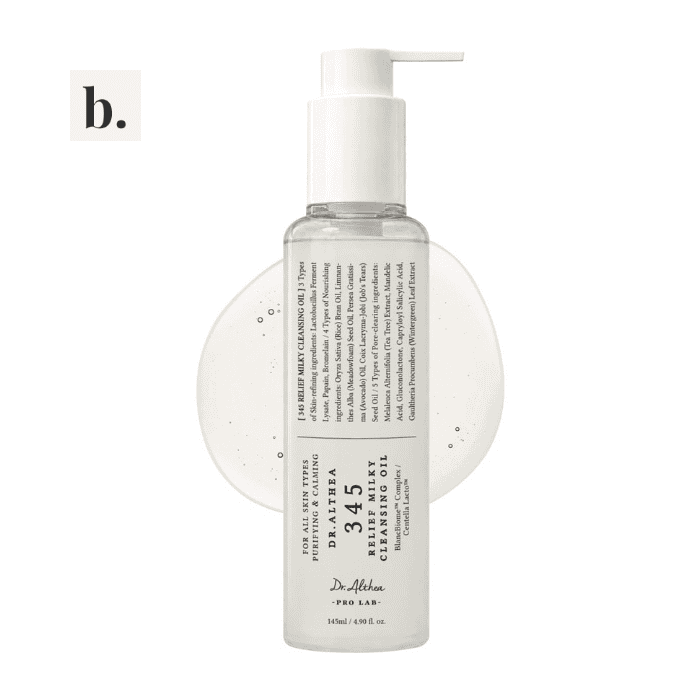
Dr.Althea
345 Relief Milky Cleansing Oil
This is best aligned with normal, combination, oily, or acne-prone skin that wants an emulsifying first cleanse for makeup, sunscreen, sebum, and pore buildup. The cleansing system is the main strength, while…
Read the BeautyBrief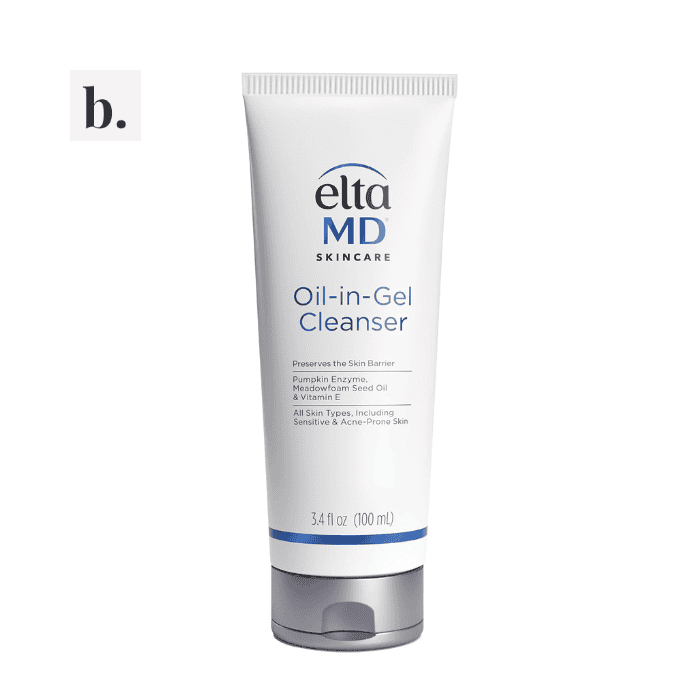
EltaMD
Oil-in-Gel Cleanser
If you wear resistant sunscreen or long-wear makeup, EltaMD Oil-in-Gel offers a practical first-cleansing format. Its Mid-Range value rests on the easy milky rinse and skin feel rather than a unique antioxidant…
Read the BeautyBrief
Philosophy
Purity Made Simple One-Step Facial Cleanser
If you prefer creamy one-step cleansing, Philosophy offers surfactants with meadowfoam oil and glycerin. Its essential-oil blend matters if your skin or eyes react to fragrance, despite brand testing. At the Mid-Range…
Read the BeautyBrief