
Jojoba Oil in Skincare
Jojoba oil is a well-established emollient that softens skin and improves formula slip. Its wax-ester composition is useful, but human evidence does not establish it as an acne treatment or stand-alone barrier-repair active.
- Aliases
- Simmondsia Chinensis Seed Oil, Simmondsia Chinensis (Jojoba) Seed Oil
- Ingredient category
- Emollient
- Most relevant for
- Dryness
- Evidence strength
- Well Supported for Softening and smoothing skin through topical emollience with jojoba-containing formulations
- Formula matters
- Refining, oxidation control, concentration, vehicle, supporting humectants, occlusives, and the finished formula determine results. Wax-ester chemistry or golden-jojoba lab data do not establish acne or barrier-repair benefits.
- Separate product needed?
- Usually No. Most routines do not need a separate jojoba facial oil if the existing moisturizer already provides enough softness and emollience.
BB takeaway
Jojoba is a dependable emollient, not a treatment active. Choose it for texture and softness when the complete formula works for you, not for acne-clearing or barrier-repair promises.
Ingredient evidence does not prove the performance of every finished product containing it.
What is jojoba oil?
Jojoba oil is the common name for Simmondsia Chinensis Seed Oil, a plant-derived cosmetic ingredient used mainly as an emollient.[1]
Despite the name, jojoba is chemically closer to a liquid wax than to most plant oils. Its major components are long-chain wax esters rather than the triglycerides found in oils such as olive or sunflower oil.[2]
That composition gives jojoba a smooth feel and good oxidative stability. It does not make jojoba identical to human sebum or automatically better for acne-prone skin.
What does jojoba oil do for skin?
Jojoba’s clearest role is emollience. It softens rough-feeling skin, improves slip, and helps moisturizers, cleansing oils, balms, and facial oils spread smoothly.
Its moisture-sealing effect is more modest. Two small human studies found little or no measurable reduction in transepidermal water loss from jojoba under the conditions tested.[3][4]
That means jojoba can make skin feel softer without behaving like a strongly occlusive ingredient such as petrolatum.
What the evidence says about jojoba oil skincare
Jojoba is well supported as an emollient, while treatment claims are much less established.
COSMILE identifies Simmondsia Chinensis Seed Oil as a skin-conditioning emollient, and Cosmetic Ingredient Review describes jojoba as predominantly long-chain wax esters with a favorable cosmetic safety record.[1][2]
In a 1992 human study, undiluted jojoba oil applied twice daily did not significantly change transepidermal water loss. A 2012 six-person study similarly found that jojoba did not show the same occlusive effect as several other oils, while petrolatum produced the strongest occlusion.[3][4]
A 2012 open observational study of a clay-and-jojoba mask reported fewer acne lesions over six weeks, but there was no untreated or vehicle-control group and the intervention combined clay with jojoba oil.[5] That study cannot establish jojoba itself as an acne treatment.
Newer laboratory research suggests refined and unrefined jojoba can differ in water-related measurements and epidermal gene expression.[6][7] Those findings do not prove that “golden” jojoba gives better visible results or repairs the barrier in people.
How jojoba oil form and formulation affect results
Refined and unrefined jojoba can differ in color, odor, trace components, and laboratory behavior. Unrefined jojoba is often called “golden” jojoba.
That does not establish that unrefined jojoba is clinically superior. The complete product still determines texture, spread, moisture retention, and tolerability.
A nearly pure jojoba facial oil behaves differently from a moisturizer containing a smaller amount alongside glycerin, other emollients, and occlusives.
Higher jojoba percentage is not automatically better. For persistent dryness, a balanced moisturizer usually does more than adding more facial oil.
Who may benefit from jojoba oil skincare?
Jojoba can be useful if you want more softness and emollience without choosing a heavy balm or ointment.
Dry, normal, combination, and oily skin can all use jojoba depending on the finished formula and personal preference.
Acne-prone skin does not need to avoid it automatically, but jojoba’s wax-esters are not evidence that it prevents clogged pores or treats acne.
If your moisturizer already leaves your skin comfortable, there is no reason to add jojoba simply because it is a popular plant oil.
Jojoba oil side effects and irritation risk
Jojoba has a favorable cosmetic safety history. Cosmetic Ingredient Review concluded that jojoba seed oil and related jojoba-derived ingredients were safe in the cosmetic uses and concentrations reviewed.[2]
Safety as used does not mean nobody can react. A published case report documents allergic contact dermatitis associated with jojoba exposure.[8]
If a jojoba-containing product repeatedly causes itching, swelling, persistent redness, or an eczema-like rash, stop using the finished product.
How to use jojoba oil in your skincare routine
Use jojoba according to the product format. In a moisturizer, balm, or cleanser, use the product normally.
If you use a separate facial oil, apply a small amount after lighter water-based products or around your moisturizer according to the texture you prefer.
If your skin is persistently dry, jojoba alone may not be enough. A complete moisturizer with humectants, emollients, and enough occlusion for your skin is usually more useful.
How long does jojoba oil take to work?
Its main benefit is immediate: skin can feel softer and smoother as soon as the oil or finished product is applied.
There is no well-established human timeline showing that jojoba oil alone repairs the skin barrier, clears acne, fades marks, or reduces wrinkles.
What can you use with jojoba oil?
Jojoba has no standard incompatibility with common skincare ingredients. It can appear in routines containing retinoids, exfoliating acids, vitamin C, niacinamide, peptides, moisturizers, and sunscreen.
Its role in those routines is mainly emollience. It does not neutralize irritation from an overly aggressive routine or replace sunscreen.
If you already use a rich moisturizer or balm, an extra jojoba-oil step may simply duplicate the emollient part of your routine.
How to choose a jojoba oil product
Start with what you need the product to do rather than shopping for jojoba by name.
For dryness, prioritize a complete moisturizer if your skin needs both hydration and better moisture retention. For a facial oil, choose a texture and formula you will actually use.
Do not treat jojoba as an acne active or a stand-alone barrier-repair ingredient. Look for finished-product human testing when a brand makes those stronger claims.
Do not assume “golden,” “cold-pressed,” or less processed automatically means better clinical performance.
Jojoba alone does not justify Premium pricing. Pay more only when the complete formula, testing, texture, packaging, or usability gives you a meaningful advantage.
Do you need a separate jojoba facial oil?
Usually, no.
A separate facial oil can make sense if you enjoy oils or want an additional emollient layer for rough or dry-feeling skin.
If dehydration or persistent dryness is the real problem, improving the complete moisturizer usually makes more sense than adding jojoba.
The BB Perspective
Jojoba oil is a dependable emollient with a straightforward strength: it softens skin and gives formulas a smooth, stable base.
Its unusual wax-ester composition is technically interesting, but the human evidence does not establish jojoba as an acne treatment or stand-alone barrier-repair ingredient.
Seek it out if you like the texture or want extra softness. Do not pay more because a brand presents it as healing, acne-clearing, or uniquely barrier-repairing.
Last reviewed: September 2026
Sources
COSMILE Europe. Simmondsia Chinensis Seed Oil.
COSMILE identifies Simmondsia Chinensis Seed Oil as a plant-derived skin-conditioning emollient. This supports ingredient identity and standard cosmetic function, not acne or barrier-repair claims. Return to citation.
Cosmetic Ingredient Review. Simmondsia Chinensis (Jojoba) Seed Oil.
The CIR safety assessment describes jojoba as predominantly long-chain wax esters and concluded the reviewed jojoba-derived ingredients were safe in the cosmetic uses and concentrations assessed. Cosmetic Ingredient Review is funded by the Personal Care Products Council, a cosmetics-industry trade association. Return to citation.
Kinnunen T. Effects of ingredients of dermatological vehicles on transpidermal water loss and percutaneous penetration: I. Oils and emulsifiers. Journal of Dermatological Treatment. 1992;2(4):141-144. doi:10.3109/09546639209092741. PMID:31945817.
Undiluted jojoba oil did not significantly alter transepidermal water loss under the tested conditions. The study is useful for limiting strong occlusion and barrier-repair claims. Return to citation.
Patzelt A, Lademann J, Richter H, et al. In vivo investigations on the penetration of various oils and their influence on the skin barrier. Skin Research and Technology. 2012;18(3):364-369. doi:10.1111/j.1600-0846.2011.00578.x. PMID:22092829.
This six-person study found jojoba did not show the same occlusive effect as several other oils; petrolatum produced the strongest occlusion. The sample was very small. Return to citation.
Meier L, Stange R, Michalsen A, Uehleke B. Clay jojoba oil facial mask for lesioned skin and mild acne—results of a prospective, observational pilot study. Forschende Komplementärmedizin. 2012;19(2):75-79. doi:10.1159/000338076. PMID:22585103.
This uncontrolled study tested a clay-and-jojoba mask, so it cannot isolate jojoba’s contribution or establish jojoba as an acne treatment. Return to citation.
Ichiyanagi N, Tsuchimoto S, Yamamoto M, et al. Water-Loss Prevention and Water-Holding Capacity of Jojoba Oils. BPB Reports. 2024;7(3):81-84. doi:10.1248/bpbreports.7.3_81.
This laboratory study found differences between golden and refined jojoba in non-human water-loss and water-holding tests. It does not establish superior human-skin performance. Return to citation.
Tsuchimoto S, Sakai H, Takeuchi C, et al. Alterations in Gene Expression Profiles of Human Epidermal Cells Treated with Jojoba Oil. Journal of Oleo Science. 2026;75(7):817-823. doi:10.5650/jos.ess25260.
This reconstructed-epidermis study measured gene-expression changes and does not establish clinical wound healing or barrier repair in people. Return to citation.
Di Berardino L, Di Berardino F, Castelli A, Della Torre F. A case of contact dermatitis from jojoba. Contact Dermatitis. 2006;55(1):57-58. doi:10.1111/j.0105-1873.2006.0847e.x. PMID:16842559.
This case report shows that jojoba allergy is possible but cannot estimate its frequency among ordinary skincare users. Return to citation.
Products featuring Jojoba Oil
These evaluated products list Jojoba Oil among the Key Ingredients that meaningfully shape the formula. Inclusion here reflects ingredient relevance, not an endorsement or rating.
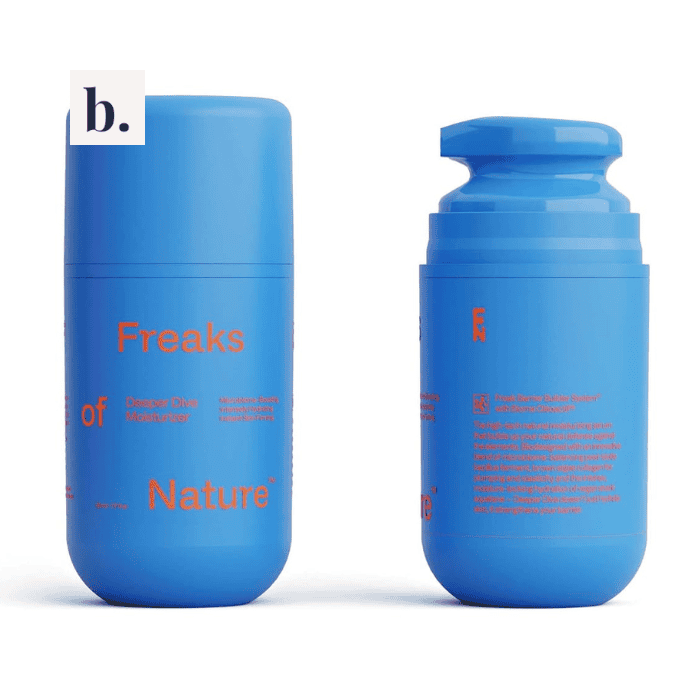
Freaks of Nature
Deeper Dive Hydrator
If you prefer an oil-based moisturizer, Deeper Dive offers a short squalane-and-plant-oil formula for surface softness. Its microbiome test does not establish clearer skin or repaired barrier function, so choose it for…
Read the BeautyBrief
Peach Slices
Redness Relief Calming Cream
If you want light hydration with panthenol and soothing ingredients, this cream offers useful Budget value. If redness is persistent or your skin dislikes botanical-heavy formulas, consider another approach.
Read the BeautyBrief
OSEA
Ocean Cleanser
If you enjoy a citrus-floral cleanser with clay-assisted washing and gentle exfoliation, OSEA delivers a differentiated Premium experience. If you avoid essential oils, need fragrance-free cleansing or want stronger pore-treatment evidence, a…
Read the BeautyBrief
OSEA
Atmosphere Protection® Cream
If you enjoy a floral-herbal moisturizer and value a published pollution-barrier test, Atmosphere Protection offers a differentiated Premium option. If you are fragrance-sensitive or want only basic hydration, a simpler unscented cream…
Read the BeautyBrief
Dermalogica
Daily Glycolic Cleanser
If you want glycolic acid built into cleansing, this is a Premium gel wash with a conditioning base and a disclosed 3% concentration. If your skin reacts to citrus oils or you…
Read the BeautyBrief
Rael
Miracle Clear Purifying Twist Up Cleansing Balm
If you remove waterproof makeup often, Rael provides a twist-up balm with product-specific removal data. Its fragrance-free formula and eye testing support shopper fit without guaranteeing tolerance. At the Budget tier, choose…
Read the BeautyBrief