

Dermalogica Daily Glycolic Cleanser Review
BeautyBrief™
Brand
Dermalogica
Product
Daily Glycolic Cleanser
Claims check
You get cleansing plus a plausible exfoliating role from 3% glycolic acid, but no exact-product clinical trial establishes measurable tone correction and citrus oils narrow sensitive-skin fit.
Shopper fit
- Normal
- Combination
- Oily
Formula flags
- Essential oils
- Exfoliating acids
Shopper preferences
- Vegan
- Cruelty-Free
Key ingredients
| Glycolic Acid | Provides the cleanser's exfoliating action and supports mild surface smoothing and brighter-looking skin. |
|---|---|
| Glycerin | Adds established humectant support high in the formula. |
| Cocamidopropyl Hydroxysultaine | Provides much of the cleansing and helps create the light lather. |
| Simmondsia Chinensis (Jojoba) Seed Oil | Adds emollient and conditioning support around the exfoliating cleansing step. |
| Calendula Officinalis Flower Extract | Adds further conditioning support in the rinse-off formula. |
Price tier
$$$ Premium
Value check
At the Premium tier, you pay for glycolic-acid cleansing and conditioning support, while a simple cleanser may offer better value if your routine already includes a leave-on exfoliant.
Where to buy
We may earn a commission through these links at no additional cost to you. This does not affect our BeautyBrief.
Bottom line
If you want glycolic acid built into cleansing, this is a Premium gel wash with a conditioning base and a disclosed 3% concentration. If your skin reacts to citrus oils or you already exfoliate, a simpler cleanser offers better routine value.
If your skin looks dull and you want some exfoliation built into cleansing, Dermalogica Daily Glycolic Cleanser combines 3% glycolic acid with a conditioning gel wash. It is a Premium option for a routine that benefits from a simple cleansing step with a surface-smoothing purpose.
The tradeoff is that you rinse the acid away. If you already use a leave-on exfoliant or your skin reacts to scented botanical oils, paying more for glycolic acid in your cleanser might not add much to your routine.
What it claims
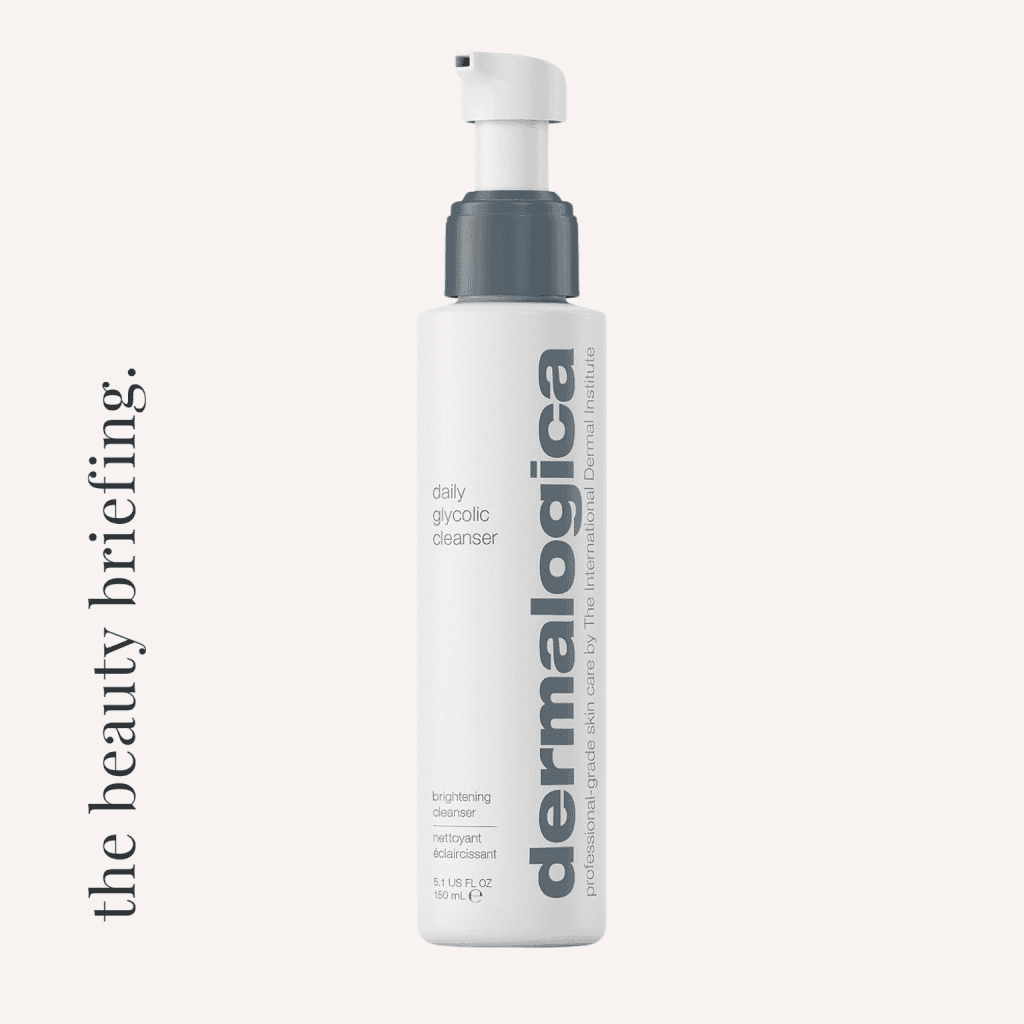
Dermalogica says Daily Glycolic Cleanser removes surface buildup, brightens the appearance of uneven-looking skin and conditions the skin while helping maintain its lipid barrier. The brand recommends it primarily for normal, combination and oily skin concerned about dullness and uneven tone. Its official product-page response identifies the glycolic-acid concentration as 3%.[1]
These are brand claims and product specifications, not independent measurements of what this cleanser achieves. Dermalogica does not present a controlled clinical trial establishing a specific change in skin discoloration or texture from this finished wash.
Claims vs. formula
Cocamidopropyl hydroxysultaine and disodium cocoyl glutamate form part of the cleansing system that helps lift oil and daily residue. Glycolic acid adds an exfoliating purpose, but the label’s 3% figure alone does not tell you the finished formula’s pH or how much exfoliation occurs during the short contact time of a cleanser.
Independent human evidence supports glycolic acid in other formats. In one randomized study of 75 participants, a different 5% glycolic-acid leave-on cream used for three months improved assessed skin texture and discoloration compared with its control. This supports the ingredient’s potential under the tested conditions; it does not establish comparable results for Dermalogica’s rinse-off cleanser.[2]
Glycerin, jojoba seed oil, urea, sodium PCA and other conditioning ingredients support the wash’s comfort-oriented design. Their presence does not prove that this finished cleanser repairs your skin barrier or delivers lasting hydration after rinsing.
Orange and grapefruit peel oils add naturally scented components. The formula also lists T-butyl alcohol near the end, but that ingredient’s presence alone does not show that the finished wash is drying. Your tolerance of the entire formula matters more than labeling one low-listed ingredient as a guaranteed problem.
Ingredients that matter
The combination matters more than any one featured ingredient: surfactants do the cleansing, glycolic acid offers exfoliation potential, and humectants and emollients support a more comfortable wash. Unlike a leave-on acid treatment, this format gives the active ingredient only the time it spends on your skin before rinsing.
Glycerin appears high in the ingredient list, alongside smaller amounts of jojoba seed oil, calendula extract and allantoin. Together, they help explain why the formula is positioned as conditioning, but they do not turn a cleanser into a moisturizer.
The citrus essential oils are more relevant to your buying decision if your skin is reactive to fragrance. Dermalogica describes the scent as coming from botanical ingredients rather than added artificial fragrance.[1]

Glycolic Acid
If rough texture or dullness bothers you, glycolic acid has evidence for smoother-looking skin. Choose a formula your skin tolerates; concentration and pH matter more than a high percentage.
Read the IngredientBrief
Glycerin
If your skin feels dry or tight, glycerin helps your skin hold moisture. You don't need a high percentage or a separate serum when your moisturizer already works well.
Read the IngredientBrief
Cocamidopropyl Hydroxysultaine
Cocamidopropyl Hydroxysultaine is a well-established cleansing and foam-supporting surfactant used mainly in rinse-off formulas. The complete surfactant system determines cleansing strength and tolerability.
Read the IngredientBrief
Jojoba Oil
Jojoba oil is a well-established emollient that softens skin and improves formula slip. Its wax-ester composition is useful, but human evidence does not establish it as an acne treatment or…
Read the IngredientBriefSafety and regulatory context
Glycolic acid is an alpha hydroxy acid (AHA). FDA explains that AHA products can increase sensitivity to sunlight and recommends sunscreen, protective clothing and limited sun exposure during use and for a week afterward; its labeling guidance also addresses products that are rinsed off. That precaution does not prove this particular cleanser produces the same level of sensitivity as a leave-on treatment.[3]
Follow Dermalogica’s directions: massage onto your dampened face and neck, rinse with warm water and avoid the eye area. If your skin stings, becomes persistently dry or is already irritated by other exfoliants, reduce overlap or choose a simpler cleanser.[1]
What to expect in the short term
You can expect a clear, lightly lathering gel cleanser designed to remove daily buildup. A smoother after-feel is plausible, but immediate brightening or exfoliation is not independently quantified for this exact product.
What to expect over time
If the cleanser suits your skin, repeated use may help reduce dull surface buildup. Do not assume it will reproduce the discoloration or texture changes measured in studies of leave-on glycolic-acid products; how often you use it, its pH and its short rinse-off contact all matter.
Who it fits
This is most useful if your skin is normal, combination or oily and you want some exfoliation within your cleansing routine. If your skin is very dry, fragrance-reactive or already over-exfoliated, a basic, fragrance-free cleanser is easier to fit.
If vegan or cruelty-free policies influence your choices, Dermalogica describes its products as vegan on its official U.S. site, and this product’s disclosed ingredients show no clearly contradictory animal-derived ingredient.[4] PETA also lists the brand as cruelty-free.[5]
Compare before you buy
Choose Dermalogica if you want cleansing and a modest glycolic-acid step together, prefer a conditioning gel texture and tolerate its citrus oils. Its 3% glycolic-acid disclosure is useful context, but it is not a finished-product performance score.
Choose a simpler cleanser if you already use a separate exfoliant, want to avoid scented oils or would rather spend your treatment budget on a leave-on product with more relevant testing and contact time.
Final Assessment
Dermalogica Daily Glycolic Cleanser has a credible exfoliating ingredient and a conditioning cleansing base, but the short-contact format limits what its glycolic-acid percentage can establish. At its Premium tier, the extra expense makes the most sense if you specifically want an AHA in your wash step; otherwise, a straightforward cleanser paired with a separate treatment is a more flexible routine choice.
Compare Prices
Choose a retailer to view current pricing and availability.
We may earn a commission through these links at no additional cost to you.
Last reviewed: October 2026
Sources
- Dermalogica. Daily Glycolic Cleanser. Official U.S. product page, including product description, ingredients, directions, FAQ and brand answer on glycolic-acid percentage. Accessed October 14, 2026.
- Thibault PK, Wlodarczyk J, Wenck A. A double-blind randomized clinical trial on the effectiveness of a daily glycolic acid 5% formulation in the treatment of photoaging. Dermatologic Surgery. 1998;24(5):573–578. doi:10.1111/j.1524-4725.1998.tb04209.x. Tested a leave-on cream, not this cleanser.
- U.S. Food and Drug Administration. Guidance for Industry: Labeling for Cosmetics Containing Alpha Hydroxy Acids. FDA guidance on AHA-containing cosmetic products and sun-protection precautions.
- Dermalogica. Shop All Products. Official brand-wide vegan declaration. Accessed October 14, 2026.
- PETA. Dermalogica (Unilever) cruelty-free listing. Accessed October 14, 2026.

