

Is 12% Vitamin C Enough for Skin, or Does a Higher Percentage Work Better?
At a glance
Vitamin C percentages are easy to compare on a product page, but the research is not a simple 12%-versus-15%-versus-20% ladder. A new 2026 study gives a 12% L-ascorbic acid serum some direct finished-product evidence, while the familiar 20% “optimal” number still comes largely from an older pig-skin absorption experiment. Here is what the concentration can—and cannot—tell you before you buy.
Yes, a 12% L-ascorbic acid serum can be a reasonable strength.
What current research does not show is that moving from 12% to 15% or 20% automatically gives you better visible results. The clinical literature uses different formulas, combinations, treatment schedules, and outcome measures, and direct head-to-head trials comparing those concentrations are still missing.
The first thing to check is the form. This Briefing focuses on L-ascorbic acid, the pure form of vitamin C used in the concentration research discussed below. A product with 12% L-ascorbic acid cannot be compared percentage-for-percentage with a serum using a vitamin C derivative.
In this Briefing
- Is 12% vitamin C enough?
- Where the 20% number comes from
- What the clinical evidence actually shows
- What the new 12% study adds
- Why formula quality matters as much as concentration
- When a higher percentage may make sense
- Why derivatives cannot be compared by percentage
- How to use a 12% L-ascorbic acid serum
- Which strength should you buy?
Is 12% vitamin C enough?
For many people, yes.
There is no clinical rule saying L-ascorbic acid has to reach 15% or 20% before it becomes useful. Reviews of topical vitamin C consistently emphasize that formulation matters, and the clinical literature has not established one ideal concentration for wrinkles, pigmentation, or overall photoaging.[1][2]
A 12% strength also now has direct finished-product evidence. In 2026, researchers studied a serum containing 12% pure L-ascorbic acid over 84 days and reported improvements from baseline in several instrumental and visible skin-aging measures.[3]
That does not make 12% a newly proven “best” concentration. It simply makes the claim that 12% is too weak much harder to defend.
Where does the 20% vitamin C number come from?
Much of the familiar 20% recommendation traces back to a 2001 percutaneous-absorption study by Pinnell and colleagues.[4]
The researchers applied L-ascorbic acid and several derivatives to pig skin. They found that L-ascorbic acid needed an acidic formulation below pH 3.5 to enter the skin in that model, and the highest measured percutaneous delivery occurred at 20%. Increasing the concentration beyond 20% did not improve delivery.[4]
That is useful formulation science. It is not a human facial trial showing that a 20% serum reduces wrinkles or pigmentation more than a 12% or 15% serum.
The distinction matters because “maximum absorption in pig skin under experimental conditions” and “best concentration to buy for visible results” are different questions.
The study also had commercial connections that are relevant when it is used to support modern vitamin C marketing: Sheldon Pinnell disclosed consulting for SkinCeuticals, and Mostafa Omar was president of PhytoCeuticals.[4]
So treat 20% as an important upper-range formulation data point—not a goal you need to reach.
What does the clinical evidence actually show?
Human research supports topical vitamin C as a useful ingredient, but it does not give us a clean dose-response curve.
A 2023 systematic review of randomized trials for melasma and photoaging included seven publications with 139 participants. The review found evidence of smoother, less wrinkled, and lighter-looking treated skin in some studies, but the authors concluded that more research is needed to determine the ideal vitamin C concentration.[1]
The concentration issue was especially revealing: most of the included studies used concentrations below 10%, and only one included randomized trial used 20%. The review specifically noted how little randomized evidence exists for the high-concentration products you commonly see for sale.[1]
A separate 2023 systematic review focused on wrinkle appearance reached another important limitation. It identified seven eligible studies, but all used vitamin C with other ingredients or treatment mechanisms, making it difficult to isolate how much of the result came from vitamin C itself.[2]
This is why statements such as “20% is more effective than 12%” sound more settled than the clinical evidence actually is.
What does the new 2026 study tell us about 12%?
It gives 12% L-ascorbic acid a more relevant piece of evidence than the concentration had before—but the study needs to be read as a finished-product study, not a concentration comparison.
The 2026 investigation enrolled 49 women with Fitzpatrick phototypes I through VI; 42 completed 84 days of twice-daily use of a La Roche-Posay serum containing 12% L-ascorbic acid plus vitamin E, salicylic acid, glycerin, hyaluronic acid, and other formula components. Participants also applied a tinted La Roche-Posay SPF 30 sunscreen each morning.[3]
Compared with baseline, researchers reported increases in epidermal thickness and improvements in measured firmness, elasticity, wrinkles, radiance, skin-tone evenness, dark-spot measures, and several collagen-related imaging findings over the 84-day period. No treatment-related adverse events were reported.[3]
Those findings show that a finished product containing 12% pure vitamin C can be associated with meaningful skin changes over several months.
They do not prove that 12% alone caused every change. The study was open-label, uncontrolled, and compared participants with their own baseline rather than with a placebo, 15%, or 20% vitamin C serum. The formula contained several other active or moisturizing ingredients, sunscreen use was part of the protocol, and the statistical analysis did not adjust for multiple comparisons. Because participants also used tinted sunscreen, the observed dark-spot improvements cannot be attributed specifically to the vitamin C serum.[3]
The commercial relationship is also substantial. L’Oréal funded the study; La Roche-Posay supported publication; several authors were L’Oréal or La Roche-Posay employees or consultants.[3]
So the study supports 12% as a credible finished-product concentration. It does not establish that 12% is optimal or that it works as well as—or better than—15% or 20%.
Why does formula quality matter as much as concentration?
L-ascorbic acid is unusually dependent on the formula around it.
It is hydrophilic, inherently unstable, and difficult to deliver through the outer skin barrier. A 2026 dermatology review emphasizes pH adjustment, stabilization, and delivery strategy as central formulation issues for topical L-ascorbic acid.[5]
That means two 15% serums are not necessarily equivalent—and a well-designed 12% product can make more sense than a poorly stabilized 20% product.
Packaging matters because L-ascorbic acid is oxidation-prone. A container that limits unnecessary light and air exposure is a practical advantage, as is following the manufacturer’s storage instructions and closing the package promptly.
Other antioxidants can matter too. A well-known formulation containing 15% L-ascorbic acid, 1% vitamin E, and 0.5% ferulic acid reduced several measures of solar-simulated UV damage compared with its vehicle in human skin.[6]
Earlier experimental work also found that adding ferulic acid improved the stability and measured photoprotective performance of a vitamin C and E solution.[7]
Those findings support that particular antioxidant strategy. They do not mean every effective vitamin C serum needs vitamin E and ferulic acid.
When might 15% or 20% still make sense?
A higher concentration can be a reasonable choice if you already tolerate L-ascorbic acid well and the overall product is a better fit for you.
Maybe the 15% formula has packaging you trust more. Maybe it layers better under sunscreen. Maybe the brand provides useful stability information or finished-product testing. Maybe you have used it before and know your skin does well with it.
Those are better reasons to choose the product than simply assuming the largest percentage gives the strongest result.
If a higher-strength acidic serum repeatedly leaves your skin stinging, red, or flaky, the concentration is not helping you by making the routine harder to use. A tolerable 12% formula that you use consistently can be the more sensible purchase.
You also do not need to “graduate” from 12% to 15% or 20% after finishing a bottle. If the product is comfortable, stable enough in normal use, fits your budget, and is helping with the concern you bought it for, a higher number is not automatically an upgrade.
Do vitamin C derivatives follow the same percentage rules?
No.
A 12% L-ascorbic acid serum is not directly comparable with a product containing 12% sodium ascorbyl phosphate, magnesium ascorbyl phosphate, ascorbyl glucoside, or tetrahexyldecyl ascorbate.
These are different molecules with different stability, conversion, delivery, and clinical evidence. Even the classic 2001 absorption study found that several derivatives tested under its conditions did not increase L-ascorbic acid levels in pig skin the way directly applied L-ascorbic acid did.[4]
That does not mean derivatives are useless. It means percentages cannot be compared as though every form of vitamin C were the same ingredient.
Check the exact vitamin C form before deciding that one product is “stronger.”
How should you use a 12% L-ascorbic acid serum?
You do not need a complicated routine.
The American Academy of Dermatology lists vitamin C among ingredients used for visible skin aging and dark spots and recommends applying a vitamin C product in the morning after cleansing and before sunscreen.[8]
A simple routine is:
- Cleanse if needed.
- Apply the vitamin C serum as directed.
- Use moisturizer if your skin needs it.
- Finish with broad-spectrum, water-resistant SPF 30 or higher when you will be exposed to daylight.
You do not need an elaborate waiting period between steps. Let the product settle enough that the next layer applies comfortably.
If your routine already contains several potentially irritating treatments, introduce the vitamin C serum gradually rather than changing multiple products at the same time. That makes it easier to tell whether the formula actually agrees with your skin.
So, which vitamin C percentage should you buy?
If you are choosing among well-formulated L-ascorbic acid serums at 12%, 15%, and 20%, there is no evidence-based rule requiring you to choose the highest number.
Start by comparing the complete products:
- Vitamin C form: Is it actually L-ascorbic acid?
- Formula: Does the product appear designed around the stability and delivery challenges of pure vitamin C?
- Packaging: Does it reasonably limit unnecessary light and air exposure?
- Tolerance: Can you use it consistently without persistent irritation?
- Evidence: Has the finished product been tested, or is the brand relying mainly on general vitamin C research?
- Price: Are you paying for a better formula and evidence—or simply a larger percentage?
A 12% L-ascorbic acid serum is not automatically the beginner version of a 20% serum. The newest finished-product research shows that 12% can be a credible concentration, while systematic reviews still do not establish an ideal clinical percentage.
For the broader buying decision—including vitamin C form, stability, packaging, skin tolerance, and price—use BB’s How to Choose Vitamin C Serum Without Wasting Money.
The BB Perspective
The beauty market has turned vitamin C concentration into an easy hierarchy: 10% sounds mild, 15% sounds serious, and 20% sounds best. The evidence is much less tidy.
The classic 20% figure tells us something important about absorption in an experimental pig-skin model. It does not prove that a 20% facial serum produces better visible results than 12% or 15%. Meanwhile, newer human research shows that a well-formulated 12% finished product can produce measurable and visible improvements, even though that study cannot isolate the concentration from the rest of the formula.
Buy the serum, not the number. A stable, tolerable 12% L-ascorbic acid product with sensible packaging and a formula you will actually use is a legitimate choice. Pay more or move higher only when the finished product gives you a better reason than percentage alone.
Last reviewed: October 2026
Sources
Correia G, Magina S. Efficacy of Topical Vitamin C in Melasma and Photoaging: A Systematic Review. Journal of Cosmetic Dermatology. 2023;22(7):1938-1945. doi:10.1111/jocd.15748. PMID: 37128827.
This systematic review included seven randomized publications with 139 participants and found evidence supporting topical vitamin C for photoaging and pigmentation outcomes, while emphasizing the small evidence base and the need for more research. Most included studies used concentrations below 10%, only one included RCT evaluated 20%, and the authors concluded that the ideal vitamin C concentration remains uncertain. Return to citation.
Sanabria B, Berger LE, Mohd H, et al. Clinical Efficacy of Topical Vitamin C on the Appearance of Wrinkles: A Systematic Literature Review. Journal of Drugs in Dermatology. 2023;22(9):898-904. PMID: 37683066.
This systematic review identified seven eligible clinical studies evaluating vitamin C and wrinkle-related outcomes. All used vitamin C alongside other ingredients or treatment mechanisms, which limited conclusions about vitamin C itself and prevented a clean concentration comparison. The authors called for more high-quality prospective and comparative research. Return to citation.
Addor FASA, Odeimi J, Rezze GG, et al. Clinical Efficacy of a 12% Pure Vitamin C Serum Across All Skin Phototypes: An Integrated In Vitro-In Vivo Evaluation. Dermatology and Therapy. Published July 25, 2026. doi:10.1007/s13555-026-01862-3. Accessed September 2026.
This open-label, uncontrolled study enrolled 49 women and had 42 complete 84 days of twice-daily use of a La Roche-Posay serum containing 12% L-ascorbic acid plus vitamin E, salicylic acid, glycerin, hyaluronic acid, and other ingredients; participants also used a La Roche-Posay SPF 30 sunscreen each morning. Researchers reported significant improvements from baseline in multiple instrumental and visible parameters. The design cannot isolate the effect of 12% vitamin C or compare it with higher concentrations. L’Oréal funded the study, La Roche-Posay supported publication, and several authors were company employees or consultants. Return to citation.
Pinnell SR, Yang H, Omar M, et al. Topical L-Ascorbic Acid: Percutaneous Absorption Studies. Dermatologic Surgery. 2001;27(2):137-142. doi:10.1046/j.1524-4725.2001.00264.x. PMID: 11207686.
This experimental study applied L-ascorbic acid and several derivatives to pig skin. L-ascorbic acid delivery depended on an acidic formulation below pH 3.5, and the highest measured percutaneous absorption occurred at 20%; concentrations above 20% did not improve delivery. It did not compare visible outcomes from different serum strengths in people. Sheldon Pinnell disclosed consulting for SkinCeuticals, and Mostafa Omar was president of PhytoCeuticals. Return to citation.
Badash A, Garibay A, Petronic-Rosic V. Vitamins and the Skin: Vitamin C in Dermatology. Clinics in Dermatology. 2026;44(2):241-247. doi:10.1016/j.clindermatol.2026.02.007. PMID: 41690651.
This 2026 review summarizes topical L-ascorbic acid’s antioxidant, collagen-related, and pigmentation applications and emphasizes formulation challenges including instability, limited skin penetration, pH adjustment, and delivery strategies. The authors reported no competing interests. BB uses it to support the importance of formulation rather than to define one universally optimal concentration. Return to citation.
Murray JC, Burch JA, Streilein RD, Iannacchione MA, Hall RP, Pinnell SR. A Topical Antioxidant Solution Containing Vitamins C and E Stabilized by Ferulic Acid Provides Protection for Human Skin Against Damage Caused by Ultraviolet Irradiation. Journal of the American Academy of Dermatology. 2008;59(3):418-425. PMID: 18603326.
This human study tested a specific antioxidant formula containing 15% L-ascorbic acid, 1% vitamin E, and 0.5% ferulic acid against its vehicle during solar-simulated UV exposure. The results support that finished antioxidant combination; they do not establish that 15% vitamin C is superior to 12% or 20%. Return to citation.
Lin FH, Lin JY, Gupta RD, et al. Ferulic Acid Stabilizes a Solution of Vitamins C and E and Doubles Its Photoprotection of Skin. Journal of Investigative Dermatology. 2005;125(4):826-832. PMID: 16185284.
This experimental work found that adding ferulic acid improved the chemical stability and measured photoprotective performance of a solution containing 15% L-ascorbic acid and 1% vitamin E. It supports a specific formulation strategy rather than a requirement that every effective vitamin C serum contain the same antioxidant combination. Return to citation.
American Academy of Dermatology Association. Dermatologist-Recommended Skin Care for Your 20s. Accessed September 2026.
AAD identifies topical vitamin C as an option for dark spots and visible skin aging and recommends applying it in the morning after cleansing and before sunscreen. The guidance does not specify that shoppers need a particular vitamin C percentage. BB uses the general application advice rather than the page’s age-specific framing. Return to citation.
Related product BeautyBriefs
These BeautyBriefs cover products relevant to the needs discussed in this Beauty Briefing. Inclusion here reflects topic relevance, not a rating or endorsement.

Allies of Skin
Allies of Skin The Lab Drop 10/10/10 Multi GF Exo Advanced Recovery Ampoules
If you are considering Allies of Skin Lab Drop 10/10/10 Ampoules for visible aging, its growth-factor and exosome-themed complexes make an ambitious treatment story. The brand's reported improvements do not establish biological…
Read the BeautyBrief
Oak Essentials
Oak Essentials Antioxidant Hand Serum
If your hands look dry, Oak Essentials Hand Serum offers humectants and emollients for softness. Its Premium value depends on the scented finish, not unproven cellular regeneration.
Read the BeautyBrief
Neutrogena
Neutrogena Rapid Wrinkle Repair Retinol Regenerating Cream
If your skin tolerates retinol and fragrance, Rapid Wrinkle Repair offers a moisturizing format for gradual fine-line care. Its Mid-Range value rests on texture and convenience rather than a disclosed retinol concentration.
Read the BeautyBrief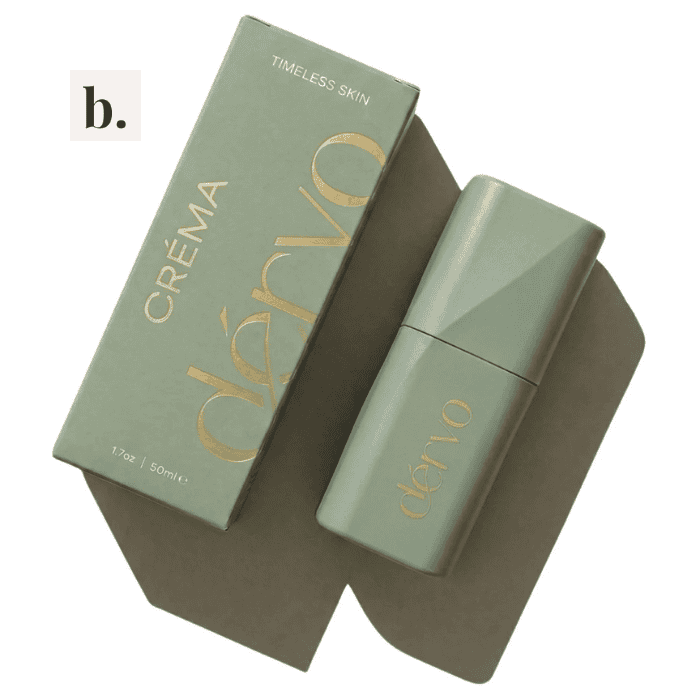
Dérvo
Dérvo Créma Face Moisturizer
If you want a rich facial moisturizer, Dérvo Créma combines humectants, plant-derived emollients and several hyaluronic-acid forms for hydration. Its peptide and botanical ingredients make a treatment-oriented formula, but published marketing claims…
Read the BeautyBrief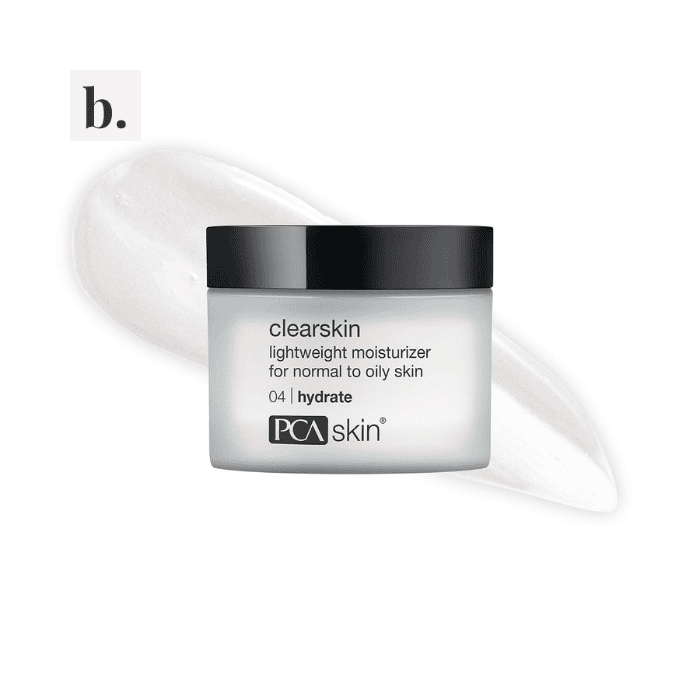
PCA SKIN
PCA SKIN Clearskin
If your skin is oily or breakout-prone and you want a light moisturizer, Clearskin offers a useful Premium formula with disclosed 4% niacinamide. Its post-breakout tone benefits are plausible rather than proven…
Read the BeautyBrief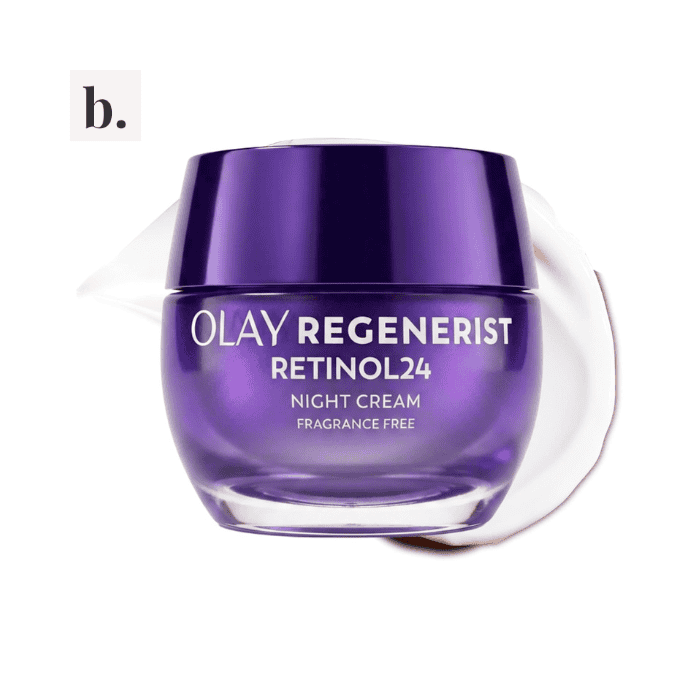
Olay
Olay Regenerist Retinol24 Night Moisturizer
If your skin tolerates retinoids, Olay Retinol24 offers a convenient fragrance-free night moisturizer with two vitamin A derivatives. Its Mid-Range value depends on routine simplicity rather than known retinol strength.
Read the BeautyBrief