
Beta-Glucan in Skincare
Beta-glucan is a family of skin-conditioning ingredients with some human support for hydration and comfort. Source, form, and the complete formula matter more than a large beta-glucan percentage or broad repair claim.
- Aliases
- Beta Glucan, β-Glucan, Beta-D-Glucan, β-D-Glucan
- Ingredient category
- Conditioning Agent, Humectant
- Most relevant for
- Dryness
- Evidence strength
- Some Support for Improving skin hydration and comfort with specific topical beta-glucan formulas
- Formula matters
- Source, molecular structure, modification, concentration, vehicle, and the rest of the moisturizing formula all matter; evidence for one oat, yeast, mushroom, or modified beta-glucan should not be applied automatically to another.
- Separate product needed?
- Usually No. Most routines do not need a separate beta-glucan serum; one makes sense only when it adds useful hydration or comfort beyond your current moisturizer.
BB takeaway
Beta-glucan is a useful supporting hydration ingredient, but it is not one standardized active. Choose the complete formula rather than paying more for large percentages, collagen claims, or vague repair marketing.
Ingredient evidence does not prove the performance of every finished product containing it.
What is beta-glucan?
Beta-glucan is a family of large carbohydrate molecules found in sources such as oats, barley, yeast, mushrooms, bacteria, and algae.[1]
That source matters. “Beta-glucan” does not describe one standardized cosmetic active. Oat beta-glucan, yeast beta-glucan, mushroom beta-glucan, and chemically modified forms can differ in structure, molecular weight, solubility, and biological behavior.[2]
Hydrolyzed Beta-Glucan, Sodium Carboxymethyl Beta-Glucan, Beta-Glucan Palmitate, and other modified forms are distinct cosmetic ingredients rather than aliases for ordinary Beta-Glucan.
What does beta-glucan do for skin?
Beta-glucan is mainly useful as a supporting hydration and skin-conditioning ingredient.
In a well-formulated leave-on product, specific beta-glucans can help skin feel less tight, softer, and more comfortable. That makes the ingredient most relevant to dry or dehydrated skin.
Some forms also have early or formula-specific evidence around soothing, barrier recovery, and visible fine lines. Those findings should not be turned into a class-wide promise that every beta-glucan serum repairs the barrier, treats eczema, or rebuilds collagen.
The rest of the moisturizing formula still matters. Glycerin, hyaluronic acid, emollients, and occlusives may contribute as much as or more than beta-glucan to how comfortable skin feels.
What the evidence says about beta-glucan skincare
Human evidence supports a hydration and comfort role, but the evidence is still limited and highly dependent on the exact beta-glucan material.
A 2025 review concluded that beta-glucan activity varies with source, molecular structure, molecular characteristics, and processing.[2] That is the most important shopper limitation: evidence for one oat, yeast, mushroom, or modified beta-glucan should not automatically be applied to another.
A brief published abstract reports improvements in fine-line and roughness measurements in 27 people using an oat beta-glucan preparation for eight weeks.[3] The study was small and linked to ingredient suppliers, so it supports that specific oat material more than a general anti-wrinkle claim for beta-glucan skincare.
A mushroom-derived beta-glucan cream has also been studied as supportive care in atopic dermatitis. In an open split-body study, 105 people were enrolled and 80 completed treatment; the beta-glucan cream was associated with improvement in itch and eczema-severity measures.[4] The study tested a proprietary mushroom-derived cream in a disease context, not an ordinary beauty serum.
More recent laboratory research on carboxymethyl beta-glucan reported effects on inflammatory signaling, barrier-related proteins, collagen-I, and wound repair in cell and reconstructed-skin models.[5] That is interesting mechanistic evidence, not proof that ordinary Beta-Glucan skincare rebuilds collagen or repairs damaged skin in people.
For your routine, hydration and comfort are the most defensible expectations. Stronger wrinkle, wound-healing, eczema, immune, and collagen claims require evidence on the exact material and finished formula.
How beta-glucan form and formulation affect results
Source and form matter more than the word “beta-glucan” on the front label.
If a brand highlights beta-glucan, useful questions are: Where does it come from? Is it ordinary Beta-Glucan or a modified form? Is the percentage referring to pure beta-glucan or to a supplier blend? Was the finished product tested for the claimed benefit?
A “5% beta-glucan complex” may mean 5% of a premixed ingredient solution rather than 5% pure beta-glucan. Without a clear explanation, large percentage claims are poor tools for comparing products.
The same applies to comparisons with hyaluronic acid. There is no strong evidence that beta-glucan is universally “better” or “more hydrating.” Either can work well; the more useful question is whether the complete formula keeps your skin comfortable.
Beta-glucan is also not the same as colloidal oatmeal. Colloidal oatmeal contains multiple oat components, so its evidence and OTC skin-protectant status should not be transferred to isolated beta-glucan.
Who may benefit from beta-glucan skincare?
Beta-glucan is most relevant when your skin feels dry, dehydrated, tight, or easily uncomfortable.
It can work well in lightweight hydrating formulas for oily or acne-prone skin, or as part of a moisturizer used alongside drying treatments.
If your skin is very dry, a cream that combines beta-glucan with humectants, emollients, and occlusives is usually more useful than a watery beta-glucan serum by itself.
If you have eczema or another diagnosed skin condition, do not choose treatment based on the beta-glucan label. Some specific formulas have supportive data, but that does not turn the ingredient family into a proven treatment category.
If your current moisturizer already keeps your skin comfortable, you do not need beta-glucan specifically.
Beta-glucan side effects and irritation risk
Beta-glucan has a reassuring cosmetic safety record. The Expert Panel for Cosmetic Ingredient Safety concluded that Beta-Glucan and related microbial polysaccharide gums in its assessment are safe under the cosmetic practices of use and concentrations reviewed.[6]
That does not guarantee that every beta-glucan product will suit your skin. Fragrance, essential oils, preservatives, acids, retinoids, or other ingredients in the complete formula can still cause stinging, itching, redness, or rash.
If you have a serious oat, barley, yeast, or mushroom allergy, ask the manufacturer what source it uses rather than assuming from the front label.
Stop using the product if you develop persistent burning, swelling, hives, blistering, or worsening redness.
How to use beta-glucan in your skincare routine
Use it according to the product type. A beta-glucan serum or essence generally goes before moisturizer. A cream containing beta-glucan can simply be your moisturizer.
There is no special beta-glucan schedule. Use the finished product as often as it remains comfortable and useful.
If your skin still feels dry after a beta-glucan serum, follow with a more complete moisturizer rather than adding more serum.
During the day, finish with broad-spectrum sunscreen. Beta-glucan does not replace UV protection.
How long does beta-glucan take to work?
Hydration and comfort can improve quickly when the finished formula suits your skin.
Do not expect an immediate change in true wrinkles, redness, eczema, or barrier damage. Studies reporting those kinds of changes used specific materials and formulas over days or weeks.
For everyday skincare, the practical test is whether regular use leaves your skin more comfortable, less tight, and smoother. If it does not, the beta-glucan label is not a reason to keep the product.
What can you use with beta-glucan?
Beta-glucan fits easily into most routines.
It can be used with glycerin, hyaluronic acid, ceramides, panthenol, niacinamide, vitamin C, retinoids, exfoliating acids, and benzoyl peroxide when the overall routine remains comfortable.
There is no standard ingredient conflict that requires beta-glucan to be separated from those actives.
It also cannot rescue an overly aggressive routine. If another product is leaving your skin persistently burning or peeling, reduce the irritating product rather than layering on more soothing products to compensate.
How to choose a beta-glucan product
Start with the product’s main job, not the beta-glucan claim.
If you need lightweight hydration, a serum or essence can work. If you have dry skin, a moisturizer that combines beta-glucan with other humectants, emollients, and occlusives is usually the better buy.
When beta-glucan is a major selling point, a clearly identified source and finished-product testing are more useful than “advanced beta-glucan complex” or a large unexplained percentage.
Be cautious with claims such as “deep repair,” “boosts immunity,” “rebuilds collagen,” “treats eczema,” “protects from UV,” or “hydrates better than hyaluronic acid.” Those claims go beyond what shoppers can assume from seeing Beta-Glucan on an ingredient list.
Beta-glucan alone does not justify Premium pricing. A higher price should be earned by the complete formula, texture, tolerability, packaging, or credible finished-product testing.
Do you need a separate beta-glucan serum?
Usually, no.
A separate serum can make sense if you specifically want lightweight hydration and your current moisturizer is not enough.
Otherwise, beta-glucan is easiest to justify inside a moisturizer, toner, or serum you already need for another reason.
If dry skin is your main concern, spending the same money on a better moisturizer will often give you more useful and longer-lasting results.
The BB Perspective
Beta-glucan is worth having in a good formula. It is not worth chasing.
There is some human support for hydration, comfort, and other benefits from specific beta-glucan preparations, but the ingredient family is too varied to treat every source and form as interchangeable.
Choose the formula for how well it hydrates, how comfortable it feels, and whether the price makes sense. Beta-glucan is a useful supporting detail—not a routine requirement or a reason to pay more.
Last reviewed: August 2026
Sources
COSMILE identifies Beta-Glucan as a polysaccharide made from glucose and lists skin-conditioning and bulking functions. Function labels explain why an ingredient may be used in cosmetics; they do not prove hydration, soothing, or anti-aging outcomes from a finished formula. COSMILE Europe is operated by Cosmetics Europe. Return to citation.
Feng X, Shang J, Wang Y, Chen Y, Liu Y. Exploring the Properties and Application Potential of β-Glucan in Skin Care. Food Science & Nutrition. 2025;13(4):e70212. doi:10.1002/fsn3.70212.
This review covers beta-glucans from different sources and explains that biological activity depends on source, structure, molecular characteristics, and processing. It combines laboratory, topical, oral, wound-care, and dermatology evidence, so not every reported effect applies to ordinary cosmetic use. All authors were affiliated with Beijing UPROVEN Medical Technology, with two also affiliated with the Beijing UPROVEN Institute of Dermatology. Return to citation.
Pillai R, Redmond M, Röding J. Anti-Wrinkle Therapy: Significant New Findings in the Non-Invasive Cosmetic Treatment of Skin Wrinkles with Beta-Glucan. International Journal of Cosmetic Science. 2005;27(5):292.
This one-page published abstract reports a clinical study of 27 people using oat beta-glucan for eight weeks and reductions in wrinkle depth, height, and roughness. Full trial methods and funding information are not provided in the abstract. The study was small, and the authors were affiliated with Symrise and Ceapro, companies connected with the tested material. It supports one oat beta-glucan preparation rather than a class-wide wrinkle claim. Return to citation.
Jesenak M, Urbancek S, Majtan J, Banovcin P, Hercogova J. β-Glucan-based cream containing pleuran isolated from Pleurotus ostreatus in supportive treatment of mild-to-moderate atopic dermatitis. Journal of Dermatological Treatment. 2016;27(4):351-354. doi:10.3109/09546634.2015.1117565.
This multicenter open split-body study enrolled 105 people with atopic dermatitis, with 80 completing it. The proprietary mushroom-derived beta-glucan cream was associated with improvement in itch and eczema-severity measures. The study was open-label and evaluated a complete treatment cream in a disease context, so it does not establish ordinary Beta-Glucan cosmetics as eczema treatment. Return to citation.
Pichon C, Marat X, Brule A, Black A, Gueniche A. The harnessing potential of carboxymethyl beta glucan: A driver of skin repair. International Journal of Cosmetic Science. Published online June 22, 2026. doi:10.1111/ics.70111.
This 2026 study tested carboxymethyl beta-glucan in cultured cells and reconstructed human-skin models and reported changes related to inflammation, barrier proteins, collagen-I, and wound repair. It did not test visible cosmetic outcomes in people, and carboxymethyl beta-glucan is not interchangeable with ordinary Beta-Glucan. All authors were affiliated with L’Oréal Research & Innovation or Lancôme. Return to citation.
Fiume MM, Heldreth B, Bergfeld WF, et al. Safety Assessment of Microbial Polysaccharide Gums as Used in Cosmetics. International Journal of Toxicology. 2016;35(Suppl 1):5S-49S. doi:10.1177/1091581816651606.
The Expert Panel for Cosmetic Ingredient Safety assessed Beta-Glucan among microbial polysaccharide gums and concluded that the group was safe in cosmetics under the practices of use and concentrations described. CIR’s December 2025 Quick Reference Table continued to list Beta-Glucan as safe under this assessment. This source supports safety and cosmetic-use context rather than finished-product effectiveness. CIR is financially supported by the Personal Care Products Council. Return to citation.
Products featuring Beta-Glucan
These evaluated products list Beta-Glucan among the Key Ingredients that meaningfully shape the formula. Inclusion here reflects ingredient relevance, not an endorsement or rating.
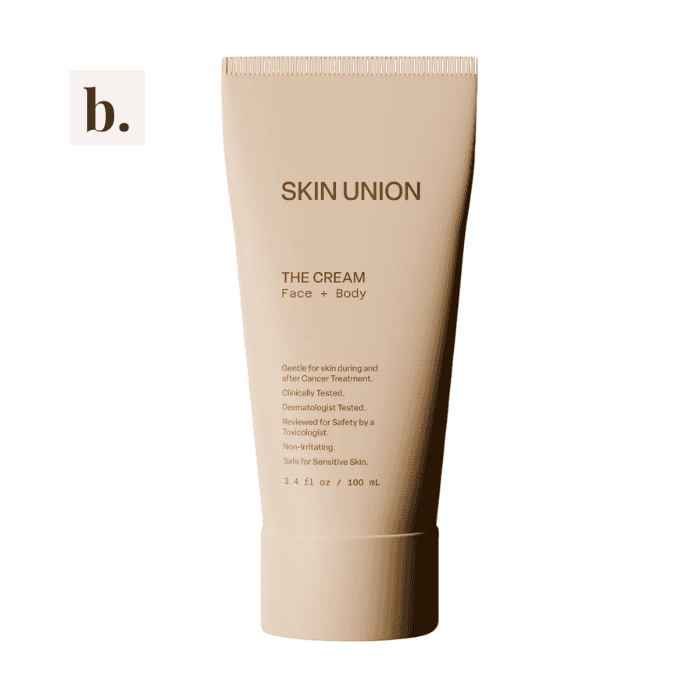
Skin Union
The Cream
If your face or body needs moisture without fragrance, The Cream combines plant oils, oat beta-glucan and a ceramide. Its value rests on that moisturizing system, while sensitive-skin clinical outcomes remain unreported.
Read the BeautyBrief
Mary Kay
Special-Edition Mary Kay Collagen Moisturizing Gel
If you want a lightweight jelly moisturizer, Mary Kay Collagen Moisturizing Gel has a credible hydrating formula with niacinamide and squalane. Its collagen does not establish dermal collagen rebuilding, and animal-derived ingredients…
Read the BeautyBrief
Obagi
ELASTIDERM® Lift Up & Sculpt Facial Moisturizer
If you want moisturizing comfort with a firming-focused formula, ELASTIDERM offers brand-reported improvements in fine lines and crepiness. Its Premium price makes more sense when you value the texture and visible appearance…
Read the BeautyBrief
The Ordinary
Natural Moisturizing Factors + Beta Glucan
If you prefer a non-greasy gel, this Budget moisturizer offers a practical mix of humectants for oily, combination or normal skin. If your skin is very dry, a cream is a better…
Read the BeautyBrief
Peach & Lily
Glass Skin Water-Gel Moisturizer
If you prefer light oil-free hydration, Glass Skin Water-Gel offers a practical Mid-Range fit for combination or oily skin. If you need a richer sealing layer, another moisturizer will suit you better.
Read the BeautyBrief
Beauty of Joseon
Red Bean Water Gel
If your oily or combination skin prefers a light gel, Red Bean Water Gel offers useful Budget hydration without a rich finish. If persistent dryness, acne treatment or measurable firming is your…
Read the BeautyBrief