

Does Melatonin Skincare Actually Help Skin Aging, or Is the Evidence Still Too Limited?
At a glance
Melatonin has a familiar reputation as a sleep hormone, but skincare brands are now promoting it for everything from overnight recovery to visible aging. The research is more interesting than a typical trend ingredient—and more complicated. Some human studies show measurable changes, while others cannot isolate melatonin from the rest of the cream. Here’s what matters before you pay for the name.
Melatonin is best known as a hormone involved in sleep and circadian rhythm. Skin has its own melatonin-related biology too: human skin can produce and metabolize melatonin and related compounds, and researchers have identified antioxidant, mitochondrial, receptor-mediated, and other signaling roles within skin.[1]
That makes melatonin a legitimate ingredient to study. It does not make every “night recovery” cream, antioxidant serum, or melatonin lotion a proven anti-aging treatment.
For your buying decision, the useful question is narrower: does the melatonin in a finished product add enough benefit beyond the rest of the formula to change what you should buy?
In this Briefing
- What melatonin may do in skin
- What the human evidence shows
- What the anti-aging studies can and cannot prove
- Where the strongest direct human evidence sits
- Can topical melatonin be absorbed systemically?
- Does the melatonin percentage matter?
- How to evaluate melatonin skincare
- Is melatonin worth seeking out?
What may melatonin do in skin?
Current reviews describe a functional cutaneous melatonin system. Skin cells can synthesize and metabolize melatonin, and melatonin and its metabolites can participate in antioxidant defense, mitochondrial regulation, inflammatory signaling, and responses to environmental stress.[1]
A 2026 review of topical melatonin in aesthetic dermatology describes potential relevance to photoprotection, barrier function, hydration, elasticity, photoaging, pigmentation, hair biology, and other applications. The authors also emphasize that the strength of evidence varies substantially by use and that several applications remain investigational.[2]
This is the first distinction to keep clear:
Biological plausibility is not the same as finished-product proof.
A molecule can have antioxidant effects in cells or skin models without every cream containing that molecule producing a visible benefit. Concentration, vehicle, delivery system, stability, packaging, dose, supporting ingredients, and frequency of use all affect what reaches the skin and what the finished product actually does.
What does the human evidence show?
There are human studies of topical melatonin, so this is not a purely theoretical ingredient.
A 2024 review focused on clinical studies concluded that topical melatonin has human evidence across photoprotection, skin-aging, and hair applications. But the quality of that evidence is uneven. The facial anti-aging literature is limited by small samples, open-label designs, multi-ingredient formulas, and a lack of matched melatonin-free controls.[3]
The newer 2026 aesthetic-dermatology review reaches a similar overall conclusion: topical melatonin is promising, but much of the field still relies on early clinical work, variable vehicles and concentrations, and extrapolation from laboratory or ex vivo research. The review identifies photoprotection as one of the better-supported areas and calls for more randomized controlled trials using standardized formulations and meaningful comparators.[2]
That means it is more accurate to say melatonin has emerging topical evidence than to say “melatonin skincare is clinically proven.”
What do the anti-aging studies actually prove?
A 22-person split-face regimen
In a 2018 randomized split-face, assessor-blinded proof-of-concept study, 22 women with moderate to severe signs of facial aging used melatonin-based day and night creams on one side of the face for three months while the other side remained untreated. Researchers reported improvements in dryness, surface texture, tonicity, and crow’s-feet appearance on the treated side.[4]
The design is better than a simple before-and-after photo series because each participant had an untreated comparison side.
It still does not isolate melatonin.
The treated side received two complete creams, including a daytime SPF 30 product, while the comparison side received no matched vehicle. The study therefore shows that the melatonin-containing regimen performed better than leaving the other side untreated. It does not show how much of the difference came from melatonin versus moisturization, sunscreen, the delivery system, or the rest of the formulas.
The trial was supported by Difa Cooper/Cantabria Labs, and one author was an employee of the company.[4]
A 15-person 0.1% melatonin cream study
Another 2018 pilot study followed 15 women older than 45 who used a cream containing 0.1% melatonin for two months. Investigators reported improvements from baseline in coarse wrinkles, fine wrinkles, and measured melanin.[5]
The limitation is straightforward: there was no placebo, vehicle, untreated comparison, or randomization. Everyone used the same complete cream and was compared with their own baseline.
That makes the result useful as an early finished-product signal. It cannot tell you that 0.1% melatonin caused the improvement or that 0.1% should become a shopper target.
A multi-ingredient night cream
A 2020 publication evaluated a night cream containing melatonin along with carnosine, niacinamide, hyaluronic acid, peptides, and other ingredients. Four open-label clinical studies involving 117 people reported improvements in hydration, transepidermal water loss, wrinkles, pigmentation-related measurements, and skin reactivity.[6]
Again, that is evidence for the finished night cream, not evidence that melatonin was the ingredient responsible.
The authors themselves noted the absence of control groups and treatment blinding. The studies were funded by ISDIN, the manufacturer, and three authors were employees while another was a paid consultant.[6]
This is why a brand cannot simply point to a positive multi-ingredient cream study and conclude that you should seek melatonin specifically.
Where is the clearest direct human evidence?
Some of the cleanest human evidence for topical melatonin comes from short-term controlled ultraviolet-exposure studies rather than consumer wrinkle creams.
In a randomized double-blind study, 20 healthy volunteers had small areas on the lower back exposed to controlled UVA and UVB. Melatonin gel applied 15 minutes before irradiation substantially reduced the erythema measured afterward, while application after irradiation did not produce the same protective effect.[7]
An earlier dose-response study in 20 volunteers also found greater suppression of UV-induced redness with higher tested concentrations of topical melatonin, with the strongest result at 0.5% in that experimental gel system.[8]
These studies matter because melatonin itself was being tested in a defined vehicle under controlled exposure.
They do not turn melatonin into sunscreen.
The studies measured short-term UV-induced redness on small test areas. They did not establish a labeled SPF, broad-spectrum protection, water resistance, or the real-world performance required of a sunscreen.
A melatonin serum without a Drug Facts sunscreen label is skincare. It does not replace broad-spectrum sunscreen.
Can topical melatonin be absorbed systemically?
Yes—at least under some product and application conditions.
A 2024 randomized, double-blind crossover trial tested a commercial “sleep lotion” against placebo lotion. Laboratory analysis found the active body lotion contained about 0.24% melatonin. Among participants with complete sampling, salivary melatonin rose dramatically after application—up to roughly 1,000-fold compared with placebo at some measured time points.[9]
Overall sleep quality was not significantly better with the active lotion across the full study group, although a subgroup of participants classified as poor sleepers reported improvement.[9]
This is important shopper context, but it should not be overgeneralized.
The study tested a sleep-oriented body lotion applied over a much larger surface area than a typical facial serum. It does not show that an ordinary face cream will meaningfully raise systemic melatonin or make you sleepy.
What it does show is that topical melatonin is not always confined to the skin and that concentration, dose, product format, and application area matter.
If a product is intentionally marketed for sleep or uses melatonin over large areas of the body, treat that as a different use case from a small amount of facial skincare.
Does the melatonin percentage matter?
It matters to formulation. It is not yet a useful universal shopping target.
Anti-aging studies have used 0.1% melatonin in specific creams. UV-erythema experiments have tested several concentrations, including 0.05%, 0.1%, and 0.5%. The sleep-lotion study found about 0.24% in the commercial lotion.[5][8][9]
Those numbers cannot be ranked as though they belong to the same product type or clinical goal.
A higher concentration may alter delivery, irritation, systemic exposure, or formulation requirements. A lower concentration in a delivery system may behave differently from the same percentage in another base.
No current clinical evidence establishes one ideal facial-skincare concentration for wrinkles, pigmentation, hydration, or barrier support.[2]
So do not pay more because the front label advertises 0.1%, 0.5%, or a proprietary “melatonin complex” unless the brand explains what the number represents and has relevant finished-product evidence.
How should you evaluate a melatonin cream or serum?
Mentally remove the word melatonin from the front of the package.
Then ask whether the product still makes sense.
- Start with the complete formula. Does the moisturizer or serum suit your skin and the concern you actually want to address?
- Look at the supporting ingredients. Niacinamide, hyaluronic acid, carnosine, peptides, vitamin C, retinoids, humectants, and emollients may be doing much of the visible work.
- Prefer finished-product testing. Evidence on the exact product is more useful than a mechanistic paper on melatonin.
- Look for a meaningful control. The strongest melatonin-specific evidence would compare the finished product with an otherwise matched formula that does not contain melatonin.
- Check the study design. A small open-label study is weaker than a randomized controlled trial.
- Check company involvement. Industry funding does not invalidate a study, but it belongs in the evidence picture.
- Do not overvalue concentration. There is no proven facial-skincare percentage you need to seek.
- Price the uncertainty. A large premium deserves stronger evidence that melatonin itself adds value.
A good moisturizer containing melatonin can still be worth buying when the melatonin-specific evidence is incomplete. The complete product simply needs to earn the price without requiring the trend ingredient to carry the whole case.
Is melatonin skincare worth seeking out?
Not specifically.
Melatonin has more substance behind it than a purely invented marketing ingredient. Human skin has relevant melatonin biology, controlled UV studies show that topical melatonin can produce a measurable effect under defined conditions, and small anti-aging studies provide enough signal to justify continued research.[1][7]
What the evidence does not show is that adding melatonin reliably makes an ordinary serum or cream better than a well-formulated product without it.
If visible photoaging is your priority, broad-spectrum sunscreen has a clearer preventive role,[10] and prescription tretinoin has a much larger body of controlled human evidence for treating photodamaged facial skin. A 2025 systematic review and meta-analysis included eight randomized trials with 1,361 participants and found significant improvement in both fine and coarse wrinkles with topical tretinoin compared with vehicle.[11]
That comparison does not mean everyone needs tretinoin or that melatonin has no value. It helps put the evidence hierarchy in perspective.
Choose a melatonin product when the complete formula fits your skin, the evidence matches the claim, and the price makes sense. Do not reorganize an effective routine—or pay a major premium—just to add melatonin.
The BB Perspective
You can treat melatonin as a credible emerging skincare ingredient, but you do not need to consider it a skincare must-have.
The strongest case is biological plausibility plus small human photoprotection studies. The anti-aging case is harder to isolate because the best-known creams pair melatonin with sunscreen, moisturizers, niacinamide, peptides, carnosine, hyaluronic acid, or proprietary delivery systems and often lack matched melatonin-free controls.
Treat melatonin as a potentially useful supporting ingredient rather than the reason to buy the product. If a cream is well formulated, comfortable, appropriately priced, and supported by finished-product testing, melatonin can be a bonus. If the entire premium rests on “overnight recovery,” “skin longevity,” or the novelty of melatonin itself, the evidence is not strong enough to justify assuming you are getting a better product.
Buy the formula. Let melatonin earn extra credit only when the product can show that it adds something meaningful.
Last reviewed: October 2026
Sources
Slominski AT, Kim TK, Janjetovic Z, et al. Melatonin and the Skin: Current Progress and Perspectives for Human Health. Journal of Investigative Dermatology. 2025;145(6):1345-1360.e2. PMID: 39918482.
This comprehensive review describes the human cutaneous melatoninergic system, including local melatonin production and metabolism, receptor-dependent and independent signaling, antioxidant activity, and mitochondrial effects. It supports the biological plausibility of topical melatonin but is not evidence that any specific consumer serum improves visible aging. Return to citation.
Kömürcügil Yiğit İ, Türsen Ü, Kroumpouzos G. Topical Melatonin in Esthetic Dermatology: From Cutaneous Melatoninergic Biology to Photoprotection, and Skin Rejuvenation. Clinics in Dermatology. Published online July 2026. PMID: 42435888.
This 2026 review describes topical melatonin as promising for photoprotection, barrier support, hydration, skin aging, and several emerging aesthetic uses while emphasizing heterogeneous evidence, small clinical studies, variable concentrations and vehicles, and limited controlled data for many indications. The authors reported no financial support and no potential conflicts of interest. BB uses it to distinguish stronger photoprotection evidence from less established rejuvenation and pigmentation claims. Return to citation.
Greco G, Di Lorenzo R, Ricci L, et al. Clinical Studies Using Topical Melatonin. International Journal of Molecular Sciences. 2024;25(10):5167. PMID: 38791203.
This review maps human clinical studies of topical melatonin across photoprotection, skin-aging, and hair applications. It highlights important limitations in the cosmetic-aging literature, including small studies, combination formulas, and designs that often cannot isolate melatonin from the rest of the treatment. BB uses this source for evidence hierarchy rather than as proof that melatonin skincare is effective as a category. Return to citation.
Milani M, Sparavigna A. Antiaging Efficacy of Melatonin-Based Day and Night Creams: A Randomized, Split-Face, Assessor-Blinded Proof-of-Concept Trial. Clinical, Cosmetic and Investigational Dermatology. 2018;11:51-57. PMID: 29416368.
This three-month study enrolled 22 women with moderate to severe signs of facial aging. A melatonin-containing day cream and night cream were used on one side of the face while the other side was untreated, and the treated side improved on several hydration, texture, tonicity, and wrinkle measures. Because the comparison side did not receive matched melatonin-free products and the day product included SPF 30, the study supports the complete regimen more clearly than melatonin itself. Difa Cooper supported the trial, and one author was a Cantabria Labs/Difa Cooper employee. Return to citation.
Milani M, Puviani M. Anti-Aging Efficacy of Melatonin-Based Cream: Clinical and Instrumental Skin Evaluation. Cosmetics. 2018;5(4):60.
This pilot study followed 15 women older than 45 using a cream containing 0.1% melatonin for two months and reported improvements from baseline in wrinkle and melanin measurements. The study had no placebo, matched vehicle, untreated comparison, or randomization, so it cannot isolate melatonin from the complete cream or delivery system. One author was affiliated with Cantabria Labs Difa Cooper. Return to citation.
Granger C, Brown A, Aladren S, Narda M. Night Cream Containing Melatonin, Carnosine and Helichrysum italicum Extract Helps Reduce Skin Reactivity and Signs of Photodamage: Ex Vivo and Clinical Studies. Dermatology and Therapy. 2020;10:1315-1329. PMID: 32915393.
Four open-label clinical studies involving 117 participants evaluated a multi-ingredient night cream and reported improvements in hydration, transepidermal water loss, wrinkle counts, pigmentation-related measures, and skin reactivity. The authors acknowledged the absence of control groups and treatment blinding. ISDIN funded the studies; three authors were employees and one was a paid consultant. BB treats the publication as evidence for the finished cream, not proof that melatonin independently produced the observed changes. Return to citation.
Bangha E, Elsner P, Kistler GS. Suppression of UV-Induced Erythema by Topical Treatment With Melatonin: Influence of the Application Time Point. Dermatology. 1997;195(3):248-252. PMID: 9407172.
In this randomized double-blind study, small areas on the lower backs of 20 volunteers were treated with melatonin gel before or after controlled UVA/UVB exposure. Application 15 minutes before irradiation substantially suppressed measured erythema, while application after exposure did not show the same protective effect. The experiment demonstrates a direct topical biological effect under controlled conditions but does not establish sunscreen-level protection or long-term anti-aging benefit. Return to citation.
Bangha E, Elsner P, Kistler GS. Suppression of UV-Induced Erythema by Topical Treatment With Melatonin (N-Acetyl-5-Methoxytryptamine): A Dose Response Study. Archives of Dermatological Research. 1996;288(9):522-526. doi:10.1007/BF02505248. PMID: 8874746.
Twenty healthy volunteers received topical melatonin at 0.05%, 0.1%, or 0.5% in a nanocolloid gel on small areas exposed to controlled UVB. The study reported a dose-response relationship, with the strongest tested concentration producing the greatest erythema suppression. This supports a concentration effect in that experimental vehicle and exposure model; it does not establish an ideal concentration for daily facial skincare. Return to citation.
Ponce C, Razon AD, Chao J, et al. Impact of an Over-the-Counter “Sleep Lotion” on Human Salivary Melatonin Levels and Sleep Quality: A Randomized Controlled Trial. Neuroendocrinology Letters. 2024;45(3):167-172. PMID: 39146562.
This randomized, double-blind crossover study compared a commercial body lotion with placebo. Laboratory testing found approximately 0.24% melatonin in the active lotion, and salivary melatonin rose dramatically after application in participants with complete sampling. Overall sleep quality was not significantly different across the full group, although a poor-sleeper subgroup reported benefit. The study concerns a sleep-oriented body lotion and large-area application; it should not be used to predict systemic exposure from ordinary facial skincare. Return to citation.
American Academy of Dermatology Association. Sunscreen FAQs. Accessed September 2026.
AAD recommends broad-spectrum, water-resistant sunscreen with SPF 30 or higher and states that sunscreen helps prevent premature skin aging caused by unprotected UV exposure. BB uses this source to place melatonin’s emerging photoprotection evidence behind established daily sun protection in the buying hierarchy. Return to citation.
Huang HY, Lee LTJ. Tretinoin for Photodamaged Facial Skin: Systematic Review and Meta-Analysis of Randomized Controlled Trials. Dermatology Practical & Conceptual. 2025;15(4):e20255172. PMID: 41236273.
This systematic review and meta-analysis included eight randomized trials with 1,361 participants and found significant improvement in fine and coarse facial wrinkles with topical tretinoin compared with vehicle. BB uses it only to put melatonin’s smaller anti-aging evidence base in context; it does not imply that prescription tretinoin is appropriate for every shopper. Return to citation.
Related product BeautyBriefs
These BeautyBriefs cover products relevant to the needs discussed in this Beauty Briefing. Inclusion here reflects topic relevance, not a rating or endorsement.

Allies of Skin
Allies of Skin The Lab Drop 10/10/10 Multi GF Exo Advanced Recovery Ampoules
If you are considering Allies of Skin Lab Drop 10/10/10 Ampoules for visible aging, its growth-factor and exosome-themed complexes make an ambitious treatment story. The brand's reported improvements do not establish biological…
Read the BeautyBrief
Schaf
Schaf Moisturizer 3.0
If you prefer a fragrance-free cream, Schaf Moisturizer 3.0 offers rich emollience alongside niacinamide and bakuchiol. Its Premium value rests on how the texture and ingredient blend suit you, not established retinoid-level…
Read the BeautyBrief
Oak Essentials
Oak Essentials Antioxidant Hand Serum
If your hands look dry, Oak Essentials Hand Serum offers humectants and emollients for softness. Its Premium value depends on the scented finish, not unproven cellular regeneration.
Read the BeautyBrief
Neutrogena
Neutrogena Rapid Wrinkle Repair Retinol Regenerating Cream
If your skin tolerates retinol and fragrance, Rapid Wrinkle Repair offers a moisturizing format for gradual fine-line care. Its Mid-Range value rests on texture and convenience rather than a disclosed retinol concentration.
Read the BeautyBrief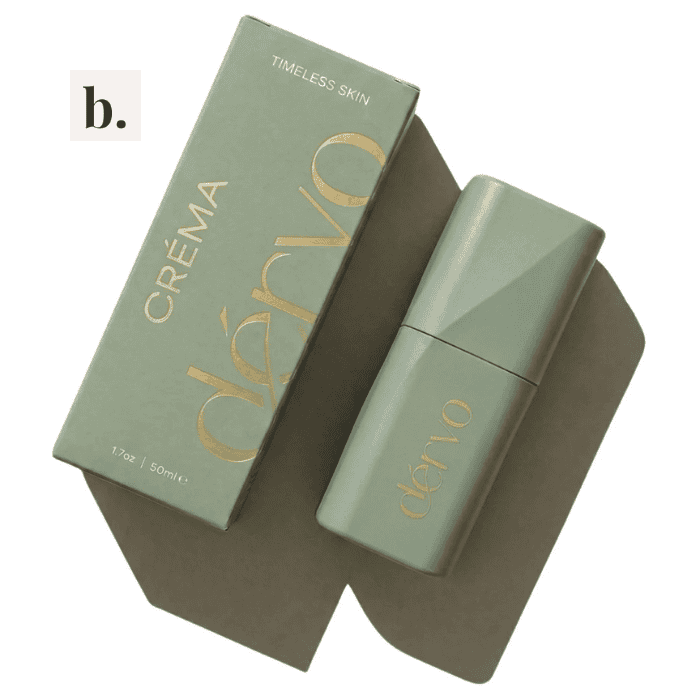
Dérvo
Dérvo Créma Face Moisturizer
If you want a rich facial moisturizer, Dérvo Créma combines humectants, plant-derived emollients and several hyaluronic-acid forms for hydration. Its peptide and botanical ingredients make a treatment-oriented formula, but published marketing claims…
Read the BeautyBrief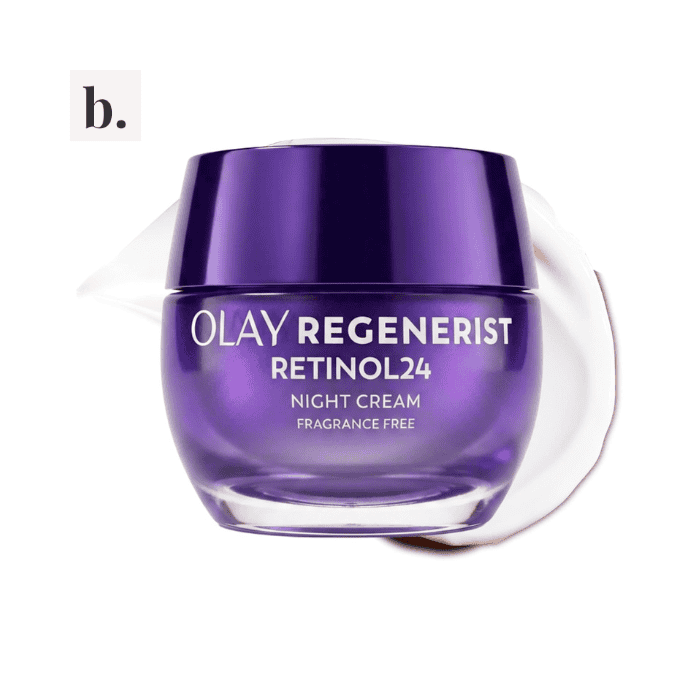
Olay
Olay Regenerist Retinol24 Night Moisturizer
If your skin tolerates retinoids, Olay Retinol24 offers a convenient fragrance-free night moisturizer with two vitamin A derivatives. Its Mid-Range value depends on routine simplicity rather than known retinol strength.
Read the BeautyBrief