

CeraVe Hydrating Facial Cleanser Review
BeautyBrief™
Brand
CeraVe
Product
Hydrating Facial Cleanser
Claims check
The formula supports gentle daily cleansing and a non-stripping finish, while CeraVe does not show how much extra real-world benefit MVE adds after rinsing.
Shopper fit
- Dry
- Normal
- Combination
- Sensitive
- Acne-Prone
Formula flags
- None identified
Shopper preferences
- Non-Comedogenic
Key ingredients
| Glycerin | Helps reduce a tight, dry after-feel. |
|---|---|
| Ceramide NP | Contributes to the cleanser's barrier-focused lipid system. |
| Ceramide AP | Works alongside cholesterol and phytosphingosine in the skin-lipid blend. |
| Ceramide EOP | Completes the three-ceramide system used to support the moisture-barrier positioning. |
| Sodium Hyaluronate | Adds moisture-binding support in the rinse-off formula. |
Price tier
$ Budget
Value check
The Budget tier is easy to justify if you want a creamy low-foam cleanser with glycerin, ceramides, cholesterol, phytosphingosine, and sodium hyaluronate without paying for unnecessary treatment claims.
Where to buy
We may earn a commission through these links at no additional cost to you. This does not affect our BeautyBrief.
Bottom line
If you want a simple low-foam cleanser for normal-to-dry, sensitive, or treatment-stressed skin, this is a strong Budget fit. Its creamy format is comfortable for daily cleansing, but heavy makeup and water-resistant sunscreen may still need a stronger first cleanse.
If your skin is normal-to-dry, sensitive, or already stressed by treatment products, CeraVe Hydrating Facial Cleanser gives you a creamy, low-foam cleanse without the stripped finish you can get from stronger foaming washes. Glycerin, ceramides, cholesterol, phytosphingosine, and sodium hyaluronate support the comfort-focused formula. Its main limitation is removal power: if you wear stubborn long-wear makeup or very water-resistant sunscreen, you may still need a dedicated first cleanse.
What it claims
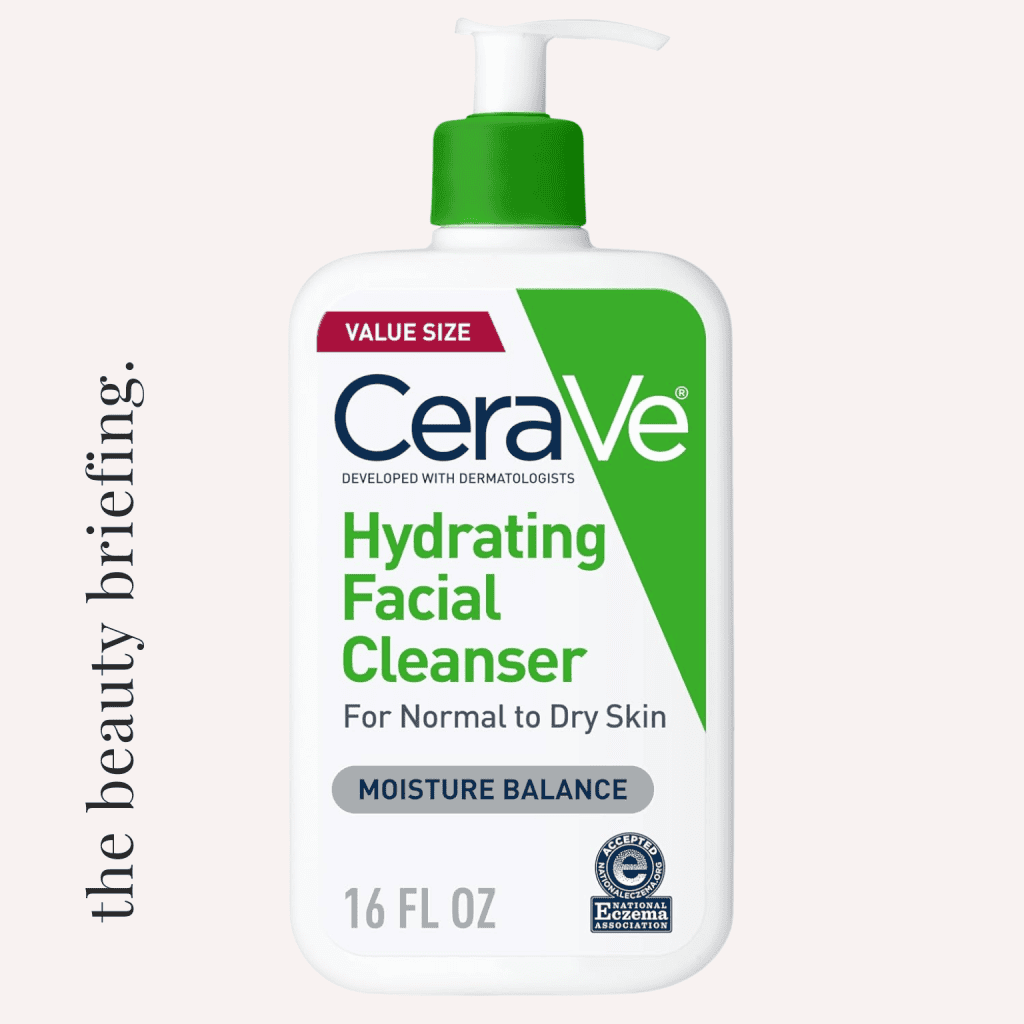
CeraVe says Hydrating Facial Cleanser removes dirt, excess oil, impurities, and makeup without stripping your skin’s natural oils or leaving it tight and dry. The current U.S. product page positions it for normal-to-dry skin, identifies it as non-comedogenic, and highlights ceramides, hyaluronic acid, and MVE Delivery Technology for moisture-barrier support and hydration after cleansing.[1]
Claims vs. formula
The formula aligns well with the gentle-cleansing and comfort claims. Glycerin is the second ingredient, while cetearyl alcohol, stearyl alcohol, glyceryl stearate, and cetyl alcohol help give the cleanser its creamy feel. These fatty alcohols support texture and comfort; they are not the same as volatile drying alcohols.
Ceramides NP, AP, and EOP appear alongside cholesterol and phytosphingosine. That combination fits the barrier-support positioning, although this is still a rinse-off cleanser and not a substitute for a leave-on moisturizer.
Sodium hyaluronate adds moisture-binding support. The bigger practical reason this formula feels gentle is the creamy, low-lather format and the softer after-feel it gives you compared with many foaming washes.
CeraVe also says its MVE Delivery Technology slowly releases ceramides after rinsing. The current product page explains how the technology is intended to work, but it does not show you how much additional real-world benefit the delivery system provides after cleansing.[1]
Ingredients that matter
Glycerin: Helps reduce a tight, dry after-feel.
Ceramide NP: Contributes to the cleanser’s barrier-focused lipid system.
Ceramide AP: Works alongside cholesterol and phytosphingosine in the skin-lipid blend.
Ceramide EOP: Completes the three-ceramide system used to support the moisture-barrier positioning.
Sodium Hyaluronate: Adds moisture-binding support in the rinse-off formula.

Glycerin
Glycerin is a well-supported humectant that helps skin hold water and improve dryness. It is common and effective, so the complete formula matters more than a high percentage.
Read the IngredientBrief
Hyaluronic Acid
Hyaluronic acid is a well-supported humectant for surface hydration. Molecular weight and the complete formula matter more than the number of HA forms advertised.
Read the IngredientBrief
Ceramides
Ceramides are well-supported barrier lipids used mainly in moisturizers for dry and eczema-prone skin. The complete moisturizing system matters more than the number of ceramides listed.
Read the IngredientBrief
Sodium Hyaluronate
Sodium hyaluronate is a well-established humectant and skin-conditioning form of hyaluronic acid used for surface hydration and temporary plumping. Molecular weight and the complete formula matter more than the sodium-hyaluronate…
Read the IngredientBriefWhat to expect in the short term
You can expect a creamy cleanser with very little visible lather. It removes routine oil, sweat, dirt, and light makeup while leaving your skin feeling softer than a standard foaming wash.
If your skin is dry, easily irritated, or already using potentially drying treatments such as retinoids or benzoyl peroxide, the low-foam format helps keep cleansing from becoming another aggressive step in your routine.
If you wear heavy foundation, waterproof mascara, transfer-resistant makeup, or highly water-resistant sunscreen, you may still need a separate first cleanse.
What to expect over time
The long-term value is consistency. You get everyday cleansing without repeatedly asking dry or treatment-stressed skin to recover from an unnecessarily strong wash.
The ceramides, cholesterol, phytosphingosine, glycerin, and sodium hyaluronate add useful support, but most lasting hydration still comes from the leave-on products you apply after cleansing.
The Budget tier fits the formula well if you want a creamy fragrance-free cleanser with ceramides and hyaluronic acid without paying for treatment claims a basic cleanser does not need.
Who it fits
This fits you best if your skin is dry, normal, sensitive, or treatment-stressed and you prefer a creamy cleanser with little foam. Combination skin can also fit when dryness or irritation matters more to you than aggressive oil removal.
If you are acne-prone, you can use it as a supporting cleanser while a separate acne treatment does the treatment work. If your skin is eczema-prone, the current National Eczema Association Seal of Acceptance and the barrier-focused formula make it a practical option to consider.[1]
If your skin is very oily, you strongly prefer visible foam, or you expect one mild cleanser to remove stubborn long-wear makeup and water-resistant sunscreen, a stronger removal format may suit you better.
Compare before you buy

Vanicream Gentle Facial Cleanser makes more sense if you still want noticeable lather and a cleaner-rinsing feel while keeping fragrance out of the formula. CeraVe is the better fit if low foam, a creamier texture, and a ceramide-focused formula matter more to you.
Read the BeautyBrief
Obagi Nu-Derm Gentle Cleanser gives you a more traditional foaming cleanse at a Premium tier, but it also includes fragrance. If your priority is a simple fragrance-free cleanser for dry or treatment-stressed skin, CeraVe stays more directly aligned with that job.
Read the BeautyBriefFinal assessment
If you want a simple low-foam cleanser for normal-to-dry, sensitive, or treatment-stressed skin, CeraVe Hydrating Facial Cleanser does that job well at a Budget tier. Its creamy format and supportive lipid-and-humectant system make daily cleansing easier on dry skin; if you need heavy makeup or water-resistant sunscreen removal, add a stronger first cleanse rather than expecting this formula to do everything.
Where to buy
Choose a retailer to view current pricing and availability.
We may earn a commission through these links at no additional cost to you. This does not affect our BeautyBrief.
Last reviewed: October 2026
Sources
CeraVe. Hydrating Facial Cleanser. Current U.S. product page. Accessed October 1, 2026.
Used as BB’s source of record for current product identity, current official ingredient list, normal-to-dry positioning, cleansing and makeup-removal claims, non-comedogenic status, National Eczema Association Seal of Acceptance, free-of-added-fragrance positioning, barrier-support claims, MVE positioning, use directions, and current Budget-tier price context. Return to citation.


