

SkinCeuticals C E Ferulic 2.0 vs. Original
At a glance
SkinCeuticals updated one of its best-known vitamin C serums after roughly two decades. The familiar vitamin C, vitamin E, and ferulic acid blend remains, but two new ingredients and fresh clinical claims raise a question for loyal users: does the reformulation earn its premium? The answer depends on what SkinCeuticals actually tested—and what it still hasn’t compared.
SkinCeuticals has reformulated C E Ferulic, which creates a practical question if you already use it: is the new formula actually better, or is it simply different?
The answer sits in the middle.
The core antioxidant system remains intact, the 30 mL bottle remains the same size, and SkinCeuticals says the sensory experience remains similar. The company has also added two ingredients and now publishes finished-product clinical claims for the reformulated serum.
If you already like the original, the evidence that matters most is still missing: a direct comparison showing that the new formula produces meaningfully better results than the old one.
One naming note: SkinCeuticals still sells the product under the official name C E Ferulic with 15% L-Ascorbic Acid. This Briefing uses “C E Ferulic 2.0” as shorthand for the reformulated version; it is not a separate product name on the current U.S. product page.[1]
In this Briefing
- What changed in the reformulation
- What stayed the same
- What the new clinical results actually show
- Has SkinCeuticals shown that the new formula is better?
- Will it feel or smell different?
- What carnosine and Endophytol add
- Should you search for the original formula?
- Is the reformulated serum still worth the premium?
- What should you do when your original bottle runs out?
What changed in C E Ferulic?
The reformulated serum still contains 15% L-ascorbic acid, 1% alpha tocopherol, and 0.5% ferulic acid.
SkinCeuticals added:
- 0.3% carnosine, a dipeptide the brand positions for additional antioxidant support;
- 1% Endophytol, a dandelion-root-derived ingredient the brand positions around anti-inflammatory and anti-pollution support.
The current U.S. product page describes the formula as “enhanced” and patent-pending and uses the additions to support broader language around visible skin longevity and environmental stress.[1]
That makes this a meaningful reformulation, but not a reinvention of the product.
What stayed the same?
The most important continuity is the classic antioxidant combination.
The 15% L-ascorbic acid, 1% alpha tocopherol, and 0.5% ferulic acid system has published experimental and human evidence behind it. A 2005 study found that adding ferulic acid improved the stability of the vitamin C and E solution and increased measured photoprotection under solar-simulated irradiation.[2]
A later human study applied the same antioxidant combination and its vehicle to separate areas of skin before controlled solar-simulated UV exposure. The antioxidant-treated areas showed lower UV-related erythema, sunburn-cell formation, and several molecular markers of UV damage compared with vehicle.[3]
Those studies are important because they support the formula architecture that SkinCeuticals chose to preserve.
They do not prove that the 2026 formula is superior to the original. Neither study included carnosine or Endophytol, and neither was designed as an old-versus-new C E Ferulic comparison.
The use pattern also remains familiar. SkinCeuticals directs users to apply four to five drops in the morning to dry skin on the face, neck, and chest, then continue the routine and use sunscreen.[1]
What do the new C E Ferulic clinical results show?
This is the biggest update since the reformulation first launched.
The current U.S. product page now publishes 12-week finished-product results for the reformulated C E Ferulic. SkinCeuticals reports improvements including:
- 32% reduction in the appearance of wrinkles;
- 33% improvement in discoloration;
- 39% improvement in radiance;
- 31% improvement in firmness;
- 31% improvement in elasticity;
- 42% improvement in even tone;
- 35% improvement in texture;
- 39% improvement in overall appearance.
The brand also states that its C E Ferulic study evaluated 12-week results.[1]
That is useful because it means the new finished formula is no longer supported only by ingredient theory and studies of the old antioxidant system.
But the public product page does not give enough accessible protocol detail to turn those percentages into a direct comparison with the original. The results are presented as improvement with the reformulated product, not as an old-formula-versus-new-formula trial.
SkinCeuticals reports measurable improvements after 12 weeks with the reformulated serum. Those brand-reported results support evaluating the updated product, but they do not establish whether it performs better than the original or how much benefit the two new ingredients contribute.
It does not support this stronger conclusion: the reformulated serum works better than the original C E Ferulic.
Has SkinCeuticals shown that the new formula is better than the original?
Not publicly in the way a current user would need to see.
SkinCeuticals states on its FAQ that the new formula provides the benefits of the original while adding broader visible-aging and environmental claims.[1]
That is a brand position.
A direct superiority claim would be much easier to evaluate with a controlled head-to-head study in which current C E Ferulic and the original formula were used under the same conditions and the differences between them were measured.
The public evidence reviewed for this Briefing does not show that comparison.
This also means the new 12-week results cannot tell you how much of the improvement came from the longstanding vitamin C, vitamin E, and ferulic acid system and how much came from carnosine or Endophytol.
If you are new to C E Ferulic, the reformulated product has its own finished-product data. If you already used the original, the evidence still does not establish that the two additions will create a noticeable upgrade for you.
Will the reformulated serum feel or smell different?
Probably not dramatically, but “identical” would be too strong.
SkinCeuticals says consumer testing found no significant difference in the sensory experience or application between the original and reformulated versions. The brand also says the familiar scent remains because it comes from the formula rather than added fragrance.[1]
If you tolerated the original well, there is no evidence-based reason to expect the reformulation to suddenly become a completely different experience.
If the original routinely caused burning, persistent redness, or enough discomfort that you avoided using it, do not assume the two new ingredients will solve that problem. SkinCeuticals itself acknowledges that some people with sensitive skin may still have difficulty with the formula.[1]
Do carnosine and Endophytol make the formula better?
They make the formula broader. Whether they make it meaningfully better for you is still unresolved.
Carnosine has a plausible role as an antioxidant dipeptide and is not new to cosmetic formulation. SkinCeuticals uses it to expand the antioxidant story beyond the original vitamin C system.
Endophytol is the more novel addition. SkinCeuticals identifies it as a dandelion-root-derived ingredient and markets it for anti-inflammatory and anti-pollution support.[1]
The current finished product now has 12-week results, but those results do not isolate either new ingredient. They therefore support the reformulated serum as a finished product without proving how much carnosine or Endophytol contributes on its own.[1]
Treat carnosine and Endophytol as supporting additions with plausible roles, not as proven reasons that the new formula outperforms the old one.
Should you search for the original C E Ferulic?
No.
If you already own an original-formula bottle that is within its normal use period and has been stored appropriately, there is no reason to throw it away simply because a reformulation exists.
SkinCeuticals specifically says existing original-formula bottles remain safe and effective to use and recommends finishing an opened bottle within three to six months.[1]
What does not make sense is paying extra for leftover stock or searching unfamiliar sellers because you are worried the reformulation will be worse.
Old stock creates new uncertainties around manufacturing age, storage, seller authenticity, and how long the bottle has been sitting in the supply chain. There is no demonstrated performance advantage that makes those uncertainties worthwhile.
Color deserves some nuance too. SkinCeuticals says C E Ferulic can range from relatively clear or pale yellow to amber when opened and can darken with time without that color change, by itself, proving loss of efficacy. The brand recommends using an opened bottle within three to six months.[1]
Follow the use-period and storage guidance rather than rejecting a normal amber bottle solely because it does not look colorless. If the formula has an unusual odor, texture change, damaged package, or questionable storage history, that is a separate reason to reconsider it.
Is the reformulated serum still worth the premium?
The reformulation does not fundamentally change the value question.
At its current U.S. list price, C E Ferulic remains a Luxury purchase.[1]
If you already know that the original fits your skin, layers comfortably under sunscreen, and gets used consistently, the unchanged core formula is a strong reason not to abandon it simply because two ingredients were added.
The new finished-product data also makes the reformulated serum easier to evaluate than it was at launch.
A premium price still deserves a high burden of proof.
For a formula-first checklist to compare C E Ferulic with other vitamin C serums, see BB’s How to Choose Vitamin C Serum Without Wasting Money, covering concentration, stability, finished-product evidence, tolerance, and value.
The reformulation does not make C E Ferulic irreplaceable, and the new evidence does not show a direct performance advantage over the original or over every less expensive 15% vitamin C serum.
Keep paying for it when the complete experience earns the premium for you: reliable use, tolerance, packaging, texture, and confidence in the formula.
Do not keep paying because “2.0,” “longevity,” carnosine, or Endophytol makes the bottle sound newly indispensable.
What should you do when your original bottle runs out?
Buy the reformulated version once from SkinCeuticals or another seller you trust and keep the rest of your routine as stable as practical.
Then judge the things that actually matter:
- Does it sting more, less, or about the same?
- Does it layer the same way under moisturizer and sunscreen?
- Do you notice a meaningful texture or scent difference?
- Are you still willing to use four to five drops consistently?
- Can you finish the bottle within the brand’s recommended period after opening?
- Does paying the premium still make sense for the experience and results you get?
If the answer remains yes, there is little reason to disrupt a routine that works.
If the reformulated product becomes harder to tolerate, harder to finish, or harder to justify financially, that is enough reason to move on. You do not owe loyalty to the original product’s reputation.
The BB Perspective
The 2026 C E Ferulic reformulation is more than a packaging story but less than the dramatic “2.0” idea might suggest.
SkinCeuticals preserved the original 15% vitamin C, 1% vitamin E, and 0.5% ferulic acid system, added carnosine and Endophytol, and now has 12-week finished-product data for the updated serum. That gives the new formula a stronger case than it had when it first launched.
What SkinCeuticals still has not shown publicly is the comparison loyal users actually need: that the reformulated formula produces a meaningful improvement over the original under the same conditions.
So there is no reason to stockpile the old version, and there is no reason to assume the new one is automatically superior. Finish the bottle you have. Try the reformulated C E Ferulic when it is time to repurchase. Keep it if the familiar experience still earns its premium place in your routine.
Last reviewed: October 2026
Sources
SkinCeuticals. C E Ferulic® with 15% L-Ascorbic Acid. Official U.S. product page. Accessed September 2026.
The current product page provides the 30 mL size, reformulated ingredient concentrations, use directions, original-formula transition guidance, color and use-period guidance, sensory claims, and the brand’s current 12-week visible-result claims for the enhanced formula. SkinCeuticals reports improvements across eight visible aging measures and states that the reformulated product provides the benefits of the original. These are company-provided finished-product claims; the public page does not present a direct original-versus-reformulated head-to-head trial or isolate the contribution of carnosine and Endophytol. Return to citation.
Lin FH, Lin JY, Gupta RD, et al. Ferulic Acid Stabilizes a Solution of Vitamins C and E and Doubles Its Photoprotection of Skin. Journal of Investigative Dermatology. 2005;125(4):826-832. PMID: 16185284.
This experimental study evaluated a solution containing 15% L-ascorbic acid and 1% alpha tocopherol with added ferulic acid. Ferulic acid improved chemical stability and increased measured protection against solar-simulated irradiation. The study supports the formulation logic of the classic vitamin C, vitamin E, and ferulic acid system retained in both versions of C E Ferulic. It did not evaluate carnosine, Endophytol, or the 2026 reformulation. The research group included Sheldon Pinnell, SkinCeuticals’ founding scientist, so BB treats it as important formula-origin evidence rather than independent proof that the current commercial product is superior to alternatives. Return to citation.
Murray JC, Burch JA, Streilein RD, Iannacchione MA, Hall RP, Pinnell SR. A Topical Antioxidant Solution Containing Vitamins C and E Stabilized by Ferulic Acid Provides Protection for Human Skin Against Damage Caused by Ultraviolet Irradiation. Journal of the American Academy of Dermatology. 2008;59(3):418-425. PMID: 18603326.
This human study compared the classic 15% L-ascorbic acid, 1% alpha tocopherol, and 0.5% ferulic acid antioxidant solution with its vehicle on separate areas of skin exposed to controlled solar-simulated UV. The antioxidant-treated areas showed lower erythema, sunburn-cell formation, and several UV-damage markers. It supports the longstanding antioxidant system but does not compare the original commercial C E Ferulic with the reformulated 2026 product or isolate the two new ingredients. Return to citation.
Related product BeautyBriefs
These BeautyBriefs cover products relevant to the needs discussed in this Beauty Briefing. Inclusion here reflects topic relevance, not a rating or endorsement.

Allies of Skin
Allies of Skin The Lab Drop 10/10/10 Multi GF Exo Advanced Recovery Ampoules
If you are considering Allies of Skin Lab Drop 10/10/10 Ampoules for visible aging, its growth-factor and exosome-themed complexes make an ambitious treatment story. The brand's reported improvements do not establish biological…
Read the BeautyBrief
Schaf
Schaf Moisturizer 3.0
If you prefer a fragrance-free cream, Schaf Moisturizer 3.0 offers rich emollience alongside niacinamide and bakuchiol. Its Premium value rests on how the texture and ingredient blend suit you, not established retinoid-level…
Read the BeautyBrief
Oak Essentials
Oak Essentials Antioxidant Hand Serum
If your hands look dry, Oak Essentials Hand Serum offers humectants and emollients for softness. Its Premium value depends on the scented finish, not unproven cellular regeneration.
Read the BeautyBrief
Neutrogena
Neutrogena Rapid Wrinkle Repair Retinol Regenerating Cream
If your skin tolerates retinol and fragrance, Rapid Wrinkle Repair offers a moisturizing format for gradual fine-line care. Its Mid-Range value rests on texture and convenience rather than a disclosed retinol concentration.
Read the BeautyBrief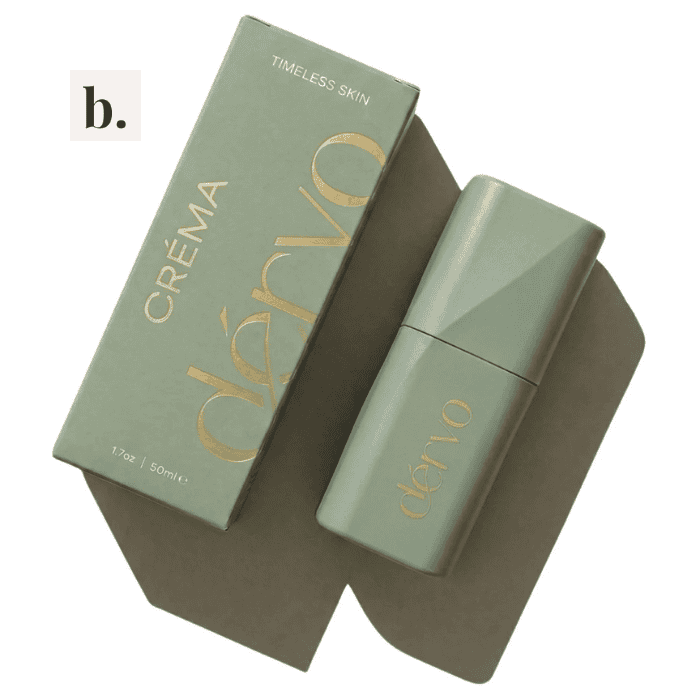
Dérvo
Dérvo Créma Face Moisturizer
If you want a rich facial moisturizer, Dérvo Créma combines humectants, plant-derived emollients and several hyaluronic-acid forms for hydration. Its peptide and botanical ingredients make a treatment-oriented formula, but published marketing claims…
Read the BeautyBrief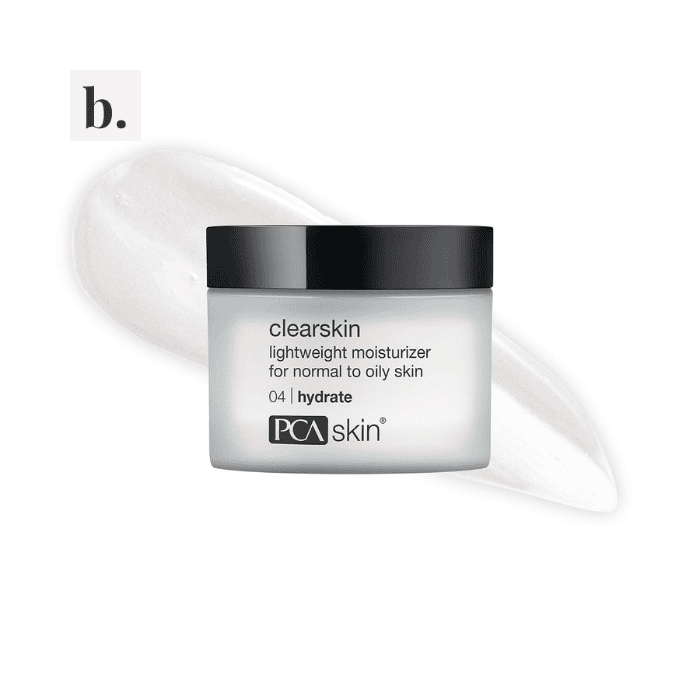
PCA SKIN
PCA SKIN Clearskin
If your skin is oily or breakout-prone and you want a light moisturizer, Clearskin offers a useful Premium formula with disclosed 4% niacinamide. Its post-breakout tone benefits are plausible rather than proven…
Read the BeautyBrief