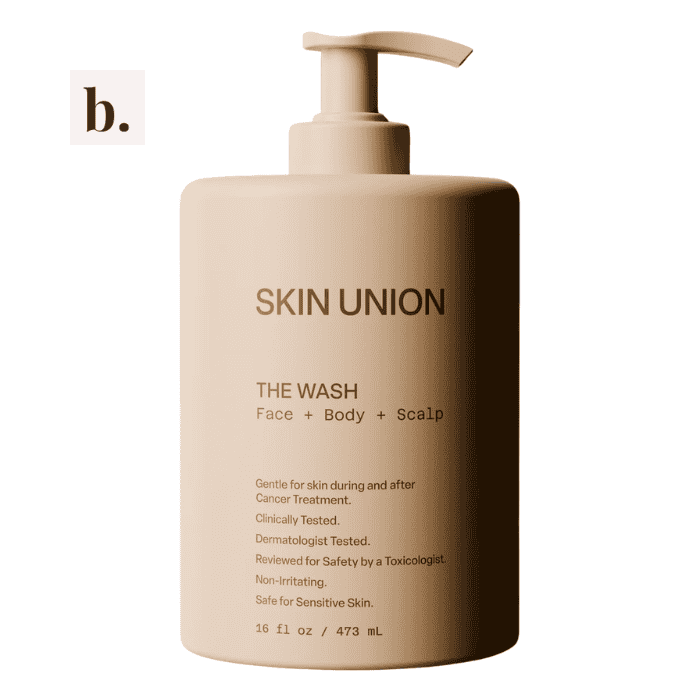
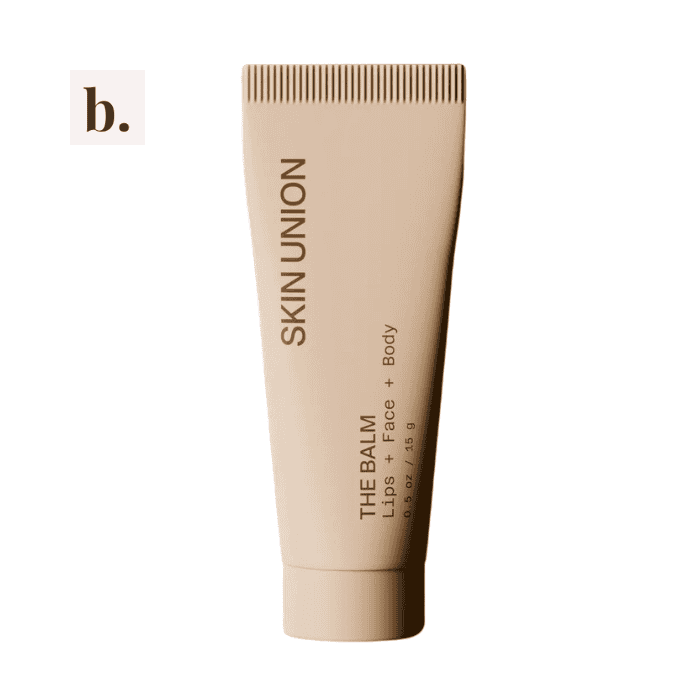
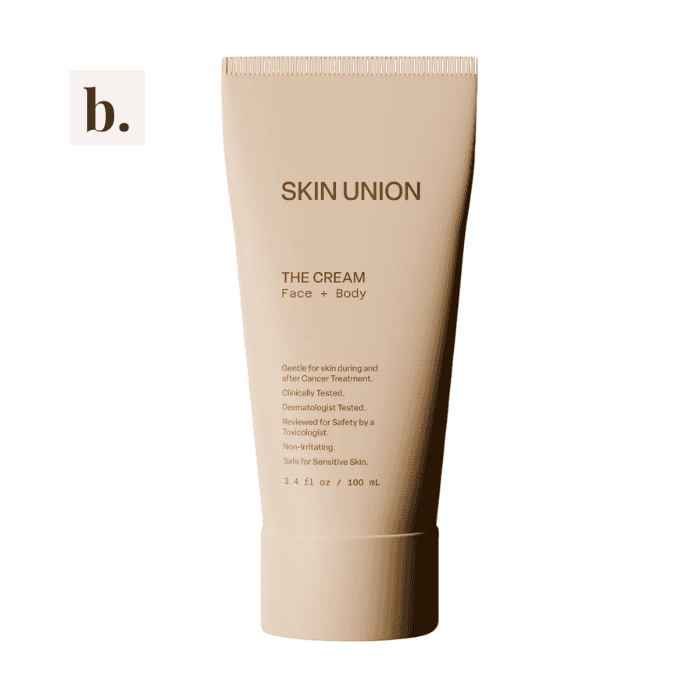
Skin Union The Cream Review
BeautyBrief™
Brand
Skin Union
Product
The Cream
Claims check
You get credible humectant, oil and ceramide moisturization, but the brand's ongoing clinical study cannot establish finished-product outcomes yet.
Shopper fit
- Dry
- Normal
- Sensitive
Formula flags
- None identified
Shopper preferences
- None Found
Key ingredients
| Helianthus Annuus (Sunflower) Seed Oil | At the brand-disclosed 12%, contributes substantial softening lipids to help your skin hold moisture. |
|---|---|
| Butyrospermum Parkii (Shea) Butter | Adds emollience; the disclosed 3.5% applies to shea and cocoa butters combined, not shea alone. |
| Beta-Glucan | At the brand-disclosed 1%, adds humectant and skin-conditioning support to your moisturizing routine. |
| Ceramide NP | Adds one of several barrier-relevant ceramides, but your finished-product barrier improvement is not quantified. |
| Glycerin | Helps attract and retain water in your skin for everyday hydration. |
Price tier
$$ Mid-Range
Value check
At its current price tier, the face-and-body formula offers several barrier-associated ingredients and convenient daily application.
Bottom line
If your face or body needs moisture without fragrance, The Cream combines plant oils, oat beta-glucan and a ceramide. Its value rests on that moisturizing system, while sensitive-skin clinical outcomes remain unreported.
If your face or body needs moisture without added perfume, Skin Union The Cream combines sunflower seed oil, shea butter, cocoa butter, oat beta-glucan and ceramide-associated ingredients. The brand discloses 12% sunflower oil and 1% oat beta-glucan, while its 28-day home-use study is still underway.[1]
What it claims
Skin Union describes The Cream as a lightweight, high-potency daily moisturizer for your face and body, intended to nourish, soothe, and help restore the moisture barrier. Alongside the three disclosed percentages, the brand highlights a ceramide complex and aloe vera, calls the product fragrance-free and toxicologist-reviewed, and directs you to apply it morning and night or whenever you want extra comfort.[1] Those are the brand’s product descriptions, not independent comparative testing.
Skin Union also reports that The Cream is currently undergoing a 28-day home-use study involving patients receiving chemotherapy and radiation, approved by a European ethics committee. The public page does not present completed study findings, so this ongoing research cannot establish that the moisturizer prevents or treats cancer-therapy skin reactions.[1]
Claims vs. formula
The moisturizing and barrier-support rationale is strong at the ingredient level. Sunflower seed oil, shea butter, cocoa butter, caprylic/capric triglyceride, fatty alcohols, jojoba esters, and other emollients support softness and moisture retention. Glycerin, 1% beta-glucan, and aloe provide water-binding or skin-conditioning support. The disclosed list also contains ceramides AP, EOP, and NP together with cholesterol, palmitic acid, stearic acid, and phytosphingosine, making barrier lipids a meaningful part of the formula story.[2]
These ingredients make sense if your skin needs ongoing hydration and a creamier finish. However, Skin Union has not published comparative finished-product measurements of transepidermal water loss, skin-barrier recovery, irritation, or clinical effectiveness for this exact cream. The ingredient list from its official glossary is presented alphabetically, not by concentration. You can rely on the three explicitly disclosed amounts, but you cannot infer the levels of ceramides, cholesterol, glycerin, or other ingredients from their positions in that glossary.[2]
The American Academy of Dermatology recommends fragrance-free creams or ointments for very dry skin and identifies moisturizers with glycerin and shea butter among useful options. It also advises applying moisturizer to slightly damp skin. This independent guidance supports the general approach, not a finding that The Cream works better than another well-formulated moisturizer.[3]
Hypoallergenic clarification: Skin Union uses the term in its broader brand positioning, but the exact The Cream product page does not explicitly document a product-specific Hypoallergenic claim. BB therefore does not assign that controlled Shopper Preference. The FDA notes that “hypoallergenic” has no standardized federal definition and is not a guarantee that your skin will tolerate the product.[4]
Ingredients that matter
Sunflower Seed Oil appears at a brand-disclosed 12%, while shea and cocoa butter add richer emollience. Beta-Glucan at 1% supports water-binding and comfort, and Ceramide NP supplies a barrier-associated lipid alongside glycerin. These ingredients give a coherent moisturizing rationale, but the brand’s ongoing home-use study does not yet demonstrate finished-product superiority for sensitive skin.

Shea Butter
Shea butter is a well-established emollient and occlusive used to soften dry-feeling skin and add richness to moisturizers. Its value depends on the complete formula, not the ingredient name alone.
Read the IngredientBrief
Beta-Glucan
Beta-glucan is a family of skin-conditioning ingredients with some human support for hydration and comfort. Source, form, and the complete formula matter more than a large beta-glucan percentage or broad…
Read the IngredientBrief
Glycerin
If your skin feels dry or tight, glycerin helps your skin hold moisture. You don't need a high percentage or a separate serum when your moisturizer already works well.
Read the IngredientBrief
Ceramides
If your skin feels dry or tight, ceramides support the moisture barrier when they're part of a well-formulated moisturizer. You don't need a longer ceramide list to get a better…
Read the IngredientBriefSafety and regulatory context
Skin Union describes The Cream as fragrance-free and toxicologist-reviewed. Those descriptors do not guarantee tolerance for every sensitive-skin concern, and a study described as ongoing is not evidence that this moisturizer treats skin reactions from cancer therapy.
If you are undergoing cancer treatment: The brand’s ongoing study is not a medical endorsement for applying the cream to actively treated skin. The American Academy of Dermatology advises using only moisturizers your cancer care team recommends for radiation-treated areas, and not applying moisturizer directly to a wound. Ask your treating team before using a new product on skin affected by radiation, blistering, or an open lesion.[5]
What to expect in the short term
You can reasonably expect a more cushioned, moisturized feel from this cream format, especially if you find a light gel or lotion insufficient. Skin Union markets it as lightweight, but BB has not performed hands-on texture or absorption testing; whether it feels light enough on your face will depend on your skin and how much you apply. The brand directs morning-and-night use for face and body.[1] Applying it after washing, while your skin remains slightly damp, aligns with dermatologists’ general advice for dry skin.[3]
What to expect over time
With consistent use, the most defensible outcome is maintenance of moisture and a more comfortable skin feel. Including ceramides, cholesterol, and fatty acids gives the formula a credible skin-barrier rationale, but their presence alone does not establish how quickly this exact product repairs an impaired barrier. You should not assume that its ongoing oncology study confirms protection against radiation dermatitis, eczema, or another medical condition.[1]
Who it fits
If your face or body feels dry or easily irritated and you prefer fragrance-free body care, The Cream is designed for frequent moisturizing. You can use it morning and night according to the brand. The pending clinical study is not a basis to promise that the cream prevents treatment-related irritation for every user.
Compare before you buy
At the Mid-Range tier, the most distinctive reasons to consider The Cream are its clearly disclosed major ingredient percentages, fragrance-free face-and-body format, and combination of humectants with barrier-related lipids. These details make its formula easy to evaluate, but do not establish that it outperforms a simpler, less expensive fragrance-free moisturizer. If you need more occlusion for very dry lips or a few rough patches, Skin Union’s separate The Balm is a more concentrated format; if you mainly want everyday all-over moisturization, The Cream is the product the brand positions for that use.[1]
Final Assessment
If you want one moisturizer for your face and body, Skin Union The Cream offers substantial plant emollients, oat beta-glucan and a ceramide. These support a moisture-focused benefit without establishing a clinical treatment effect from the ongoing study. Its value depends on how well the texture fits your daily routine.
Last reviewed: October 2026
Sources
Skin Union. The Cream. Exact official product page. Accessed October 11, 2026.
Used for identity, 12% sunflower seed oil, 3.5% combined shea/cocoa butters, 1% beta-glucan, price-tier context, directions, fragrance-free and toxicologist-reviewed positioning, and the ongoing 28-day study. No completed study results are supplied on the page.
Skin Union. Ingredient glossary. Complete ingredient mapping for The Wash, The Cream, and The Balm, accessed October 11, 2026.
American Academy of Dermatology Association. Dermatologists’ top tips for relieving dry skin. Accessed October 11, 2026.
General dry-skin and moisturizer-use guidance; not a finished-product test of Skin Union The Cream.
U.S. Food and Drug Administration. Cosmetics Safety Q&A: “Hypoallergenic”. Accessed October 11, 2026.
Used to explain the absence of a standard federal definition for hypoallergenic, not to contradict an independently verified product certification.
American Academy of Dermatology Association. How to care for your skin during and after radiation therapy. Accessed October 11, 2026.
Used for safety-oriented advice about moisturizer on radiation-treated skin; not evidence that this finished cream is medically effective.