

Do You Really Need an Eye Cream? What Eye Creams Can Actually Do for Wrinkles, Dark Circles and Puffiness
At a glance
You do not automatically need a separate eye cream. If your regular moisturizer is comfortable around your eyes and gives you the hydration you want, an extra product may add little. A dedicated eye formula makes more sense when you want a targeted ingredient, better eye-area tolerability, or a product designed for a specific concern such as fine lines, pigment, or temporary puffiness.
If you are shopping for an eye cream, several very different concerns are often grouped together as “tired-looking eyes.” Fine lines, dark circles, puffiness, dryness, hollowness, and under-eye bags do not have the same cause, so one cream cannot realistically fix all of them.
The useful question is not whether eye cream is a necessary skincare category. It is whether a specific eye-area formula does something your existing routine does not already do.
A 2026 narrative review of periocular skincare found evidence that some finished eye-area formulas improve hydration, firmness, pigment uniformity, and puffiness. It also emphasized important limits: many studies are short, industry-sponsored, based on multicomponent formulas, and conducted in narrow populations.[1]
That does not make eye creams useless. It means you should judge them the same way you would any other skincare purchase: by the formula, the evidence, and what you actually want the product to do.
Do you actually need a separate eye cream?
Usually, no.
If your facial moisturizer is suitable for use around the eyes according to its directions, stays out of your eyes, and provides enough hydration without irritation, you do not need a separate eye cream just because another product is marketed for that area. Moisturizing alone can temporarily soften dehydration lines and make the area look smoother.
A dedicated eye product becomes more useful when you want one of three things:
- A targeted active such as a retinoid, peptide, niacinamide, antioxidant, or depigmenting ingredient in an eye-area formula
- A lighter or more cushioning texture that works better under concealer or around sensitive eyes
- A formula specifically designed and tested for periocular tolerability
The 2026 periocular review stresses that evidence from ordinary facial skincare cannot always be transferred directly to the eye area because the skin is thinner and tolerability can differ.[1]
That is a reason to care about the finished formula—not a reason to assume every product labeled “eye cream” is superior to your regular moisturizer.
What eye creams can realistically do for fine lines and wrinkles
Hydration is the most predictable short-term benefit. Humectants and emollients can make dry, crepey skin look smoother and reduce the appearance of dehydration lines without changing deeper structural aging.
For longer-term wrinkle improvement, some eye-area formulas containing retinoids, peptides, antioxidants, or combinations of these ingredients have human evidence. A 2024 review of common eye-cream ingredients found supportive evidence for several of these ingredient groups, while also noting that the strength and directness of evidence vary substantially by ingredient and formulation.[2]
In a small 12-week open-label study, 16 participants used a proprietary retinoid eye cream nightly and showed improvements from baseline in lines and wrinkles, texture, under-eye darkness, puffiness, and dryness. Another 10 participants used a peptide eye cream in the morning plus the retinoid eye cream at night and improved on several measured endpoints. There was no untreated or vehicle-control group, so the study shows change from baseline rather than proving that the retinoid system caused every improvement. The study was sponsored by SkinBetter Science, and two authors were company employees.[3]
If wrinkles are your main concern, look for a product with a plausible treatment system and evidence that matches the claim. A high price, luxury packaging, or a long peptide list does not establish better wrinkle performance.
If the directions for your facial retinoid permit use around the orbital bone and you tolerate it there, a separate retinoid eye cream may be redundant. If your facial treatment is too irritating for that area, a gentler dedicated eye formula may earn its place.
Dark circles are not one problem
“Dark circles” can come from several different causes: increased pigment, visible blood vessels through thin skin, post-inflammatory discoloration, swelling, shadowing from hollowness, skin laxity, or a mixture of these factors.[4]
This is why dark-circle claims are so difficult to judge. A brightening formula may help when pigment contributes to the darkness. It will not fill a tear trough. A caffeine gel may make temporary swelling look better while doing little for inherited brown pigmentation. A moisturizer can make thin dry skin look smoother without changing the structural shadow underneath it.
A systematic review of periorbital hyperpigmentation treatments found that topical creams can be useful for pigment-based dark circles, while structural causes such as volume loss respond better to structural treatments rather than topical skincare.[5]
Before you buy an eye cream for dark circles, ask what kind of darkness you are actually trying to change.
What about caffeine for dark circles and puffiness?
Caffeine is one of the most common eye-product ingredients, but it is not a guaranteed depuffing treatment.
The Beauty Briefing’s Caffeine IngredientBrief reviews a randomized, double-blind, placebo-controlled trial in 34 adults in which a 3% caffeine gel did not significantly outperform the same gel base without caffeine for puffiness. That suggests the gel base and cooling effect may matter as much as the caffeine itself.[6]
Caffeine can still be reasonable in an eye product, especially if you like the formula and see a useful cosmetic difference. It just does not justify choosing one product over another based on the caffeine percentage alone.
Eye creams can help some puffiness—but not every under-eye bag
Temporary puffiness caused by fluid retention can sometimes look better with cooling, hydration, gentle massage, or a well-designed eye gel or cream.
Fixed under-eye bags are different. Prominent fat pads, skin laxity, and structural changes are not problems a topical cream can meaningfully remove. A product may make the overlying skin look smoother while leaving the underlying bag unchanged.
This distinction matters because “reduces puffiness” is often used broadly in marketing. Look for whether a brand is talking about temporary morning swelling or implying that a topical product can correct a structural under-eye bag.
Why the eye area needs extra attention to tolerability
The skin around your eyes is more vulnerable to irritation, and products can migrate into the eye itself. A formula that works well on your cheeks or forehead may sting, water your eyes, or trigger irritation when used too close to the lash line.
FDA advises using only products intended for use around the eye area, following directions, stopping use if irritation occurs, and keeping eye-area cosmetics clean to reduce contamination risk.[7]
A 2026 scoping review also raised questions about how periocular skincare may interact with the ocular surface, tear film, and local microbiome. Much of that evidence remains preclinical, so it does not establish that ordinary eye creams cause eye disease, but it reinforces the importance of tolerability and keeping products out of the eye.[8]
If an eye cream repeatedly causes burning, watering, itching, redness, or swelling, that formula is not a good fit for you regardless of how strong the ingredient story sounds.
How to choose an eye cream by concern
If dryness or crepey texture is your main concern: prioritize a comfortable moisturizing formula with humectants and emollients. You may not need a specialized treatment product at all.
If fine lines are your main concern: look for a well-tolerated retinoid, peptide, antioxidant, or evidence-backed finished formula. Expect gradual change rather than an instant tightening effect.
If brown pigmentation is your main concern: look for ingredients and finished-product evidence relevant to pigment, while recognizing that irritation itself can worsen discoloration in some skin tones.
If bluish or purple darkness is your main concern: vascular visibility and thin skin may be contributing. Topicals have more limited and variable effects here.
If morning puffiness is your main concern: cooling texture and hydration may matter as much as the highlighted active.
If hollowness or fixed bags are your main concern: be skeptical of a cream promising a dramatic structural correction. Topical skincare is not designed to replace lost volume or reposition under-eye fat.
When an eye cream earns the extra step
An eye cream earns its place when it gives you a meaningful advantage over products you already own.
- The formula is better tolerated around your eyes than your facial treatment
- It contains a targeted active you do not already use in that area
- It has credible finished-product testing for the concern you want to treat
- The texture works better under sunscreen, makeup, or concealer
- You consistently use it because the formula is comfortable and practical
It does not earn the extra step just because eye cream is treated as a mandatory category.
Before buying, compare the formula with your existing moisturizer or serum. If the eye product offers essentially the same hydration and ingredient story in a smaller package, you may be paying more for category positioning rather than a meaningful performance difference.
What to look for in eye-cream studies
Eye products are often marketed with percentages such as “reduced wrinkles,” “improved dark circles,” or “less puffiness.” Those numbers become more useful when you know what was actually tested.
Look for:
- Whether the finished product was tested
- How many people were enrolled and how many completed the study
- How long the product was used
- Whether there was a placebo, vehicle, untreated area, or comparison product
- Whether results were measured objectively or only reported by participants
- Whether the study separated wrinkles, pigmentation, puffiness, and structural concerns
- Whether the participants resemble the shoppers the product is being marketed to
- Whether irritation and ocular tolerability were reported
The 2026 narrative review specifically identifies short study duration, industry sponsorship, inconsistent endpoints, and limited diversity as recurring weaknesses in periocular skincare research.[1]
The BB Perspective
You do not need an eye cream simply because you have skin around your eyes.
If your regular moisturizer works well there, a separate basic moisturizer may be redundant. A dedicated eye product becomes more defensible when it offers better tolerability, a targeted treatment system, or credible finished-product evidence for a concern you actually have.
The biggest buying mistake is expecting one eye cream to fix every form of wrinkles, dark circles, puffiness, and under-eye bags. Start with what is causing your concern, then judge whether the formula is actually built to address it.
The right eye product for you is not the one with the longest ingredient list or the strongest “anti-aging” language. It is the one that gives your routine a specific benefit you were not already getting.
Last reviewed: September 2026
Sources
Prudkin L, Piquero-Casals J, Rengifo-Palacios J, et al. Dermocosmetics for Periocular Aging: Evidence, Mechanisms, and Integration with Aesthetic Procedures. A Narrative Review. Dermatology and Therapy. Published September 30, 2026. doi:10.1007/s13555-026-01934-4.
This narrative review summarizes periocular-specific clinical and mechanistic evidence and highlights important limitations: many studies are short, industry-sponsored, use multicomponent finished formulas, and include narrow populations or inconsistent endpoints. ISDIN funded the journal Rapid Service Fee; two authors were ISDIN employees, one author was an ISDIN medical advisor, and another disclosed consulting, clinical-trial, or speaking relationships with multiple companies including ISDIN. Return to citation.
Hamie H, Yassine R, Shoukfeh R, Turk D, Huq F, Moossavi M. A Review of the Efficacy of Popular Eye Cream Ingredients. International Journal of Women’s Dermatology. 2024;10(2):e156. doi:10.1097/JW9.0000000000000156. PMID:38873621. PMCID:PMC11175953.
This review examines retinoids, vitamins C and E, peptides, ceramides, hyaluronic acid, caffeine, and niacinamide. It notes that eye-cream-specific clinical evidence is limited and heterogeneous, so ingredient mechanisms should not be treated as proof that every finished eye cream will deliver the same visible result. The authors reported no funding and no conflicts of interest. Return to citation.
Kaufman J, Callender VD, Young C, Jones P, Wortzman M, Nelson DB. Efficacy and Tolerability of a Retinoid Eye Cream for Fine to Moderate Wrinkles of the Periorbital Region. Journal of Drugs in Dermatology. 2022;21(9):932-937. doi:10.36849/JDD.6815. PMID:36074511.
This dual-center, open-label 12-week study included 26 completers: 16 used the retinoid eye cream nightly and 10 used a peptide eye cream in the morning plus the retinoid eye cream at night. There was no untreated or vehicle-control group. The study was sponsored by SkinBetter Science; two authors were SkinBetter Science employees. Results therefore apply to the tested proprietary formulas and should not be generalized to all retinoid eye creams. Return to citation.
Sarkar R, Ranjan R, Garg S, Garg VK, Sonthalia S, Bansal S. Periorbital Hyperpigmentation: A Comprehensive Review. Journal of Clinical and Aesthetic Dermatology. 2016;9(1):49-55. PMID:26962392. PMCID:PMC4756872.
This review describes multiple contributors to under-eye darkness, including pigmentation, post-inflammatory change, edema, vascularity, skin laxity, and tear-trough shadowing. It supports matching the product strategy to the cause rather than treating dark circles as one condition. Return to citation.
Michelle L, Pouldar Foulad D, Ekelem C, Saedi N, Atanaskova Mesinkovska N. Treatments of Periorbital Hyperpigmentation: A Systematic Review. Dermatologic Surgery. 2021;47(1):70-74. doi:10.1097/DSS.0000000000002484. PMID:32740208.
This systematic review included 39 studies and found that treatment choice depends on the cause of dark circles. Topical creams and chemical peels are more relevant to pigment-based concerns, while volume loss and laxity require structural approaches. Return to citation.
Amnuaikit T, Maneenuan D, Boonme P. Evaluation of Caffeine Gels on Physicochemical Characteristics and In Vivo Efficacy in Reducing Puffy Eyes. Journal of Applied Pharmaceutical Science. 2011;1(2):56-59.
This randomized, double-blind, placebo-controlled trial included 34 adults prone to puffy eyes and compared a 3% caffeine gel with the same gel base without caffeine. Both reduced puffiness, but the caffeine gel was not significantly more effective; the authors attributed much of the visible effect to the cooling hydrophilic gel base. Return to citation.
U.S. Food and Drug Administration. Eye Cosmetic Safety. Current September 2026.
FDA advises stopping eye-area cosmetics if irritation occurs, keeping products and applicators clean, and using only cosmetics intended for use near the eyes. This source provides safety guidance rather than evidence that a specific eye cream is effective. Return to citation.
Imokhai PO, Metellus R, Karsten M, et al. An Interdisciplinary Scoping Review of the Emerging Impact of Periocular Skincare Products on the Ocular Surface Microbiome and Tear Film Stability. Frontiers in Cellular and Infection Microbiology. 2026;16:1898798. Published September 18, 2026. doi:10.3389/fcimb.2026.1898798.
This scoping review examines potential interactions between periocular products and the ocular surface. Much of the evidence is preclinical or indirect, and the authors identify major gaps in longitudinal, dose-duration, and real-world clinical data. The authors reported no financial support for the work or publication and no commercial or financial conflicts of interest. Return to citation.
Related product BeautyBriefs
These BeautyBriefs cover products relevant to the needs discussed in this Beauty Briefing. Inclusion here reflects topic relevance, not a rating or endorsement.

Allies of Skin
Allies of Skin The Lab Drop 10/10/10 Multi GF Exo Advanced Recovery Ampoules
If you are considering Allies of Skin Lab Drop 10/10/10 Ampoules for visible aging, its growth-factor and exosome-themed complexes make an ambitious treatment story. The brand's reported improvements do not establish biological…
Read the BeautyBrief
Schaf
Schaf Moisturizer 3.0
If you prefer a fragrance-free cream, Schaf Moisturizer 3.0 offers rich emollience alongside niacinamide and bakuchiol. Its Premium value rests on how the texture and ingredient blend suit you, not established retinoid-level…
Read the BeautyBrief
Oak Essentials
Oak Essentials Antioxidant Hand Serum
If your hands look dry, Oak Essentials Hand Serum offers humectants and emollients for softness. Its Premium value depends on the scented finish, not unproven cellular regeneration.
Read the BeautyBrief
Neutrogena
Neutrogena Rapid Wrinkle Repair Retinol Regenerating Cream
If your skin tolerates retinol and fragrance, Rapid Wrinkle Repair offers a moisturizing format for gradual fine-line care. Its Mid-Range value rests on texture and convenience rather than a disclosed retinol concentration.
Read the BeautyBrief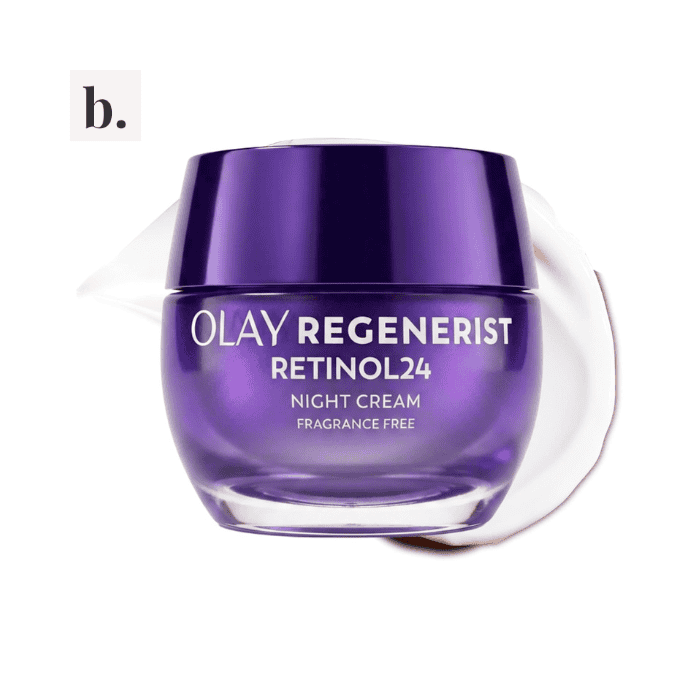
Olay
Olay Regenerist Retinol24 Night Moisturizer
If your skin tolerates retinoids, Olay Retinol24 offers a convenient fragrance-free night moisturizer with two vitamin A derivatives. Its Mid-Range value depends on routine simplicity rather than known retinol strength.
Read the BeautyBrief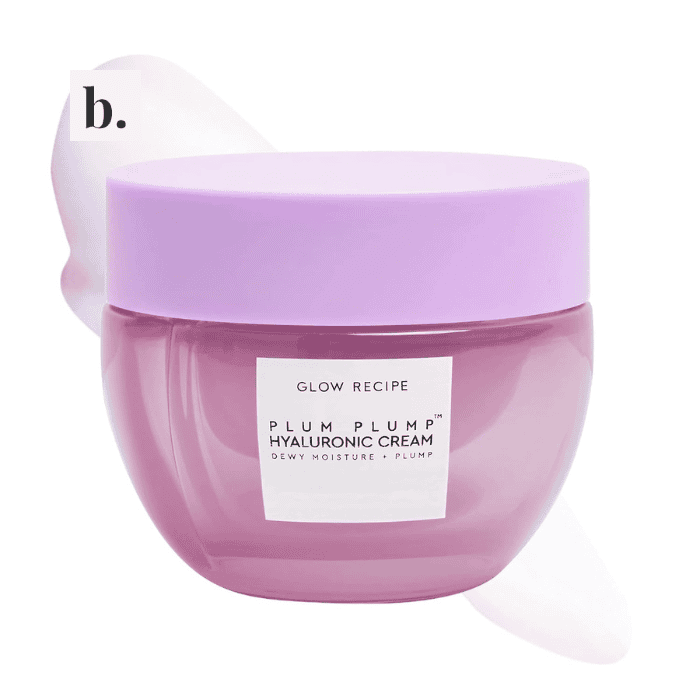
Glow Recipe
Glow Recipe Plum Plump Hyaluronic Cream
If you want lightweight hydration, Plum Plump combines hyaluronic acid forms, glycerin and squalane for a temporarily plumper-looking finish. Its refillable format adds value, but the fragrance and limited wrinkle evidence matter…
Read the BeautyBrief