

Alchemy 21/12 Enzyme + PHA Resurfacing Polish Review
BeautyBrief™
Brand
Alchemy 21/12
Product
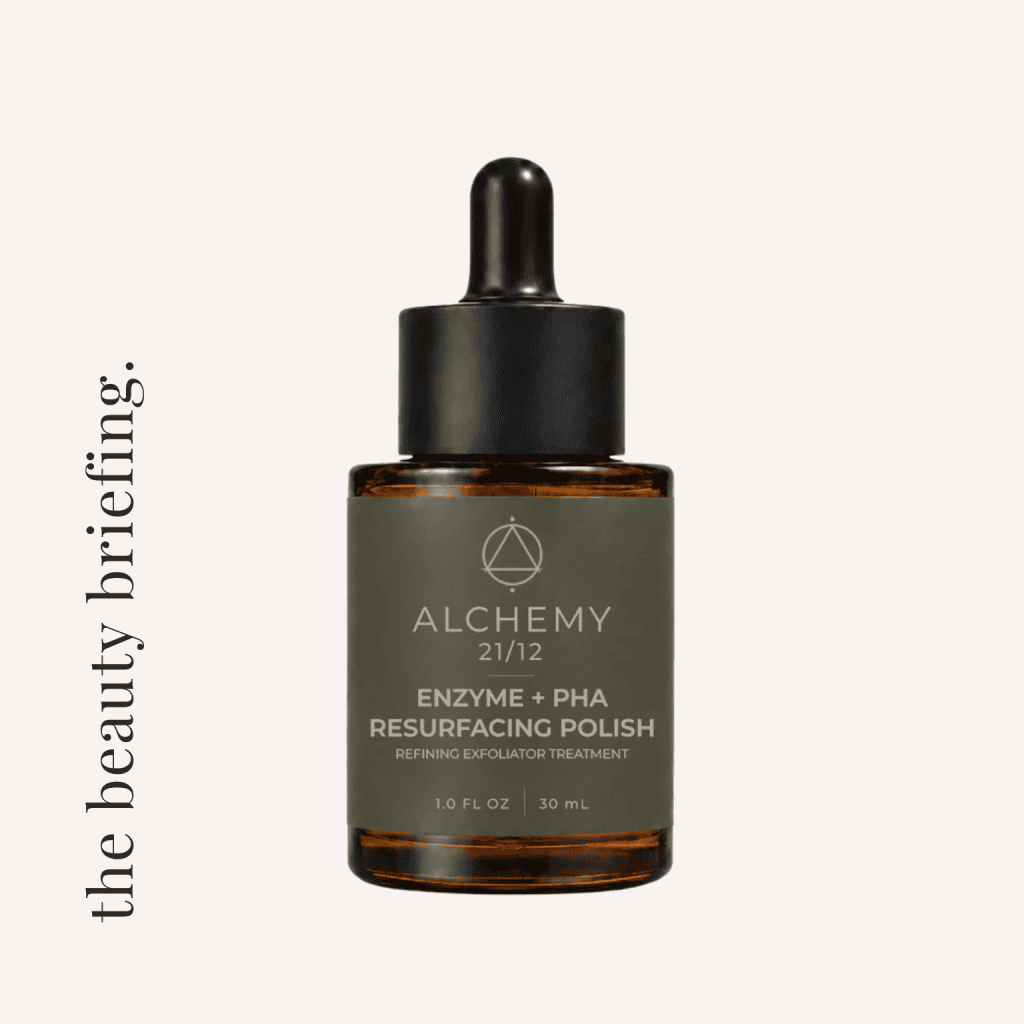
ENZYME + PHA RESURFACING POLISH
Claims check
You get a credible short-contact PHA, enzyme and polishing system, but comfort ingredients cannot guarantee freedom from irritation.
Shopper fit
- Dry
- Normal
- Combination
- Oily
- Sensitive
Formula flags
- Exfoliating acids
- Physical exfoliation (jojoba esters)
Shopper preferences
- Vegan
- Cruelty-Free
Key ingredients
| Gluconolactone | Disclosed at 3.0%; provides the primary PHA resurfacing pathway with added humectant support. |
|---|---|
| Lactobionic Acid | Disclosed at 0.5%; adds a second PHA resurfacing pathway with water-binding support. |
| Bromelain | Listed at 2500 GDU; adds enzymatic breakdown of protein-rich surface buildup. |
| Jojoba Esters | Provide the controlled physical polishing step that completes the three-path resurfacing system. |
| Panthenol | Works with ectoin, allantoin, beta-glucan, glycerin, and aloe to add hydration and comfort support. |
Price tier
$$$ Premium
Value check
At the Premium tier, you get three exfoliating approaches and declared acid strengths, while simpler PHA products may be enough for gentle renewal.
Bottom line
If rough, dull skin benefits from periodic exfoliation, this polish combines PHAs, bromelain and jojoba esters in one short-contact step. Its Premium value rests on that combined format, and sensitive or heavily treated skin needs a conservative approach.
If your skin feels rough or looks dull, Alchemy 21/12 Enzyme + PHA Resurfacing Polish combines 3% gluconolactone, 0.5% lactobionic acid, bromelain and jojoba esters in a short-contact exfoliating gel. You get chemical, enzyme and physical polishing in one step—not a treatment you need every day.[1]
Its panthenol and ectoin provide a comfort-focused base, but adding soothing ingredients does not eliminate the irritation risk of combining three exfoliating pathways.
What it claims
Alchemy 21/12 positions the polish as a gentler alternative to a traditional chemical peel, aimed at dullness, rough texture, surface buildup, uneven tone and texture, congestion, and loss of luminosity. The brand specifically describes the product as a sensitive-skin polish and emphasizes resurfacing without aggressive sting or prolonged recovery.[1]
Claims vs. formula
The resurfacing claim is well supported by the disclosed formula and directions. Gluconolactone and lactobionic acid are PHAs with exfoliating and humectant properties; published reviews describe PHAs as generally less sensory-irritating than traditional AHAs while still supporting skin smoothing and moisturization.[2] Here, the brand discloses 3.0% gluconolactone and 0.5% lactobionic acid in a rinse-off format.[1]
Bromelain adds a separate enzymatic pathway. A review of proteolytic enzymes used for skin exfoliation found that bromelain and related enzymes can exfoliate skin, while also noting that enzyme activity, formulation conditions, and irritation or allergy potential remain important product-level considerations.[3]
The jojoba esters add the third pathway: physical polishing. That can help remove loosened surface debris, but it also means the product’s gentleness depends partly on pressure, contact time, frequency, and what else the shopper is using. The formula’s soothing ingredients improve the balance; they do not cancel cumulative exfoliation.
Ingredients that matter
The exfoliating system combines gluconolactone and lactobionic acid, two polyhydroxy acids with water-binding and surface-smoothing roles, with bromelain for enzymatic action. Jojoba esters contribute the physical polishing step when you massage the gel across damp skin.
Panthenol, ectoin, beta-glucan and allantoin help support comfort during a short-contact treatment. The 3% and 0.5% disclosures add useful concentration context, but they do not establish that sensitive or rosacea-prone skin will always tolerate the polish. Keep pressure gentle and avoid combining it with other strong exfoliants on the same night.

Gluconolactone
Gluconolactone is a PHA with some human evidence for mild exfoliation and smoother-looking texture in specific formulas. Concentration, pH, format, other acids, and the finished formula determine how gentle or…
Read the IngredientBrief
Panthenol
Panthenol is a well-supported humectant and conditioning ingredient that improves hydration and helps reduce water loss. The complete moisturizer matters more than a high percentage or broad barrier-repair marketing.
Read the IngredientBriefWhat to expect in the short term
The most realistic immediate outcome is smoother-feeling, more even-looking surface texture after the polish is rinsed away. The brand’s three-to-five-minute contact time keeps this in short-treatment territory, while the massage step adds a physical component that makes light pressure important.[1]
Some tingling or irritation is still possible because the product combines acids, enzyme activity, and physical polishing. Shoppers already using retinoids, leave-on acids, benzoyl peroxide, scrubs, or other exfoliating treatments should count this as another exfoliation step rather than treating the “gentle” positioning as permission to stack actives.
What to expect over time
Used periodically and according to tolerance, the formula should help manage recurring surface roughness and dull buildup. The benefit is mainly maintenance of smoother-looking texture rather than a reason to exfoliate on a fixed schedule when the skin does not need it. Increasing frequency beyond what the skin tolerates raises the risk of irritation without guaranteeing better results.
Who it fits
If your skin is normal, combination, oily or dry and rough texture is a concern, this short-contact polish offers a multi-path approach. If your skin is sensitive or rosacea-prone, start cautiously because a formula with acids, enzymes and polishing particles can still cause irritation despite comfort-supporting ingredients.
The brand labels this product vegan and states that its formulas are cruelty-free. These attributes are brand-declared and do not establish that the polish is non-irritating.[1]
Compare before you buy
At the Premium tier, the value comes from disclosed exfoliant strengths, three complementary resurfacing mechanisms, a short-contact format, and a stronger comfort system than a basic scrub. Shoppers who only want mild PHA exfoliation do not need all three pathways and can find simpler options for less. This product makes more sense when the combination of PHA, enzyme, and controlled polishing is the feature being sought rather than when “gentle exfoliation” alone is the goal.
Final Assessment
Enzyme + PHA Resurfacing Polish is a thoughtfully built short-contact exfoliant with disclosed PHA strengths and three distinct resurfacing mechanisms rather than a vague glow formula. Its comfort system makes the sensitive-skin positioning more credible than it would be in a harsher scrub or peel, but the combined acid, enzyme, and physical action still requires restraint. The product is best suited to shoppers who specifically want periodic multi-path resurfacing and are willing to manage frequency around the rest of their active routine.
Last reviewed: October 2026
Sources
- Alchemy 21/12. Enzyme + PHA Resurfacing Polish. Current official U.S. product page. Accessed October 15, 2026.
- Grimes PE, Green BA, Wildnauer RH, Edison BL. The use of polyhydroxy acids (PHAs) in photoaged skin. Cutis. 2004;73(2 Suppl):3-13.
This review describes gluconolactone and lactobionic acid as PHAs with exfoliating, humectant, and skin-smoothing roles and discusses their generally lower sensory irritation relative to traditional AHAs. The review supports ingredient-class context, not proof of performance for this finished Alchemy 21/12 product.
- An overview of the use of proteolytic enzymes as exfoliating agents. International Journal of Cosmetic Science. 2022.
The review found limited but supportive evidence for proteolytic enzymes including bromelain as exfoliating agents and emphasized that pH, temperature, stabilization, activity, and irritation or allergy potential matter in finished formulations. It does not test this product.


