

innisfree Green Tea Seed Hyaluronic Acid Cream Review
BeautyBrief™
Brand
innisfree
Product
Green Tea Seed Hyaluronic Acid Cream
Claims check
You get an effective-looking hydration-and-barrier formula with brand-reported instrumental support, but the official silicone-free claim conflicts with three silicone ingredients in the disclosed INCI.
Shopper fit
- Dry
- Normal
- Combination
- Oily
- Sensitive
- Acne-Prone
Formula flags
- Silicones
Shopper preferences
- Vegan
- Cruelty-Free
- Non-Comedogenic
- Dermatologist-Tested
Key ingredients
| Glycerin | Provides core humectant support within the cream's hydration system. |
|---|---|
| Squalane | Adds emollient support and helps reinforce moisture retention and skin softness. |
| Hyaluronic Acid | The listed five hyaluronic-acid forms add water-binding support within the complete cream; their separate effects are not measured. |
| Ceramide NP | Ceramide NP contributes a barrier-relevant lipid alongside cholesterol and lecithin; ingredient presence alone does not quantify barrier repair. |
| Panthenol | Adds humectant and skin-conditioning support alongside allantoin and madecassoside. |
Price tier
$$ Mid-Range
Value check
At the Mid-Range tier, you pay for five hyaluronic-acid forms, emollients, barrier lipids and finished-product hydration testing, though the silicone-label conflict matters if you avoid that category.
Where to buy
We may earn a commission through these links at no additional cost to you. This does not affect our BeautyBrief.
Bottom line
If you want a cushioned moisturizer with hydration data and barrier-supporting ingredients, this offers solid Mid-Range value. If you avoid silicones, choose another cream because the official ingredient list contradicts the brand's silicone-free statement.
If you want a silky moisturizer with substantial hydration support, innisfree Green Tea Seed Hyaluronic Acid Cream combines glycerin, multiple forms of hyaluronic acid, squalane and Ceramide NP. It also has product-specific instrumental and consumer results, offering more direct support for hydration than ingredient names alone.
The most important label issue is easy to overlook: the official U.S. page says the cream is formulated without silicone, yet the same page lists three silicone ingredients. If avoiding silicones affects your purchase, follow the disclosed formula, not the contradictory exclusion claim.
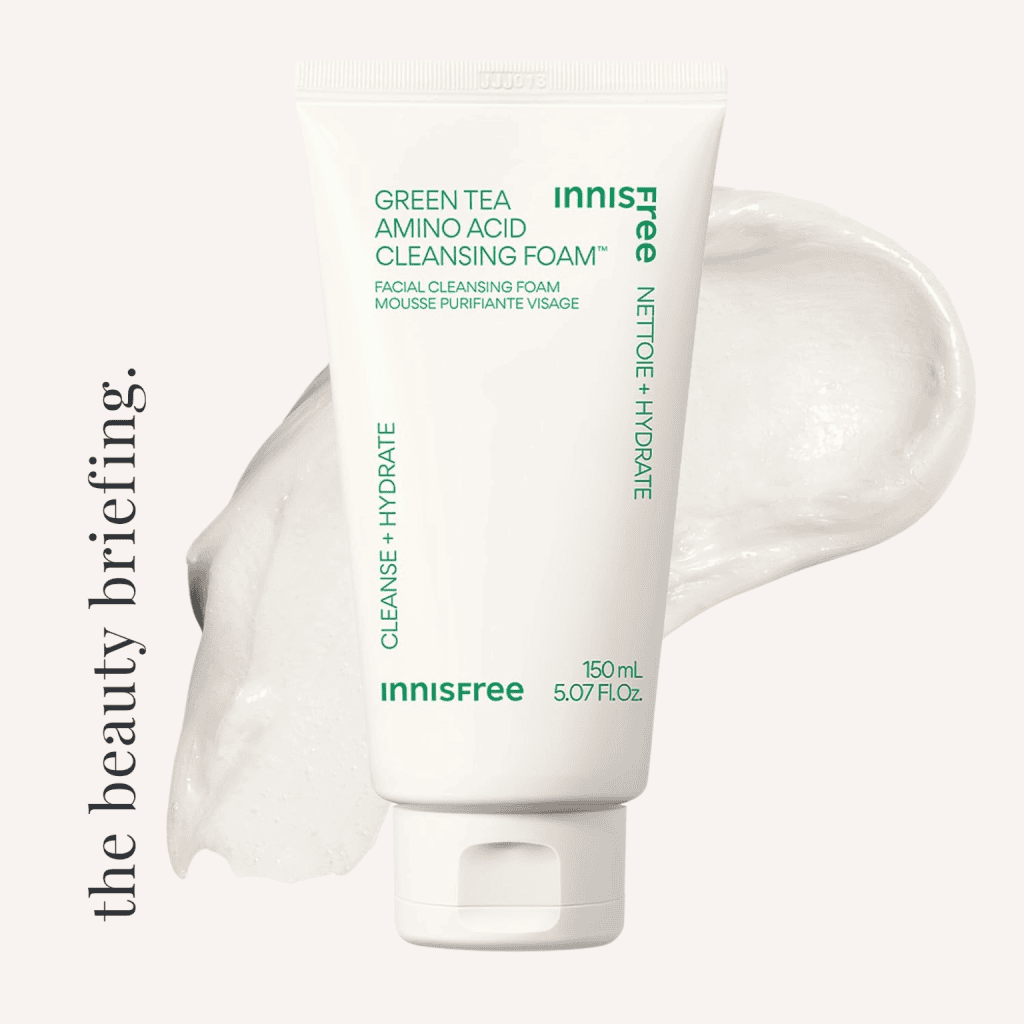
What it claims
innisfree describes Green Tea Seed Hyaluronic Acid Cream as a daily moisturizer for long-lasting hydration, barrier support and a healthy-looking glow. The brand lists a five-form hyaluronic acid system, green tea, sugarcane-derived squalane and ceramide, and labels the product non-comedogenic and dermatologically tested.[1]
The official page reports a fivefold hydration boost and an improvement in temporary moisture-barrier measurements after one use in a 31-person instrumental study. It also gives positive consumer-assessment percentages from a smaller home-use panel and claims hydration lasting up to 100 hours. The results are brand-reported, with limited published methods and no publicly demonstrated superiority over other moisturizers.[1]
Claims vs. formula
Glycerin and propanediol appear near the top of the INCI. Hyaluronic acid, sodium hyaluronate, hydrolyzed hyaluronic acid, sodium hyaluronate crosspolymer and sodium acetylated hyaluronate provide several related water-binding ingredients. That makes the hydration focus plausible without assuming that every form reaches a particular depth in your skin.
Squalane, fatty alcohols, cholesterol, hydrogenated lecithin, phytosphingosine and Ceramide NP contribute emollient and skin-lipid functions. Scientific research on ceramide formulations supports their relevance to the outer skin barrier, while also emphasizing that finished-product performance depends on the whole formulation rather than the mere presence of a ceramide.[2]
The current official full ingredient list also names stearyl dimethicone, methyl trimethicone and polymethylsilsesquioxane. All three belong to the silicone family. The brand’s simultaneous “formulated without silicone” statement conflicts with its disclosed INCI, so the factual Silicones formula flag remains appropriate.[1]
Panthenol, allantoin and madecassoside add skin-conditioning ingredients, while green tea seed oil and leaf extract support the product’s botanical positioning. Their presence does not independently establish antioxidant treatment or reversal of dullness, redness or skin aging.
Ingredients that matter
Glycerin and the five named hyaluronic-acid ingredients attract and hold water in the outer skin. Squalane and the silicone-containing emollient system contribute the cushiony, smoothing finish, while Ceramide NP and cholesterol add barrier-relevant lipids.
Panthenol, allantoin and madecassoside broaden the comfort-focused formula. The brand’s instrumental study is useful evidence for hydration and temporary barrier measurements, but it does not identify the individual contribution of any one ingredient.
Silicones are a formula characteristic rather than a reason to assume pore clogging. Nevertheless, if your preference is a genuinely silicone-free cream, this documented ingredient list rules out the product despite the page’s exclusion statement.

Glycerin
If your skin feels dry or tight, glycerin helps your skin hold moisture. You don't need a high percentage or a separate serum when your moisturizer already works well.
Read the IngredientBrief
Squalane
If your skin feels dry or rough, squalane can make it feel softer and smoother. You don't need a separate oil when your moisturizer already keeps your skin comfortable.
Read the IngredientBrief
Hyaluronic Acid
If your skin feels dry or tight, hyaluronic acid helps your skin hold moisture. You don't need several HA forms or a separate serum when your moisturizer already hydrates well.
Read the IngredientBrief
Panthenol
Panthenol is a well-supported humectant and conditioning ingredient that improves hydration and helps reduce water loss. The complete moisturizer matters more than a high percentage or broad barrier-repair marketing.
Read the IngredientBriefSafety and regulatory context
Brand “formulated without” lists are shopping claims, not substitutes for the full INCI. Here, the contradiction is visible within the same official product page; the ingredient list identifies silicone compounds and must take precedence when you evaluate a silicone-avoidance preference.[1]
The product’s non-comedogenic and dermatologically tested attributes are exact-product brand claims, not guarantees that you will never experience breakouts or irritation. Its full listed formula has no added fragrance, but individual skin reactions remain possible.
What to expect in the short term
You get a smooth, cushioned cream with ingredients designed to improve surface hydration and comfort. The brand’s one-use instrumental data supports early hydration and temporary moisture-barrier effects; the reported percentage changes are study outcomes, not a guarantee of the same result for you.
What to expect over time
With consistent use, the clearest expectation is maintained moisture and a smoother-looking, more comfortable skin surface. The advertised long-duration hydration and consumer-reported glow are brand results rather than proof of permanent barrier reconstruction or correction of pigmentation.
If you still have persistent dryness, a richer occlusive moisturizer may be more useful than adding another serum with hyaluronic acid.
Who it fits
This makes sense if your skin is normal, dry, combination or oilier but comfortable with a cream texture and you want hydration supported by exact-product testing. The brand also identifies the product as suitable for sensitive skin and non-comedogenic, but those labels cannot predict every individual’s response.
If you avoid silicones, this is not a match for your preference. If you want a weightless gel, a lighter moisturizer may be more pleasant regardless of how well the cream performs in hydration testing.
innisfree identifies the product as formulated without animal-derived ingredients, and PETA lists INNISFREE as cruelty-free. These purchasing attributes are distinct from the ingredient-list labeling conflict.[3][1]
Compare before you buy
Choose this cream if you want Mid-Range hydration with multiple hyaluronic acid forms, barrier-relevant lipids and brand-reported finished-product testing. The formula provides a more substantial finish than a watery gel.
Choose another moisturizer if you require silicone-free ingredients, because this product’s current INCI lists silicones despite the brand’s conflicting wording. If lighter hydration is your priority, a simple gel-cream may fit better and cost less.
Final Assessment
innisfree Green Tea Seed Hyaluronic Acid Cream offers a useful Mid-Range moisture-and-barrier system backed by brand-reported instrumental hydration testing, especially if you enjoy a silky cream texture. Its clear limitation is the contradictory silicone-free claim: you can appreciate the moisturizer’s humectants and ceramide support while recognizing that it is not a silicone-free formula, and that distinction should guide your purchase.
Where to buy
Choose a retailer to view current pricing and availability.
We may earn a commission through these links at no additional cost to you.
Last reviewed: October 2026
Sources
- innisfree. Green Tea Seed Hyaluronic Acid Cream. Current official U.S. product page, complete ingredient list, formula-free claims and study summaries. Accessed October 14, 2026.
- Schild J, et al. The role of ceramides in skin barrier function and the importance of their correct formulation for skincare applications. International Journal of Cosmetic Science. 2024. Ceramide formulation review, not a clinical trial of this cream.
- PETA. INNISFREE cruelty-free listing. Company-level animal-testing policy. Accessed October 14, 2026.
