

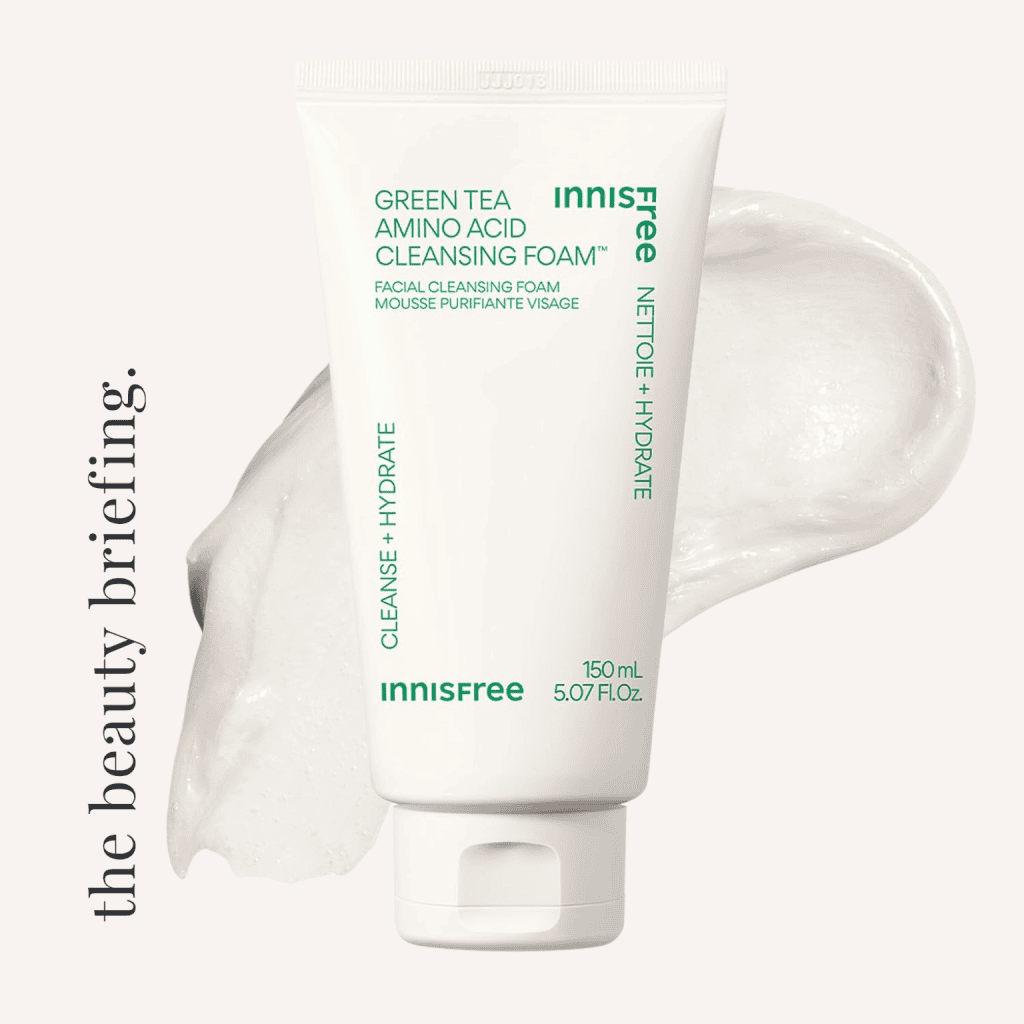
innisfree Green Tea Amino Acid Cleansing Foam Review
BeautyBrief™
Brand
innisfree
Product
Green Tea Amino Acid Cleansing Foam
Claims check
You get a dense fatty-acid-based foam supported by glycerin, while the listed green tea and amino acids do not establish leave-on treatment benefits and added fragrance may limit skin tolerance.
Shopper fit
- Normal
- Combination
- Oily
Formula flags
- Fragrance
Shopper preferences
- Vegan
- Cruelty-Free
Key ingredients
| Glycerin | Adds humectant support within the foaming cleansing base and helps offset a leaner post-rinse feel. |
|---|---|
| Myristic Acid | Works with potassium hydroxide as part of the fatty-acid cleansing system that creates the dense lather. |
| Lauric Acid | Contributes to cleansing and foam generation within the soap-based structure. |
| Camellia Sinensis Leaf Extract | A secondary green-tea botanical in the rinse-off formula; it does not establish finished-product antioxidant treatment. |
Price tier
$ Budget
Value check
At the Budget tier, you pay for a generous richly foaming cleanser with glycerin support, so value is strongest if you enjoy that format and tolerate fragrance.
Where to buy
We may earn a commission through these links at no additional cost to you. This does not affect our BeautyBrief.
Bottom line
If you like a creamy lather and your skin tolerates fragrance, this is a sensible Budget daily cleanser with a recognizable green-tea theme. If your skin feels dry or tight after washing, a simpler fragrance-free cleanser is a better fit.
If you enjoy a full, creamy lather and want an affordable everyday wash, innisfree Green Tea Amino Acid Cleansing Foam gives you a Budget cleanser with glycerin, green tea and a blend of amino acids. It is designed for rinsing away ordinary dirt and oil, not for treating acne or delivering the same green-tea benefits as a leave-on serum.
The practical tradeoff is the foaming system. The formula includes fatty acids and potassium hydroxide alongside other surfactants, plus added fragrance. If your skin feels tight after rich foam or reacts to scent, a simpler fragrance-free cleanser may be a better purchase.
What it claims
innisfree describes this as a gentle daily cleanser that removes dirt and impurities without overstripping and helps maintain moisture balance. It markets green tea and an amino acid complex for all skin types, recommends morning and evening use, and advises using a cleansing oil or balm first for heavy makeup or long-wear sunscreen.[1]
The brand describes a skin-friendly pH but does not publish an exact finished-product pH or a controlled study demonstrating that the cleanser outperforms a fragrance-free alternative for barrier comfort. Its cleansing claims are more directly supported by the surfactant system than by claims about the antioxidant benefits of green tea.
Claims vs. formula
Myristic, lauric, stearic and palmitic acids appear high in the ingredient list, together with potassium hydroxide. In a cleanser, this combination can create soap-type cleansing components that generate a substantial lather. Lauryl hydroxysultaine, lauryl glucoside and disodium cocoyl glutamate add other surfactant functions. The name “amino acid” does not mean that the cleanser uses only amino-acid-based surfactants.
Independent cleansing science distinguishes soap-based and synthetic-detergent systems. Soap-type systems can interfere more with skin pH and surface lipids, depending on the finished formula. That is a relevant caution for skin that feels dry or irritated after washing, not proof that this specific innisfree product has an alkaline pH or will damage everyone’s barrier.[2]
Glycerin is second in the disclosed ingredients, making its humectant role more convincing than an incidental botanical mention. The formula also contains propanediol and amino acids including arginine, aspartic acid and glutamic acid, which fit a supporting conditioning and moisture story without changing the main cleansing chemistry.
Camellia sinensis leaf extract provides recognizable green-tea content, but its position near the end of the INCI and the rinse-off format do not establish meaningful antioxidant treatment effects after cleansing. The brand’s green-tea-water description also does not quantify how much extract is present in the finished wash.
Ingredients that matter
Glycerin is the most useful moisturizing ingredient to notice: it helps attract water within a wash whose primary task is cleansing. Myristic and lauric acids contribute to the creamy foam, while the secondary surfactants help remove everyday residue.
Arginine, aspartic acid and glutamic acid form the advertised amino acid complex. Their presence does not by itself prove a milder wash than a low-foam synthetic-detergent cleanser. Green tea extract adds a secondary conditioning ingredient but does not make this product an anti-aging or brightening treatment.
Fragrance is explicitly listed. If you avoid scented skincare or already know that perfumed cleansers bother your skin, that matters more to the purchase decision than the product’s botanical marketing.

Glycerin
If your skin feels dry or tight, glycerin helps your skin hold moisture. You don't need a high percentage or a separate serum when your moisturizer already works well.
Read the IngredientBrief
Green Tea Extract
Green tea extract is a botanical antioxidant with some human evidence for inflammatory acne in specific topical green tea or EGCG formulas. Catechin content, stability, and finished formulation matter more…
Read the IngredientBrief
Fragrance
Fragrance is a scent blend added mainly for sensory appeal. Many shoppers tolerate it well, while specific fragrance materials can trigger irritation or allergic contact dermatitis in susceptible people.
Read the IngredientBriefWhat to expect in the short term
You get a generous, creamy lather for removing ordinary oil, sweat and daily buildup. A clean after-feel is the main immediate result; if you notice persistent tightness, that is a sign that a gentler wash may suit your routine better.
For stubborn makeup and long-wear sunscreen, innisfree itself recommends a cleansing oil or balm first rather than asking this water-based foam to remove everything alone.[1]
What to expect over time
With repeated use, the primary benefit remains routine cleansing. The published product information does not establish lasting antioxidant protection, improvement in pigmentation, acne treatment or measurable barrier repair from the finished formula.
Who it fits
This is most relevant if your skin is normal, combination or oily and you enjoy a richly lathering cleanser. The Budget positioning makes sense when texture and an everyday wash matter more than treatment actives.
If your skin is dry, sensitive or fragrance-reactive, do not rely on the “all skin types” claim alone. The fatty-acid cleansing system and fragrance make a milder fragrance-free option worth comparing, especially when your routine already contains drying treatments.
innisfree identifies the product as formulated without animal-derived ingredients, and PETA currently lists INNISFREE as cruelty-free. Those are useful purchasing distinctions, though neither establishes whether the finished wash will be gentle on your skin.[1][3]
Compare before you buy
Choose this foam if you want an affordable, substantial lather and a green-tea-themed cleanser that you rinse off. Its useful role is removing surface residue, while glycerin helps support a more comfortable cleansing experience.
Choose a low-foam fragrance-free cleanser if dryness, fragrance sensitivity or over-cleansing is your greater concern. Do not pay extra for a leave-on antioxidant expectation from a wash whose contact time is short.
Final Assessment
innisfree Green Tea Amino Acid Cleansing Foam offers reasonable Budget value when you want a rich foam, and its glycerin content is a practical counterweight to the cleansing base. The product’s fatty-acid surfactant structure and added fragrance matter more to shopper fit than its green-tea or amino-acid story; for dry or reactive skin, a simpler fragrance-free cleanser is the more cautious choice.
Where to buy
Choose a retailer to view current pricing and availability.
We may earn a commission through these links at no additional cost to you.
Last reviewed: October 2026
Sources
- innisfree. Green Tea Amino Acid Cleansing Foam. Current official U.S. product page, ingredients, directions and claims. Accessed October 14, 2026.
- Mijaljica D, Spada F, Harrison IP. Skin Cleansing without or with Compromise: Soaps and Syndets. Molecules. 2022;27(6):2010. doi:10.3390/molecules27062010. Review of cleansing systems; not a study of innisfree’s finished product.
- PETA. Is INNISFREE Cruelty-Free? Company listing. Accessed October 14, 2026.
