
Ferulic Acid in Skincare
Ferulic acid is a supporting antioxidant with human evidence across several topical formulations, especially vitamin C and vitamin E systems. The complete formula matters because its independent contribution is difficult to isolate.
- Aliases
- 4-Hydroxy-3-methoxycinnamic Acid, trans-Ferulic Acid, (E)-Ferulic Acid
- Ingredient category
- Antioxidant
- Evidence strength
- Some Support for Reducing UV-induced erythema and related photoaging measures with topical ferulic-acid formulations
- Formula matters
- Concentration, solubility, pH, vehicle, delivery, packaging, stability, and supporting antioxidants shape results. Evidence from combination serums or professional peels does not automatically apply to ordinary serums.
- Separate product needed?
- Usually No. Most routines do not need a separate ferulic-acid product when an existing antioxidant serum already fills the same role.
BB takeaway
Ferulic acid is a credible supporting antioxidant, but its value comes from the finished antioxidant system rather than the ingredient name or percentage alone. Choose the complete serum rather than adding a separate ferulic-acid step.
Ingredient evidence does not prove the performance of every finished product containing it.
What is ferulic acid?
Ferulic acid is a plant-derived phenolic antioxidant found naturally in plant cell walls and foods. Chemically, it is also known as 4-hydroxy-3-methoxycinnamic acid. The trans, or E, form is commonly referenced in research.
In skincare, ferulic acid is used mainly to support antioxidant formulas and improve the stability or performance of other antioxidants.
Despite the word “acid,” ferulic acid is not an exfoliating acid like glycolic acid, lactic acid, or salicylic acid. Its primary skincare role is antioxidant support rather than surface exfoliation.
What does ferulic acid do for skin?
Ferulic acid helps neutralize reactive molecules generated by UV exposure, pollution, and normal skin metabolism.
Its most established skincare role is inside leave-on antioxidant formulas, especially products that combine vitamin C with vitamin E.
In those systems, ferulic acid can improve antioxidant stability and help strengthen protection against UV-induced oxidative damage.
That does not make ferulic acid sunscreen. It does not create a reliable SPF or replace broad-spectrum sunscreen.
Ferulic acid also should not be treated as a proven stand-alone treatment for wrinkles, dark spots, redness, or acne marks. Visible results from a serum belong to the complete formula.
What the evidence says about ferulic acid skincare
Ferulic acid has some support for reducing UV-induced erythema and improving other photoaging-related skin measures, but the evidence is highly formula-specific.
A 2025 systematic review identified 18 human studies involving topical ferulic acid or ferulic-acid-containing formulas.[1] Reported benefits included improvements in erythema, pigmentation, hydration, elasticity, and texture.
The same review also highlighted important limitations: small sample sizes, limited skin-tone diversity, relatively few robust randomized trials, and major differences among the tested formulas. Those issues make it difficult to isolate how much benefit came from ferulic acid itself.
The best-known antioxidant evidence comes from combination formulas. A 2005 study found that adding ferulic acid to a solution containing 15% L-ascorbic acid and 1% alpha-tocopherol improved vitamin stability and roughly doubled photoprotection in the tested experimental skin model.[2]
A later human clinical trial tested a formula containing 15% L-ascorbic acid, 1% alpha-tocopherol, and 0.5% ferulic acid against its vehicle. The antioxidant combination reduced several signs of acute UV-induced skin damage.[3] That result supports the complete vitamin C, vitamin E, and ferulic acid system rather than ferulic acid alone.
Ferulic acid has also been tested more directly. One human study found that topical ferulic acid reduced UVB-induced erythema in healthy volunteers.[4] Professional 14% ferulic-acid peel studies have reported improvements in hydration, erythema, pigmentation, and texture, but those high-strength procedures are not comparable to ordinary antioxidant serums.[5]
For your routine, ferulic acid is a credible supporting antioxidant. It is not a proven stand-alone wrinkle, dark-spot, or redness treatment across ordinary serums.
How ferulic acid form and formulation affect results
Ferulic acid is highly formula-dependent.
Solubility, stability, pH, vehicle, delivery system, packaging, and the antioxidants around it can all affect how useful it is in a finished product.
The familiar vitamin C, vitamin E, and ferulic acid combination has direct research behind it, but matching those three ingredient names on a label does not make every serum equivalent to a studied formula.
The form of vitamin C matters too. Much of the better-known combination evidence uses L-ascorbic acid, which can be difficult to stabilize and often requires an acidic formula.
Ferulic acid itself also has formulation challenges. Newer 2026 research continues to explore carrier systems designed to improve its solubility, photostability, and delivery.[6] That work is useful for formulation science but does not prove visible consumer benefits from those systems.
Do not assume that more ferulic acid is better. The commonly cited vitamin C and E serum uses 0.5% ferulic acid, but that does not establish 0.5% as a universal ideal concentration.
Who may benefit from ferulic acid skincare?
Ferulic acid makes the most sense if you already use sunscreen consistently and want a leave-on antioxidant serum.
It is especially relevant when comparing complete vitamin C or multi-antioxidant formulas rather than when looking for a single ingredient to solve one concern.
You may not need it if your current antioxidant serum already works well, your routine is becoming crowded, or your skin does not tolerate acidic vitamin C formulas.
If you are choosing between an antioxidant serum and a sunscreen you will reliably wear, sunscreen is the higher-priority purchase.
Ferulic acid side effects and irritation risk
Ferulic acid is generally used in topical formulas without being considered an especially harsh ingredient, but ferulic-acid products can still sting, dry, or redden the skin.
The complete formula often matters more to tolerability. Low-pH L-ascorbic acid, alcohol, fragrance, exfoliating ingredients, or other actives can increase irritation.
Preclinical delivery and irritation research found short-term topical ferulic-acid exposure well tolerated under the tested conditions, but porcine-skin and animal findings do not establish tolerability for every retail serum.[7]
Stop using a product that causes persistent burning, swelling, itching, blistering, a rash, or worsening redness.
How to use ferulic acid in your skincare routine
Ferulic acid is most often used in a leave-on antioxidant serum. Follow the directions for the finished product rather than treating ferulic acid as a separate step with its own universal schedule.
Morning use is common because antioxidant serums fit naturally beneath sunscreen. Apply the serum after cleansing, follow with moisturizer if needed, and finish with broad-spectrum sunscreen.
If the serum is acidic or your skin is reactive, introduce it gradually and increase use only when the product remains comfortable.
There is usually no reason to layer a separate ferulic acid product over a vitamin C serum that already contains it.
How long does ferulic acid take to work?
Ferulic acid begins contributing to the antioxidant system while the product is on the skin, but antioxidant support is not something you can see after one use.
There is no dependable timeline for visible results from ferulic acid alone.
Human studies in the 2025 review ranged from short UV-exposure experiments to weeks or months of topical use, depending on the formula and outcome being measured.[1]
Be cautious when a brand promises a specific wrinkle, brightening, or redness timeline from ferulic acid without finished-product testing.
What can you use with ferulic acid?
Ferulic acid is most commonly paired with vitamin C and vitamin E. That combination has the clearest direct evidence.
It can also sit comfortably alongside moisturizer, sunscreen, niacinamide, peptides, glycerin, and ceramides.
A ferulic-acid serum can be used in a routine that also contains exfoliating acids, acne treatments, or retinoids when the total routine remains comfortable.
The main practical limit is cumulative irritation rather than a known incompatibility with ferulic acid itself.
How to choose a ferulic acid product
Look for ferulic acid inside a complete antioxidant serum rather than treating it as the main reason to buy.
If the formula uses L-ascorbic acid, look for useful information about concentration, packaging, stability, storage, and finished-product testing.
Choose packaging that limits unnecessary light and air exposure, and follow storage directions. Major changes in color, odor, texture, or skin feel can signal that an antioxidant formula has changed during use.
Do not assume that 0.5%, 1%, or another ferulic-acid percentage is automatically superior. The evidence does not establish a universal concentration ladder.
Ferulic acid alone does not justify Premium pricing. Pay more only when the complete formula offers a meaningful advantage in stability, packaging, texture, tolerability, or credible finished-product evidence.
Do you need a separate ferulic acid serum?
Usually, no.
Ferulic acid is most useful as part of a complete antioxidant serum rather than as an additional standalone layer.
A ferulic-acid-containing serum can earn a place when it fills a clear antioxidant role, suits your skin, and does not duplicate another product you already use.
If your current vitamin C or antioxidant serum already contains a well-designed antioxidant blend, adding another ferulic acid product is unlikely to add meaningful value.
The BB Perspective
Ferulic acid is a credible supporting antioxidant, especially in formulas that combine vitamin C and vitamin E.
The human evidence is encouraging but still too heterogeneous to give ferulic acid independent credit for every brightening, redness, or anti-aging result attached to a multi-ingredient serum.
You usually do not need to seek out ferulic acid or pay extra for it. Choose the antioxidant serum with the best combination of evidence, stability, tolerability, packaging, and value, then treat ferulic acid as a useful supporting feature when the rest of the formula earns its place.
Last reviewed: September 2026
Sources
Roux J, Horton L, Babadjouni A, Kincaid CM, Atanaskova Mesinkovska N. Ferulic Acid Use for Skin Applications: A Systematic Review. Journal of Clinical and Aesthetic Dermatology. 2025;18(5):38-42. PMID:40538529. PMCID:PMC12175833.
This systematic review included 18 human studies involving 443 participants and reported improvements in measures including erythema, pigmentation, hydration, elasticity, and texture. It also identified small samples, limited skin-tone diversity, few robust randomized trials, and varied formulas that make ferulic acid’s independent contribution difficult to isolate. The authors declared no relevant conflicts of interest. The review received no funding, and its authors declared no relevant conflicts of interest. Return to citation.
Lin FH, Lin JY, Gupta RD, et al. Ferulic acid stabilizes a solution of vitamins C and E and doubles its photoprotection of skin. Journal of Investigative Dermatology. 2005;125(4):826-832. doi:10.1111/j.0022-202X.2005.23768.x. PMID:16185284.
This study found that adding ferulic acid to a 15% L-ascorbic acid and 1% alpha-tocopherol solution improved chemical stability and increased photoprotection in the tested experimental skin model. It supports the antioxidant combination rather than every ferulic-acid serum. The study received partial NIH grant support. Sheldon R. Pinnell disclosed consulting for SkinCeuticals, and Jan Zielinski disclosed serving as president of Zielinski Laboratory. Return to citation.
Murray JC, Burch JA, Streilein RD, Iannacchione MA, Hall RP, Pinnell SR. A topical antioxidant solution containing vitamins C and E stabilized by ferulic acid provides protection for human skin against damage caused by ultraviolet irradiation. Journal of the American Academy of Dermatology. 2008;59(3):418-425. doi:10.1016/j.jaad.2008.05.004. PMID:18603326.
This small clinical trial compared a serum containing 15% L-ascorbic acid, 1% alpha-tocopherol, and 0.5% ferulic acid with its vehicle during controlled UV exposure. The combination reduced multiple markers of acute UV-induced damage. The findings belong to the complete antioxidant system and do not isolate ferulic acid’s independent effect. The study was funded by SkinCeuticals-L’Oréal. Sheldon R. Pinnell disclosed consulting for the company, and the tested C E Ferulic formulation was covered by a SkinCeuticals patent. Return to citation.
Saija A, Tomaino A, Trombetta D, et al. In vitro and in vivo evaluation of caffeic and ferulic acids as topical photoprotective agents. International Journal of Pharmaceutics. 2000;199(1):39-47. doi:10.1016/S0378-5173(00)00358-6. PMID:10794925.
This study included healthy human volunteers and found that topical ferulic acid reduced UVB-induced erythema under the tested experimental conditions. It supports direct photoprotective activity but does not establish sunscreen protection or predict the performance of ordinary retail serums. Return to citation.
Zduńska-Pęciak K, Dębowska R, Kołodziejczak A, Rotsztejn H. Ferulic acid — A novel topical agent in reducing signs of photoaging. Dermatologic Therapy. 2022;35(7):e15543. doi:10.1111/dth.15543. PMID:35486440.
This study involved 20 women receiving eight professional 14% ferulic-acid peel treatments and reported improvements in hydration, pigmentation, erythema, and skin topography. The high-strength peel protocol is not comparable to an ordinary leave-on antioxidant serum. The study received Medical University of Łódź funding. Coauthor Renata Dębowska was affiliated with the Dr Irena Eris research center; the authors declared no conflicts of interest. Return to citation.
Vinchurkar R, Kuchekar A. Design, optimization, and evaluation of ferulic acid-loaded cubosomal cream for enhanced topical delivery and anti-hyperpigmentation efficacy. Drug Development and Industrial Pharmacy. 2026;52(8):1594-1611. doi:10.1080/03639045.2026.2692051. PMID:42316997.
This formulation study developed a cubosomal ferulic-acid cream and measured photostability, solubility, release, tyrosinase inhibition, and cell-based responses. It did not test visible pigmentation outcomes in a consumer clinical trial, so it supports formulation science rather than shopper-visible brightening claims. Return to citation.
Zhang LW, Al-Suwayeh SA, Hsieh PW, Fang JY. A comparison of skin delivery of ferulic acid and its derivatives: evaluation of their efficacy and safety. International Journal of Pharmaceutics. 2010;399(1-2):44-51. doi:10.1016/j.ijpharm.2010.07.054. PMID:20692328.
This delivery study evaluated ferulic acid and related compounds using porcine skin, nude mice, and short-term irritation measures. It found no meaningful irritation signal under the tested conditions, but it does not provide a human irritation rate or establish long-term tolerability for retail ferulic-acid products. Return to citation.
Products featuring Ferulic Acid
These evaluated products list Ferulic Acid among the Key Ingredients that meaningfully shape the formula. Inclusion here reflects ingredient relevance, not an endorsement or rating.
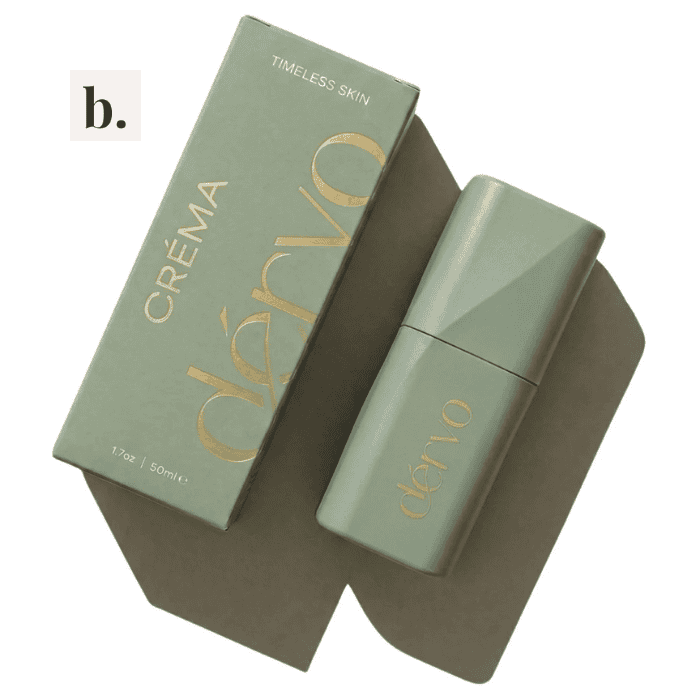
Dérvo
Créma Face Moisturizer
If you want a rich facial moisturizer, Dérvo Créma combines humectants, plant-derived emollients and several hyaluronic-acid forms for hydration. Its peptide and botanical ingredients make a treatment-oriented formula, but published marketing claims…
Read the BeautyBrief
Naturium
Multi-Peptide Rich Cream
If your skin needs a rich, cushioning moisturizer, Naturium Multi-Peptide Rich Cream combines emollients and humectants with palmitoyl pentapeptide-4 and copper tripeptide-1. Choose it for hydration with peptide extras, not for a…
Read the BeautyBrief