
Colloidal Oatmeal in Skincare
Colloidal oatmeal is a well-supported skin-protecting and soothing ingredient for dry, itchy, eczema-prone skin. It works best inside a fragrance-free moisturizer, ointment, or bath product with enough moisture support.
- Aliases
- Colloidal Oat
- Ingredient category
- Barrier-Supporting Ingredient, Skin-Soothing Ingredient
- Most relevant for
- Dryness, Eczema-Prone Skin, Skin Barrier Support
- Evidence strength
- Well Supported for Temporary relief of minor itching and irritation with qualifying OTC colloidal-oatmeal products
- Formula matters
- Product format, concentration, fragrance, and supporting humectants, emollients, and occlusives matter more than a large oat percentage alone; 1% is not automatically better.
- Separate product needed?
- Sometimes. A colloidal-oatmeal product can be useful when dry, itchy, or eczema-prone skin needs more relief than your current moisturizer provides.
BB takeaway
Colloidal oatmeal has strong support for soothing and protecting dry, itchy, eczema-prone skin. Choose the right complete moisturizer or bath product rather than chasing the highest oat percentage.
Ingredient evidence does not prove the performance of every finished product containing it.
What is colloidal oatmeal?
Colloidal oatmeal is finely milled oat material designed to disperse evenly in water or a topical formula. It contains several naturally occurring oat components rather than one isolated active molecule.
The term matters. Colloidal Oatmeal is not the same thing as oat oil, oat extract, oat water, hydrolyzed oat protein, or isolated beta-glucan.
In the United States, colloidal oatmeal is recognized as an over-the-counter skin-protectant active ingredient when a finished product meets FDA Monograph M016 requirements.[1]
What does colloidal oatmeal do for skin?
Colloidal oatmeal is most useful for dry, itchy, irritated-feeling, and eczema-prone skin.
In a well-formulated cream, ointment, lotion, or bath product, it can support moisture retention and temporarily relieve minor itching and irritation. That makes it especially useful when dryness and itch are the main problems.
For qualifying OTC skin-protectant products, FDA permits temporary-relief claims for minor skin irritation and itching associated with conditions such as eczema, rashes, insect bites, and poison ivy, oak, or sumac.[1]
That is not the same as curing eczema or replacing medical treatment when skin is significantly inflamed, infected, or not improving.
What the evidence says about colloidal oatmeal skincare
The evidence is strongest for complete leave-on emollient formulas used on dry or eczema-prone skin.
In a randomized two-week study, 61 people with mild-to-moderate atopic dermatitis completed treatment with either a 1% colloidal oatmeal cream or a basic fragrance-free moisturizer. The oat cream improved more eczema- and barrier-related measures, while both products improved hydration.[2]
That supports the tested cream, not a rule that every 1% colloidal oatmeal product is better than a simpler moisturizer. All authors worked for Johnson & Johnson Consumer Inc.
A randomized study in 90 children also found that one OTC 1% colloidal oatmeal cream was non-inferior to a prescription barrier cream over three weeks for mild-to-moderate atopic dermatitis symptoms.[3] Again, that supports the tested finished product rather than 1% as a universal ideal concentration. All three authors were affiliated with Johnson & Johnson Consumer Inc.
A 2025 review of colloidal-oat emollients in pediatric atopic dermatitis found supportive evidence for hydration, reduced water loss, barrier support, and symptom control.[4] The review was supported by Kenvue and all authors served as Kenvue consultants, so its conclusions should be read as supportive rather than independent proof of every colloidal-oat product.
For shoppers, the evidence supports colloidal oatmeal as a useful skin-protecting and soothing ingredient for dry, itchy, eczema-prone skin. The complete formula still matters more than the oat percentage alone.
How colloidal oatmeal form and formulation affect results
The product format changes how useful colloidal oatmeal is.
A leave-on cream or ointment is usually the better choice for very dry or eczema-prone skin because it can combine colloidal oatmeal with humectants, emollients, and occlusives. A lotion may be easier to spread over the body but may feel less protective.
A bath treatment can provide temporary relief over a large area, but it does not replace a leave-on moisturizer. A cleanser should be judged mainly by whether it cleans without leaving skin tight.
Supporting ingredients often make the bigger difference. Glycerin helps attract water, ceramides support the barrier, and petrolatum and dimethicone help slow moisture loss.
Fragrance matters too. Dermatologists generally recommend fragrance-free creams or ointments for atopic dermatitis because fragrance can trigger irritation or flares in some people.[5]
Do not assume 1% is automatically better than a lower amount. FDA’s OTC monograph allows colloidal oatmeal at a minimum of 0.007%, or 0.003% in a permitted mineral-oil combination, when the product meets the other monograph conditions.[1]
Who may benefit from colloidal oatmeal skincare?
Colloidal oatmeal makes the most sense when your skin is dry, itchy, rough, or eczema-prone.
It can be especially useful if frequent washing, cold weather, dry air, or another treatment leaves your skin uncomfortable.
If eczema is the main concern, look for a fragrance-free cream or ointment that provides enough moisture support rather than buying a lightweight oat serum simply because it sounds soothing.
You do not need colloidal oatmeal specifically if your current fragrance-free moisturizer already keeps your skin comfortable.
It is also not the main ingredient to seek out for acne, dark spots, wrinkles, infection, or deep wounds.
Colloidal oatmeal side effects and irritation risk
Colloidal-oatmeal products are generally well tolerated, but any finished formula can still irritate or trigger an allergic reaction.
Fragrance, preservatives, botanical extracts, or cleansing ingredients may be responsible for stinging, redness, itching, or rash.
Oat sensitization and allergic contact reactions are possible, especially in susceptible or atopic skin, even though many finished colloidal-oatmeal products have shown low sensitization potential.[6] If you have a known oat allergy, use extra caution and ask a healthcare professional whether a topical oat product is appropriate.
The Cosmetic Ingredient Review panel considered most reviewed Avena sativa-derived cosmetic ingredients safe under reported use conditions when formulated to avoid sensitization, but lacked sufficient evidence to assess oat meristem cell extract. Colloidal oatmeal itself was not assessed separately because its definition can include more than one oat species.[6]
Stop using the product if you develop persistent burning, swelling, hives, or a worsening rash.
How to use colloidal oatmeal in your skincare routine
Use the finished product according to its label.
For a moisturizer, apply after washing while the skin is still slightly damp, then reapply dry areas as needed.
For eczema-prone skin, use lukewarm water and avoid scrubbing. A fragrance-free cream or ointment applied after bathing is usually more useful than adding multiple soothing serums.
For a bath treatment, follow the labeled amount and soaking time. Qualifying OTC colloidal-oatmeal bath products also warn that the tub may become slippery.[1]
If you use prescription or OTC eczema medication, colloidal oatmeal can be a supportive moisturizer when your treatment plan allows it. It does not replace the medication.
How long does colloidal oatmeal take to work?
A good moisturizer or bath product can make skin feel softer or less tight after the first use.
Temporary itch relief may also begin quickly, but ongoing eczema improvement depends on regular moisturizing and appropriate treatment.
Clinical studies of 1% colloidal oatmeal creams measured improvement over about two to three weeks.[2][3] Those timelines belong to the tested products and should not be turned into a promise for every colloidal-oat formula.
If eczema is worsening, oozing, crusted, painful, widespread, or not improving, do not keep relying on a moisturizer alone.
What can you use with colloidal oatmeal?
Colloidal oatmeal fits easily into most moisturizing routines.
It works well alongside glycerin, ceramides, panthenol, hyaluronic acid, dimethicone, squalane, cholesterol, fatty acids, and petrolatum.
It can also be used in routines containing retinoids, exfoliating acids, or acne treatments when the complete routine remains comfortable.
A soothing moisturizer cannot undo an overly irritating routine. If your skin is burning, peeling, or becoming more inflamed, reduce the irritating step rather than layering more soothing products on top.
How to choose a colloidal oatmeal product
Start with the format your skin actually needs.
For very dry or eczema-prone skin, choose a fragrance-free cream or ointment with strong moisture support. For larger body areas, a lotion may be easier to use. Choose a bath treatment when widespread itching is the main problem.
If the product has a Drug Facts panel, colloidal oatmeal may be acting as an OTC skin-protectant active. FDA’s current monograph allows colloidal oatmeal at a minimum of 0.007%, or 0.003% in a permitted combination with mineral oil.[1]
That does not mean FDA individually approved the finished product, and it does not make a larger percentage automatically better. The product still has to meet the applicable monograph conditions.
Be cautious with “triple oat,” “prebiotic oat,” “microbiome balancing,” or similar marketing unless the finished product has useful testing for the benefit being claimed.
Colloidal oatmeal alone does not justify Premium or Luxury pricing. Pay more only when the complete formula gives you a meaningful advantage in comfort, moisture retention, texture, packaging, or credible finished-product testing.
Do you need a separate colloidal oatmeal product?
Sometimes.
A colloidal-oatmeal product can make sense when dry, itchy, or eczema-prone skin remains uncomfortable and your current moisturizer or bath routine is not doing enough.
You do not need an oat serum, oat cleanser, oat mist, and oat cream. One effective fragrance-free moisturizer or bath product is usually enough.
If petrolatum or another simple moisturizer already keeps your skin comfortable, colloidal oatmeal is optional rather than necessary.
The BB Perspective
Colloidal oatmeal has earned its reputation as a useful ingredient for dry, itchy, and eczema-prone skin.
Its strongest evidence is in properly formulated skin-protectant and emollient products—not in every cosmetic that uses an oat story. The complete formula still determines how moisturizing, tolerable, and useful the product actually is.
Choose colloidal oatmeal when it solves a real itch, dryness, or eczema-prone-skin need. Do not build an entire routine around oat ingredients or pay more simply because “oat” sounds soothing.
Last reviewed: September 2026
Sources
FDA Monograph M016 lists colloidal oatmeal as an OTC skin-protectant active ingredient at a minimum concentration of 0.007%, or 0.003% in a permitted combination with mineral oil. It also defines allowable temporary-relief claims, warnings, and directions for qualifying products. Products marketed under the monograph are not individually approved like new prescription drugs; they must comply with the monograph conditions. Return to citation.
Capone K, Kirchner F, Klein SL, Tierney NK. Effects of Colloidal Oatmeal Topical Atopic Dermatitis Cream on Skin Microbiome and Skin Barrier Properties. Journal of Drugs in Dermatology. 2020;19(5):524-531. doi:10.36849/JDD.2020.4924. PMID:32484623.
This randomized two-week study compared a cream containing 1% colloidal oatmeal with a standard fragrance-free moisturizer in people with mild-to-moderate atopic dermatitis; 61 participants completed the study. The oatmeal cream improved more eczema- and barrier-related measures, while both formulas improved hydration. All authors worked for Johnson & Johnson Consumer Inc. The findings support the tested formula rather than 1% colloidal oatmeal as a universal superiority claim. Return to citation.
Lisante TA, Nuñez C, Zhang P. Efficacy and safety of an over-the-counter 1% colloidal oatmeal cream in the management of mild to moderate atopic dermatitis in children: a double-blind, randomized, active-controlled study. Journal of Dermatological Treatment. 2017;28(7):659-667. doi:10.1080/09546634.2017.1303569. PMID:28366039.
This randomized trial included 90 children with mild-to-moderate atopic dermatitis and compared an OTC 1% colloidal oatmeal cream with a prescription barrier cream for three weeks. The oatmeal cream was non-inferior on eczema-severity outcomes, and both products were well tolerated. All three authors were affiliated with Johnson & Johnson Consumer Inc. The result supports that specific finished product rather than a class-wide claim that 1% is the ideal concentration. Johnson & Johnson Consumer Inc. funded the study and medical-writing support. Return to citation.
Fowler JF, Ma L, Bergman J, et al. Is colloidal oat an effective emollient ingredient for the prevention and treatment of atopic dermatitis in infants? Journal of Dermatological Treatment. 2025;36(1):2487945. doi:10.1080/09546634.2025.2487945. PMID:40256827.
This 2025 review summarized clinical and preclinical evidence on colloidal-oat emollients in pediatric atopic dermatitis and reported supportive findings for hydration, reduced transepidermal water loss, barrier support, symptom control, and tolerability. The article was supported by an unrestricted contribution from Kenvue; all authors served as Kenvue consultants, and Kenvue funded medical-writing support. It is useful as an up-to-date evidence review but should not be treated as independent proof that every colloidal-oat formula performs the same way. Return to citation.
American Academy of Dermatology. Atopic Dermatitis: Skin Care.
AAD recommends moisturizing after bathing and whenever skin feels dry and advises people with atopic dermatitis to choose fragrance-free creams or ointments rather than lotions when stronger moisture support is needed. This supports practical product-selection advice rather than proving a specific colloidal-oatmeal formula is superior. Return to citation.
This assessment found most reviewed Avena sativa-derived cosmetic ingredients safe under reported use conditions when formulated to avoid sensitization, but evidence was insufficient to reach a safety conclusion for oat meristem cell extract. It also summarizes mixed sensitization evidence: many finished colloidal-oatmeal products showed little or no sensitization in patch testing, while oat sensitization and contact-allergy reports exist, particularly in atopic populations. Colloidal oatmeal was not assessed as a separate cosmetic ingredient because its cosmetic definition can include more than one oat species; confirmed Avena sativa colloidal-oatmeal data were used as supporting information. CIR is funded by the Personal Care Products Council while stating that its Expert Panel and review process operate independently. Return to citation.
Products featuring Colloidal Oatmeal
These evaluated products list Colloidal Oatmeal among the Key Ingredients that meaningfully shape the formula. Inclusion here reflects ingredient relevance, not an endorsement or rating.
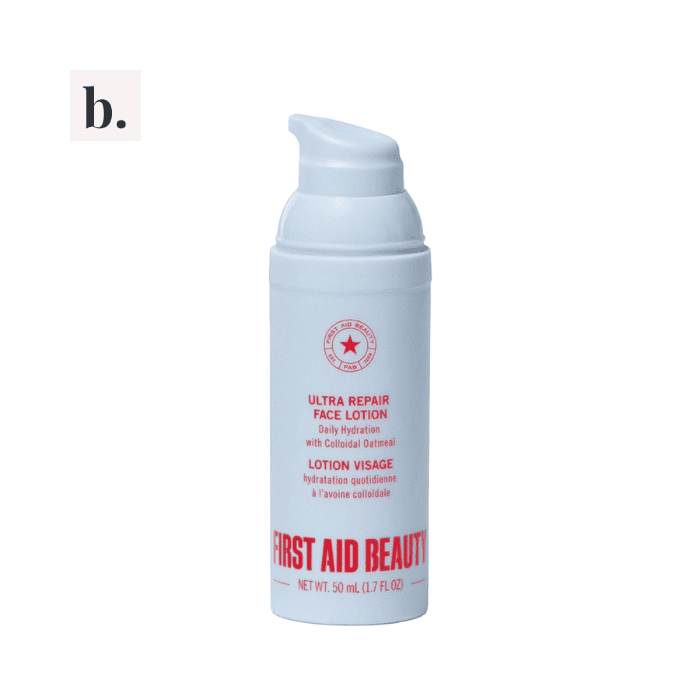
First Aid Beauty
Ultra Repair Face Lotion with Colloidal Oatmeal
If you prefer a lighter daily moisturizer, Ultra Repair Face Lotion combines humectants, emollients and colloidal oatmeal for softness and hydration. Its ingredients provide a barrier-support rationale but do not establish treatment…
Read the BeautyBrief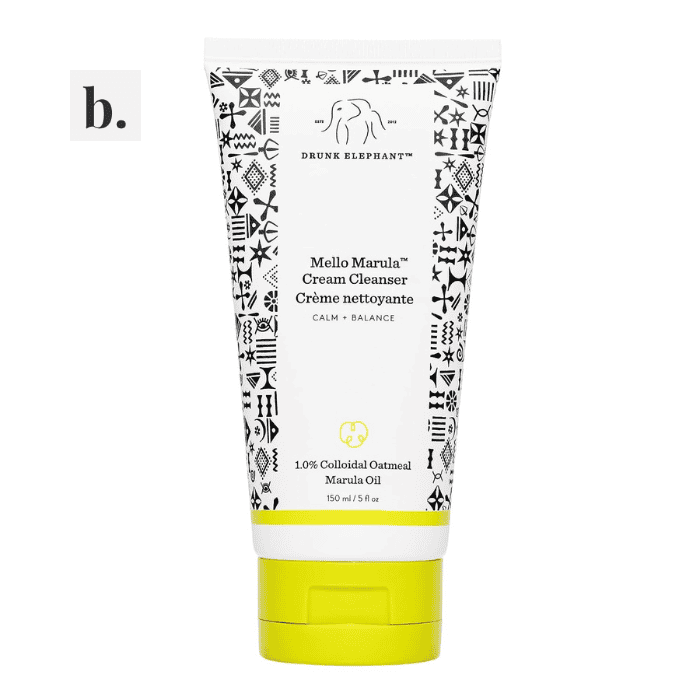
Drunk Elephant
Mello Marula Cream Cleanser
If you want a low-lather cleanser that removes sunscreen and makeup without a tight after-feel, Drunk Elephant Mello Marula combines a mild-leaning surfactant system with emollients and 1% colloidal oatmeal. Its Mid-Range…
Read the BeautyBrief
First Aid Beauty
Ultra Repair Firming Night Cream with Colloidal Oatmeal + Niacinamide
If your skin feels dry by bedtime, First Aid Beauty Ultra Repair Firming Night Cream offers glycerin, shea butter and dimethicone for a richer moisturizing finish. Niacinamide and peptides add skin-aging interest,…
Read the BeautyBrief
Peach & Lily
Rescue Party Barrier Comfort Cream
If your skin is dry or sensitive and likes richer creams, Rescue Party offers meaningful Mid-Range moisture value. If you are shopping for independently proven cream-only rapid barrier repair, the paired-routine study…
Read the BeautyBrief