
Sodium Laureth Sulfate in Skincare
Sodium Laureth Sulfate is an effective cleansing and foaming surfactant used mainly in rinse-off products. Tolerability depends more on concentration and the complete cleansing system than on the SLES name alone.
- Aliases
- SLES, Sodium Lauryl Ether Sulfate, Sodium Laureth Sulphate, Sodium Lauryl Ether Sulphate
- Ingredient category
- Cleansing Agent, Surfactant
- Evidence strength
- Well Supported for Cleansing oil, sweat, sunscreen residue, and everyday debris from skin in rinse-off products
- Formula matters
- Concentration, contact time, pH, and the other surfactants and moisturizing ingredients in the formula determine how mild or stripping an SLES cleanser feels.
- Separate product needed?
- Usually No. SLES is not an ingredient to seek out on its own; choose a cleanser because the complete formula cleans effectively without leaving your skin uncomfortable.
BB takeaway
SLES is a well-established cleanser, not an automatic harshness warning. Judge the finished surfactant system and how your skin feels after washing rather than shopping by sulfate labels alone.
Ingredient evidence does not prove the performance of every finished product containing it.
What is Sodium Laureth Sulfate?
Sodium Laureth Sulfate is an anionic surfactant used for cleansing and foaming. You may also see it called SLES, Sodium Lauryl Ether Sulfate, Sodium Laureth Sulphate, or Sodium Lauryl Ether Sulphate.
It is related to Sodium Lauryl Sulfate, or SLS, but they are not the same ingredient. Human patch-testing research has generally found SLES less irritating than SLS under comparable test conditions.[1]
SLES is still a sulfate, so a product containing it is not sulfate-free. That label can matter if sulfate-free is your preference, but it is not a reliable gentleness score.
What does Sodium Laureth Sulfate do for skin?
SLES helps water mix with oil, sunscreen residue, sweat, and everyday debris so they can be rinsed away.
Its established cosmetic role is cleansing. It also helps many rinse-off formulas spread and lather, although more foam does not mean better cleansing.
SLES is not an acne treatment, barrier treatment, exfoliant, or anti-aging active. Any extra skincare claims need to come from the rest of the formula or testing on the finished cleanser.
What the evidence says about Sodium Laureth Sulfate skincare
SLES is a well-established cleansing surfactant. For your skin, the more useful evidence concerns tolerability: concentration, contact time, and the rest of the surfactant system determine irritation potential.
The Cosmetic Ingredient Review Expert Panel found that SLES can irritate skin and eyes but is not considered a sensitizer based on the data it reviewed. Its conclusion was that SLES-containing products should be formulated to be non-irritating.[2]
Human studies show why judging SLES alone can be misleading. In one 13-person patch study, irritation changed depending on the total surfactant concentration and which other cleansers were mixed with SLES.[3]
Another study found that a mixed surfactant system built around SLES was milder than SLES alone in controlled testing, and the finished body cleanser did not worsen measured skin condition during four weeks of use.[4]
For your routine, SLES cleans effectively, but comfort depends on the complete formula and how you use the product.
How Sodium Laureth Sulfate form and formulation affect results
The complete cleansing system matters more than the ingredient name by itself.
Concentration, contact time, product pH, the other surfactants, moisturizing ingredients, and how easily the product rinses can all change how an SLES cleanser feels.
That is why ingredient-list position is not enough to predict mildness. Seeing SLES near the top of the list does not tell you its exact active concentration or how the surfactant blend behaves after the cleanser is diluted with water during use.
SLES is also an ethoxylated ingredient. Manufacturing some ethoxylated cosmetic ingredients can create trace 1,4-dioxane as a byproduct. FDA says 1,4-dioxane is not intentionally added as a cosmetic ingredient and that manufacturing changes have substantially reduced contamination levels over time.[5]
You cannot tell from an ingredient list whether a finished cleanser contains detectable 1,4-dioxane or at what level. That is a manufacturing-quality issue, not evidence that every SLES product is contaminated or unsafe.
Who may benefit from Sodium Laureth Sulfate skincare?
SLES can work well if you want an effective rinse-off cleanser for oil, sweat, sunscreen, or everyday buildup.
It is common in body washes, shampoos, and facial cleansers where easy rinsing and noticeable lather are part of the product experience.
Oily skin does not automatically need SLES, and dry or sensitive-feeling skin does not automatically need to avoid it.
If your current SLES cleanser removes what you need and leaves your skin comfortable, there is little reason to replace it solely because it contains a sulfate.
Sodium Laureth Sulfate side effects and irritation risk
The main shopper concern is irritation.
Stronger or longer exposure can leave skin feeling tight, dry, red, or uncomfortable. Laboratory patch tests use much longer contact than ordinary washing, but they consistently show that irritation rises with dose and exposure.[1][3]
Your skin may also react to another part of the cleanser, including fragrance, preservatives, exfoliating acids, or other surfactants.
If a cleanser repeatedly causes burning, cracking, worsening redness, or persistent dryness, switching to a gentler cleanser makes more sense than keeping it and adding more soothing products to compensate.
How to use Sodium Laureth Sulfate in your skincare routine
Use the finished cleanser according to its directions.
Massage it briefly over wet skin and rinse thoroughly. Longer washing does not make SLES cleanse better and can increase the overall cleansing burden.
If your skin tends to dry out, use lukewarm rather than very hot water and avoid unnecessary repeat cleansing.
After cleansing, use a moisturizer if your skin needs one. Ingredients such as glycerin and ceramides can support comfort, but they should not be used to justify a cleanser that consistently feels too harsh.
How long does Sodium Laureth Sulfate take to work?
SLES works while you cleanse.
There is no multi-week treatment timeline because its job is to help remove oil and debris during washing.
What changes with repeated use is tolerability. A cleanser that is too aggressive for your skin can contribute to ongoing dryness or irritation, while a well-balanced formula can remain comfortable as part of a regular routine.
What can you use with Sodium Laureth Sulfate?
SLES does not have the kind of ingredient conflicts associated with leave-on treatment actives.
The practical issue is the total irritation load of your routine. If you also use retinoids, exfoliating acids, benzoyl peroxide, or other drying treatments, cleanser mildness becomes more important.
A harsh cleanser plus strong treatments is often harder to tolerate than either one alone.
If cleansing is the step that leaves your skin tight or stinging, changing the cleanser usually makes more sense than trying to counteract it with extra serums.
How to choose a Sodium Laureth Sulfate product
Do not shop by SLES alone.
Start with what the cleanser needs to remove and how your skin feels afterward. A good cleanser should do its job without leaving persistent tightness, burning, flaking, or a stripped feeling.
A “sulfate-free” claim may matter to you personally, but it is not proof of a gentler formula. Alternative surfactants can also irritate, and human testing shows that surfactant combinations can change mildness substantially.[4]
If a brand claims “gentle,” “barrier-friendly,” or “for sensitive skin,” finished-product tolerability testing is more useful than whether SLES appears on the ingredient list.
Also ignore fear-based 1,4-dioxane marketing that treats the presence of an ethoxylated ingredient as proof of dangerous contamination. FDA describes 1,4-dioxane as a trace manufacturing byproduct and says levels in cosmetics have declined significantly over time.[5]
SLES itself does not justify Premium pricing. Pay more only when the complete cleanser gives you a meaningful advantage in tolerability, texture, packaging, performance, or credible finished-product testing.
Do you need a separate Sodium Laureth Sulfate cleanser?
No.
SLES is not an ingredient you need to seek out. It is one tool formulators use to build an effective cleanser.
If a cleanser containing SLES works well for your skin, keep it. If it leaves you consistently dry or irritated, choose a better cleanser rather than searching for one particular replacement surfactant.
The goal is a cleansing system that works, not a specific surfactant label.
The BB Perspective
Sodium Laureth Sulfate is an effective cleanser with real irritation potential, but it is not an automatic deal-breaker.
The evidence shows that dose, exposure, and the complete surfactant system change how SLES behaves. That makes it a good example of why ingredient blacklists are weak shopping tools.
Judge the finished cleanser. If it removes what you need and leaves your skin comfortable, SLES is not a problem that needs fixing. If the cleanser strips or irritates your skin, move on regardless of whether the next formula is sulfate-free.
Last reviewed: September 2026
Sources
Löffler H, Happle R. Profile of Irritant Patch Testing with Detergents: Sodium Lauryl Sulfate, Sodium Laureth Sulfate and Alkyl Polyglucoside. Contact Dermatitis. 2003;48(1):26-32. PMID:12641575.
This human patch-testing study compared SLS, SLES, and an alkyl polyglucoside at several concentrations and exposure times. SLS produced the strongest irritation response, SLES produced a milder but detectable response, and the alkyl polyglucoside produced the least visible response in this model. Patch testing creates much longer and more concentrated exposure than ordinary rinse-off cleansing, so the study is useful for comparing irritation potential rather than predicting exactly how a retail cleanser will feel. Return to citation.
Robinson VC, Bergfeld WF, Belsito DV, et al. Final Report of the Amended Safety Assessment of Sodium Laureth Sulfate and Related Salts of Sulfated Ethoxylated Alcohols. International Journal of Toxicology. 2010;29(4 Suppl):151S-161S. PMID:20634505.
The Cosmetic Ingredient Review Expert Panel found dermal and ocular irritation potential but did not identify SLES as a sensitizer in the reviewed data. The panel concluded that these ingredients should be used only in formulations designed to be non-irritating. The report supports evaluating SLES in the context of a finished cosmetic rather than treating the raw ingredient’s irritation potential as the outcome of every cleanser. CIR is financially supported by the Personal Care Products Council. Return to citation.
Turkoglu M, Pekmezci E, Sakr A. Evaluation of Irritation Potential of Surfactant Mixtures. International Journal of Cosmetic Science. 1999;21(6):371-382. PMID:18503452.
Thirteen human participants received 24-hour closed-patch applications of SLES alone and in several surfactant mixtures. Irritation increased with dose and varied among formulas, showing that total surfactant concentration and the combination of surfactants affect irritation potential. The closed-patch method is much harsher than ordinary cleansing and should not be read as the expected response to a brief rinse-off face wash. Return to citation.
Takagi Y, Shimizu M, Morokuma Y, et al. A New Formula for a Mild Body Cleanser: Sodium Laureth Sulphate Supplemented with Sodium Laureth Carboxylate and Lauryl Glucoside. International Journal of Cosmetic Science. 2014;36(4):305-311. PMID:24617572.
This research included a short controlled detergent test and a four-week finished-cleanser usage study. A mixed surfactant system built around SLES behaved more mildly than SLES alone in the controlled test, and the finished cleanser did not worsen measured skin condition during regular use. All authors were affiliated with Kao Corporation, so the findings apply to the tested system and are industry-connected rather than proof that every SLES blend is mild. Return to citation.
U.S. Food and Drug Administration. 1,4-Dioxane in Cosmetics: A Manufacturing Byproduct.
FDA explains that trace 1,4-dioxane can form during manufacture of certain ethoxylated cosmetic ingredients, including materials identifiable by “-eth-” naming. It is not intentionally added as a cosmetic ingredient. FDA reports that manufacturing changes have significantly reduced levels over time and cites international assessments finding recent reported levels within acceptable margins of exposure. The presence of SLES on an INCI list does not establish whether a finished product contains detectable 1,4-dioxane. Return to citation.
Products featuring Sodium Laureth Sulfate
These evaluated products list Sodium Laureth Sulfate among the Key Ingredients that meaningfully shape the formula. Inclusion here reflects ingredient relevance, not an endorsement or rating.
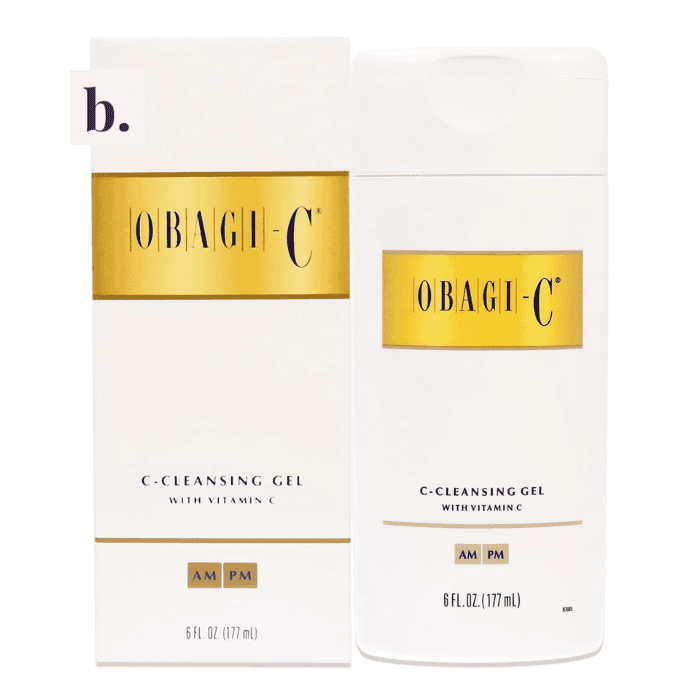
Obagi
C® Fx C-Cleansing Gel
If you want a traditional foaming cleanser, Obagi-C Fx C-Cleansing Gel provides useful everyday washing for oil and residue. Its vitamin C does not establish the results of a leave-on treatment, while…
Read the BeautyBrief
Olay
Detoxifying Pore Scrub with Pro-Vitamin B5
If you enjoy a foaming scrub, Olay supplies hydrated silica and a salicylic-acid ingredient. Fragrance, MCI/MI preservatives and added friction matter for sensitive or treatment-stressed skin. At the Budget tier, its value…
Read the BeautyBrief
Bioré
Oil Control Deep Pore Charcoal Cleanser
If your oily skin prefers strong foam, Bioré supplies everyday cleansing with charcoal and menthol. Fragrance and colorants can affect sensitive-skin tolerance, while the pore-treatment claims remain limited. At the Budget tier,…
Read the BeautyBrief
Bioré
Purify & Reset Daily Cleanser
If your oily skin prefers cooling foam, Bioré supplies strong surface cleansing. Its fragrance and colors may not suit reactive skin, while charcoal does not establish acne treatment. At the Budget tier,…
Read the BeautyBrief
Clinique
All About Clean™ Liquid Facial Soap Oily Skin Formula
If you have oily skin and tolerate its preservatives, Clinique Oily Formula provides rich fragrance-free cleansing. MCI/MI matters for sensitized skin, and saw palmetto is absent from its published full INCI. At…
Read the BeautyBrief
Clinique
All About Clean™ Liquid Facial Soap Mild
If you have dry-combination skin and like lather, Clinique Liquid Facial Soap Mild provides routine cleansing with conditioning ingredients. Its MCI/MI preservatives matter if you are sensitized, despite the fragrance-free description. At…
Read the BeautyBrief