SaponiQ Purify Review
BeautyBrief™
Brand
SaponiQ
Product
Purify
Claims check
SaponiQ Purify combines traditional soap, charcoal and essential oils for aromatic cleansing; finished-product acne and detoxification benefits have not been demonstrated.
Shopper fit
- Combination
- Oily
Formula flags
- Essential oils
Shopper preferences
- Vegan
- Cruelty-Free
Key ingredients
| Activated Charcoal | Has adsorption properties, but does not prove this bar treats acne or clears your pores. |
|---|---|
| Tea Tree Essential Oil | Contributes scent and a possible tolerability concern if your skin reacts to essential oils. |
| Grapefruit Essential Oil | Provides a citrus scent that matters if you prefer fragrance-free cleansing. |
| Clove Essential Oil | Adds spicy aroma and further essential-oil exposure during cleansing. |
| Organic Coconut Oil | Provides one of the oils used to produce the soap base and its lather. |
Price tier
$$$ Premium
Value check
At the Premium tier, you pay for a small-batch charcoal and essential-oil experience rather than measured acne-control effects.
Bottom line
If you love a dramatic charcoal bar with a citrus-spice fragrance, SaponiQ Purify makes everyday cleansing more sensory. Its Premium appeal is the handmade lather and distinctive aroma.
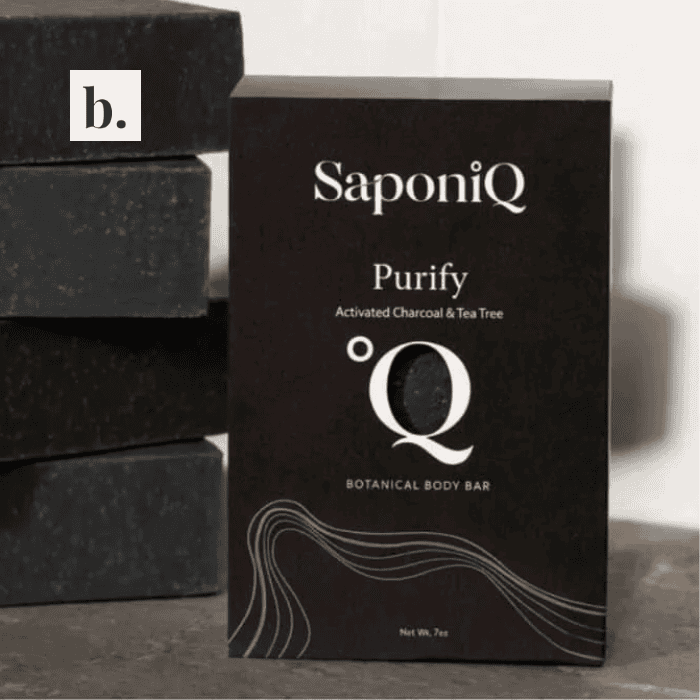
Charcoal soap has a certain allure: a dark bar, a rich lather and the feeling that your skin is getting a deep clean. SaponiQ Purify adds tea tree, grapefruit and clove essential oils to that experience, creating a crisp citrus-spice wash.[1]
The drama is in the color and aroma. The charcoal doesn’t mean the bar can draw out acne or medically detoxify your skin.
What it claims
The brand positions Purify for combination, oily and blemish-prone skin and describes a refreshed, smoother-feeling result. Charcoal’s adsorption properties do not establish that this exact rinse-off bar clears pores or treats pimples.[1]
Claims vs. formula
SaponiQ lists plant oils, water and sodium hydroxide among the inputs used to make the cured bar. Soapmaking converts oils and alkali into the cleansing base, while the charcoal and three essential oils are added for product character. No published finished-bar pH or clinical acne outcomes establish treatment superiority.[3]
Ingredients that matter
Plant oils form the soapmaking base that removes everyday residue, while activated charcoal gives the bar its dark look and defining ingredient story. Tea tree, grapefruit and clove oils create its aromatic profile.
Those essential oils are worth noting if your skin reacts to strongly scented products. Charcoal’s presence alone doesn’t turn a rinse-off soap into a clinically tested acne treatment.
Safety and regulatory context
Conventional soapmaking ingredient lists do not disclose the finished bar’s measured pH or prove that residual free lye remains. Published comparisons of other soaps help explain why your individual cleansing tolerance matters, but do not measure this SaponiQ bar.[2]
SaponiQ’s official brand policy identifies its products as vegan and cruelty-free; the description is brand-declared rather than evidence of a separate independent certification.[4]
What to expect in the short term
You can expect a dark lathering bar and a pronounced citrus-spice scent while it removes everyday skin oils. You should not expect medically meaningful detoxification from charcoal soap.
What to expect over time
This product remains a repeated cleansing step, not a course of acne treatment. If your face feels tight or stings after repeated washing, a milder and fragrance-free cleanser may better fit your routine.
Who it fits
If your skin is combination or oily and you enjoy essential-oil soap, Purify offers a scented bar option. Fragrance-reactive or dry skin may prefer a gentler wash; the brand declares its range vegan and cruelty-free.
Compare before you buy
Purify’s Premium price is easiest to justify if you enjoy its charcoal appearance and crisp, spicy fragrance. If breakouts are your main concern, choose an acne treatment on its own evidence, not the look of a cleansing bar. A simple unscented wash may be more comfortable if your skin becomes tight after soap.
Final Assessment
Purify is a soap with personality: charcoal-dark, citrus-spiced and handmade for an enjoyable wash. Its cleansing ingredients can do the everyday job, while the detox and acne story remains unproven for this bar. The charcoal-dark color and citrus-spice scent make Purify a distinctive handmade cleansing ritual.
Last reviewed: October 2026
Sources
-
SaponiQ. Purify — Activated Charcoal Detox Botanical Face & Body Bar. Official U.S. product page. Accessed October 11, 2026.
-
Sanchez N, Fayne R, Burroway B. Charcoal: An ancient material with a new face. Clinics in Dermatology. 2020;38(2):262–264.
-
Khosrowpour Z, Ahmad Nasrollahi S, Samadi A, et al. Skin biophysical assessments of four types of soaps by forearm in-use test. Journal of Cosmetic Dermatology. 2022;21(7):3127–3132.
-
SaponiQ. Frequently Asked Questions — Products and Ingredients. Official brand-controlled FAQ. Accessed October 11, 2026.