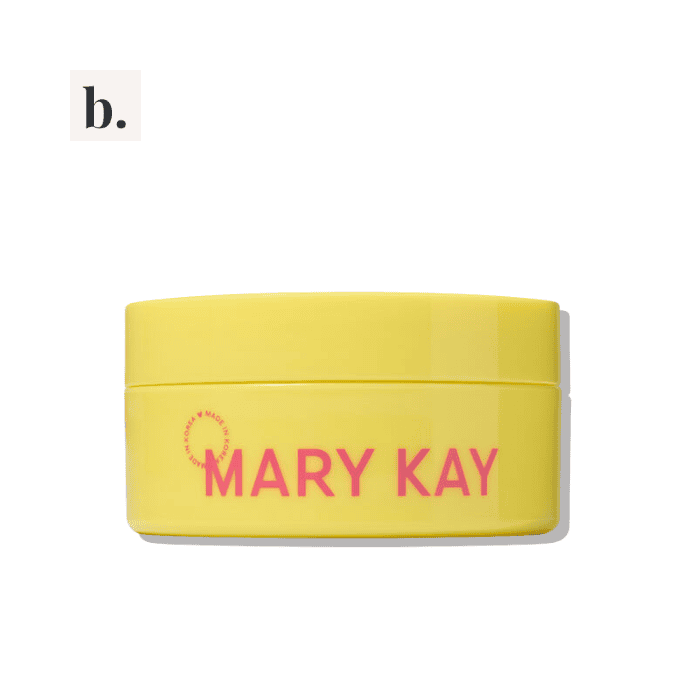
Special-Edition Mary Kay Melt-In Cleansing Balm Review
BeautyBrief™
Brand
Mary Kay
Product
Special-Edition Melt-In Cleansing Balm
Claims check
You get effective oil-and-emulsifier cleansing, but salmon-derived sodium DNA does not establish skin regeneration during rinsing.
Shopper fit
- Dry
- Normal
- Combination
Formula flags
- None identified
Shopper preferences
- None Found
Key ingredients
| Cetyl Ethylhexanoate | Provides the main balm-to-oil slip for dissolving makeup and sunscreen. |
|---|---|
| Ethylhexyl Palmitate | Supplies emollient slip and dissolves oily makeup residue as part of the rinse-off balm. |
| Polyglyceryl-6 Dicaprate | Helps the balm emulsify with water and rinse cleanly. |
| Oryza Sativa (Rice) Bran Oil/Oryza Sativa Bran Oil | Provides supportive emollience alongside the main cleansing and emulsifying ingredients. |
| Sodium DNA | Supplies the salmon-derived PDRN claim but lacks finished-product evidence of regeneration after rinsing. |
Price tier
$$ Mid-Range
Value check
At the Mid-Range tier, you pay for controlled balm dispensing and makeup removal rather than a proven PDRN treatment.
Bottom line
If you want a twist-to-dispense cleansing balm, Mary Kay Melt-In uses emollients and emulsifiers to loosen makeup. Its salmon DNA ingredient rules out vegan fit, and its Mid-Range value rests on convenience rather than regeneration.
If you want a balm that dissolves face makeup and rinses milky, Mary Kay Special-Edition Melt-In Cleansing Balm uses cetyl ethylhexanoate, ethylhexyl palmitate and polyglyceryl emulsifiers for oil-soluble cleansing. Mary Kay includes salmon-derived sodium DNA, but it is a rinse-off ingredient rather than proven skin regeneration.

What it claims
Mary Kay describes the product as a balm-to-oil-to-milk cleanser for face makeup and excess oil. Its oil-and-emulsifier system also provides a formula-based rationale for lifting sunscreen, but that result is not separately documented as a finished-product removal test.[1] The brand also highlights PDRN from salmon DNA, rice bran oil, and vitamin E.
Claims vs. formula
The makeup-removal claim is well aligned with the formula. Cetyl ethylhexanoate and ethylhexyl palmitate provide the main oil-soluble cleansing slip, while polyglyceryl-6 dicaprate and polyglyceryl-10 dioleate help the balm emulsify and rinse. Rice bran oil and tocopherol add supporting emollient and antioxidant context. Sodium DNA is listed last, but ingredient order alone cannot establish its concentration. The brief rinse-off exposure and absence of finished-product regeneration evidence do not justify treating salmon DNA/PDRN as a demonstrated skin-repair benefit.
Ingredients that matter
Cetyl Ethylhexanoate and Ethylhexyl Palmitate loosen makeup and skin oils, while Polyglyceryl-6 Dicaprate helps the formula turn milky when you add water. Oryza Sativa (Rice) Bran Oil and tocopherol contribute emollient and antioxidant-related properties, although their short rinse-off contact limits treatment expectations. Sodium DNA is sourced from salmon according to the brand; that means the formula is not vegan and does not establish a regenerative effect after washing.

Safety and regulatory context
Mary Kay identifies sodium DNA as purified fragments obtained from salmon. That means the balm does not meet a Vegan preference, even though no perfume or added fragrance is listed in the published ingredients.[1] If you have a known fish allergy or avoid animal-derived cosmetics, that source is relevant to your choice; the INCI alone does not establish an allergy reaction rate for this finished wash.
Ethylhexyl palmitate has shown comedogenic potential when tested in concentrated exposure, but this is an emulsifying rinse-off cleanser and no exact-product comedogenicity result is disclosed. Do not treat an ingredient hazard score as proof the entire balm will clog your pores.
What to expect in the short term
Expect oil-like slip during massage and a milky emulsion after adding water. Mary Kay directs users to twist the dispenser, massage the balm over the face, and rinse thoroughly; it can be used alone or as the first cleanse.
What to expect over time
The repeat-use benefit is comfortable cleansing and makeup removal rather than skin regeneration. Any PDRN-related treatment expectation is not supported by the format.
Who it fits
If you have normal, dry or combination skin and want a fragrance-free first cleansing step, the twist-to-dispense balm offers a convenient way to remove face makeup and oily buildup before rinsing. A short ingredient list is not a tolerance guarantee, and the salmon-derived sodium DNA rules it out for vegan shoppers. If your skin tends to clog with rich oils, consider how a rinse-off balm performs for you rather than inferring a result from one ingredient alone.
Compare before you buy
At the Mid-Range tier, the practical value is a twist-to-dispense balm that melts to oil, emulsifies and rinses cleanly. Similar cleansers can perform makeup removal without a salmon-DNA story. If easy first-cleansing and compact dispensing matter to you, the format justifies consideration; the PDRN claim does not independently establish skin regeneration or a need to pay extra.
Final Assessment
If you want a twist-to-dispense first cleanser, Mary Kay Melt-In Cleansing Balm offers a credible oil-and-emulsifier system for softening and removing makeup. The salmon-derived sodium DNA is not evidence of skin regeneration in a short wash. Its Mid-Range value comes from the dispensing and rinsing format rather than the PDRN story.
Last reviewed: October 2026
Sources
Mary Kay. Special-Edition Mary Kay Melt-In Cleansing Balm. Official U.S. product page, including the full ingredient declaration, application instructions and limited-edition availability.