

Dr. Whitney Bowe Beauty Bowe Glowe™ Microbiome Nourishing Cream Review
BeautyBrief™
Brand
Dr. Whitney Bowe Beauty
Product
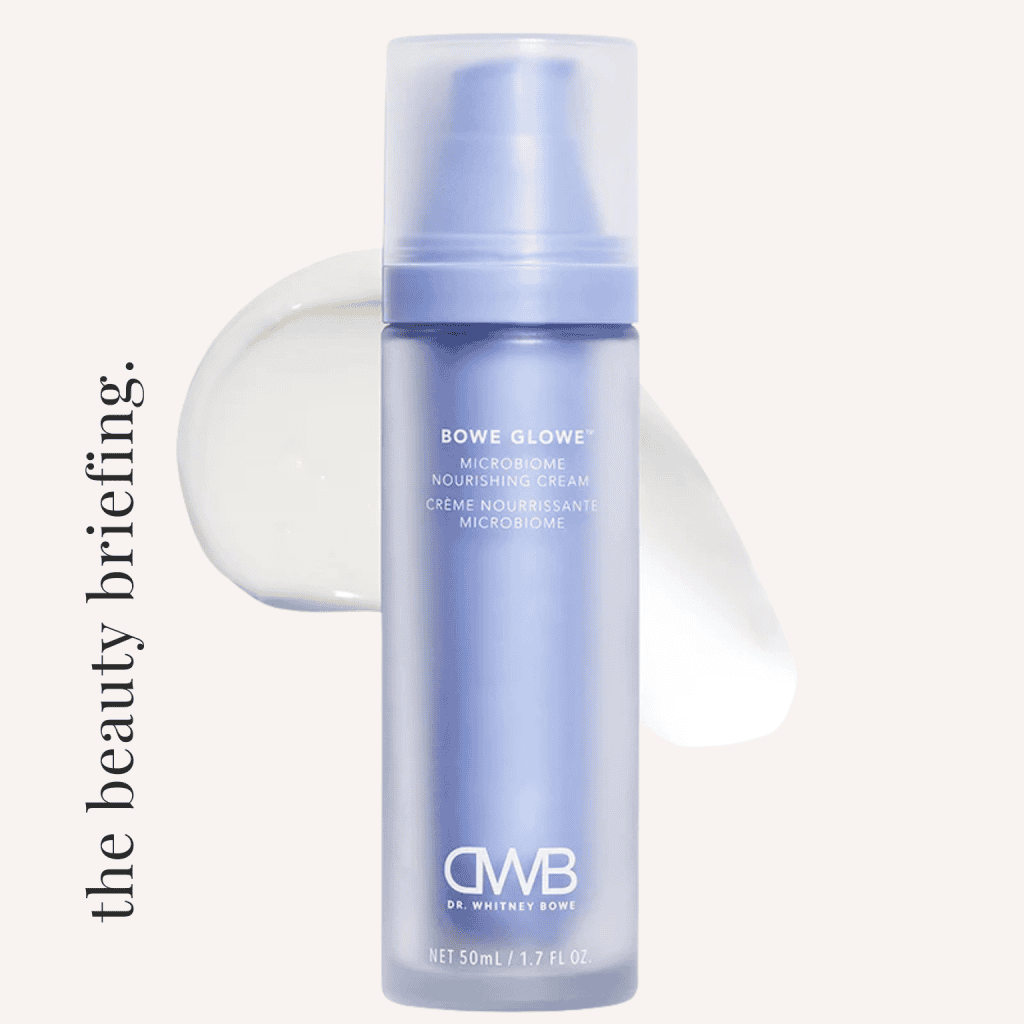
Bowe Glowe™ Microbiome Nourishing Cream
Claims check
Product-specific TEWL and four-week use data support barrier, hydration, and visible-smoothing claims, while the reported microbiome-diversity increase comes from a combined Bowe Glowe plus Bowe Growe regimen and cannot be attributed to the cream alone.
Shopper fit
- Dry
- Normal
- Combination
- Sensitive
Formula flags
- None identified
Shopper preferences
- Vegan
Key ingredients
| Squalane | Provides lightweight emollience and helps reduce a dry, tight feel. |
|---|---|
| Glycerin | Adds dependable humectant support within the moisturizing base. |
| Ceramide NP | Adds a barrier-lipid component within the broader emollient system. |
| Inulin | Adds a prebiotic component that supports the formula's microbiome-focused design. |
| Lactobacillus Ferment | Adds a ferment-derived postbiotic component without establishing a cream-alone microbiome outcome. |
Price tier
$$$ Premium
Value check
The Premium tier is best supported by the well-rounded barrier formula, product-specific TEWL and four-week use data, texture, and refillable packaging; the microbiome-diversity result comes from a combined cream-plus-elixir regimen rather than the moisturizer alone.
Where to buy
We may earn a commission through these links at no additional cost to you. This does not affect our BeautyBrief.
Bottom line
This fragrance-free cream is best aligned with shoppers who want a nourishing barrier moisturizer backed by product-specific hydration and barrier testing. Its microbiome-focused formula is relevant, but the published diversity result comes from Bowe Glowe used with Bowe Growe, so the strongest value remains documented moisture, barrier support, texture, and refillable packaging.
Dr. Whitney Bowe Beauty Bowe Glowe™ Microbiome Nourishing Cream is a Premium day-and-night moisturizer built around squalane, glycerin, shea oil, Ceramide NP, sodium hyaluronate, and microbiome-focused ingredients including inulin, alpha-glucan oligosaccharide, and lactobacillus ferment.[1]
The hydration and barrier case is stronger than the microbiome story. Bowe Glowe has product-specific barrier and user-perception testing, but the brand’s published microbiome-diversity result comes from a combined Bowe Glowe plus Bowe Growe regimen rather than the cream alone.[1]
What it claims
Dr. Whitney Bowe Beauty says Bowe Glowe strengthens the skin barrier, deeply hydrates, visibly smooths fine lines, and helps balance the skin microbiome. The brand reports an independent 20-subject TEWL study after one application, a four-week independent use study of 30 subjects using the cream twice daily, and a separate 32-subject system study using Bowe Growe once daily plus Bowe Glowe twice daily.[1]
Claims vs. formula
The hydration and barrier claims are well aligned with the formula. Squalane, glycerin, shea oil, sunflower oil, Ceramide NP, sodium hyaluronate, lecithin, bisabolol, and other emollient ingredients provide complementary humectant, lipid, and skin-conditioning support.[1]
The product-specific testing adds useful finished-formula evidence. The brand reports that 20 subjects showed improved transepidermal water loss one hour after a single Bowe Glowe application, while separate four-week testing in 30 subjects produced strong hydration and visible-smoothing perception results.[1] Those results support the moisturizer’s barrier, hydration, and appearance claims more directly than ingredient theory alone.
The microbiome claim needs a narrower reading. Inulin, alpha-glucan oligosaccharide, and lactobacillus ferment give the formula a real prebiotic/postbiotic basis, but the current page’s next-generation-sequencing result was measured in a 32-subject study using both Bowe Growe and Bowe Glowe.[1] That means the reported increase in microbiome diversity cannot be assigned to this cream alone.
Independent dermatology reviews describe topical prebiotic and postbiotic approaches as promising, while also noting that microbiome-focused cosmetic evidence remains heterogeneous and lacks standardized criteria for translating microbial changes into clinical benefit.[2] For shoppers, that makes the cream’s barrier and hydration performance more concrete than the microbiome-diversity language.
Ingredients that matter
Squalane: Provides lightweight emollience and helps reduce a dry, tight feel.
Glycerin: Adds dependable humectant support within the moisturizing base.
Ceramide NP: Adds a barrier-lipid component within the broader emollient system.
Inulin: Adds a prebiotic component that supports the formula’s microbiome-focused design.
Lactobacillus ferment: Adds a ferment-derived postbiotic component without establishing a cream-alone microbiome outcome.

Squalane
If your skin feels dry or rough, squalane can make it feel softer and smoother. You don't need a separate oil when your moisturizer already keeps your skin comfortable.
Read the IngredientBrief
Glycerin
If your skin feels dry or tight, glycerin helps your skin hold moisture. You don't need a high percentage or a separate serum when your moisturizer already works well.
Read the IngredientBrief
Ceramides
If your skin feels dry or tight, ceramides support the moisture barrier when they're part of a well-formulated moisturizer. You don't need a longer ceramide list to get a better…
Read the IngredientBrief
Sodium Hyaluronate
Sodium hyaluronate is a well-established humectant and skin-conditioning form of hyaluronic acid for surface hydration and temporary plumping. Molecular weight and the complete formula matter more than the ingredient name…
Read the IngredientBriefWhat to expect in the short term
Expect a silky, nourishing cream with more cushion than a gel moisturizer but without added fragrance. Dr. Whitney Bowe Beauty directs users to apply it generously to the face, neck, and chest morning and night.[1] The strongest immediate benefits are softness, comfort, and a more moisturized feel.
What to expect over time
The most defensible longer-term expectations are better moisture retention, continued barrier support, and smoother-looking skin. The brand’s product-specific TEWL and four-week use data support those outcomes more directly than the microbiome language.[1]
The microbiome-focused ingredients add an interesting formulation layer, but shoppers should not read the brand’s diversity result as proof that Bowe Glowe alone produces a specific microbiome change. The published public-page result comes from the combined cream-plus-elixir regimen.
Who it fits
Dry, normal, combination, and sensitive skin have the clearest fit, especially when barrier support and a fragrance-free cream texture are priorities. Shoppers with oily skin can still use the formula, but those who consistently prefer gel textures may find the finish richer than necessary.
For BB’s controlled Shopper Preferences, Vegan is supported by product-specific labeling plus the brand’s stated outer-skincare policy excluding animal derivatives. Cruelty-Free is also claimed by the brand, but BB does not carry it into BeautyBrief because the current public record does not provide a recognized certification or enough testing-policy detail to meet the strict V2 proof threshold.[3]
Compare before you buy
Bowe Glowe makes the most sense when the shopper wants a richer barrier moisturizer with finished-product testing and is interested in microbiome-focused formulation. Shoppers whose main goal is simply basic barrier support can find simpler ceramide-and-humectant creams at lower tiers, so the Premium spend is most defensible when texture, refillable packaging, finished-product testing, and the broader formula matter.
For repeat users, the Bowe Glowe Refill uses the same moisturizer positioning in a lower-packaging format and is the more practical choice once the original pump and bottle are already on hand.[4]
Final Assessment
Bowe Glowe™ Microbiome Nourishing Cream makes the strongest case as a Premium barrier-and-hydration moisturizer with useful finished-product testing and a well-built fragrance-free formula. Its microbiome-focused ingredients are relevant, but the current microbiome-diversity result comes from a combined Bowe Glowe plus Bowe Growe regimen rather than the cream alone. The value is therefore clearest for shoppers prioritizing documented moisture and barrier performance, texture, and refillable packaging—not for shoppers paying mainly for the word microbiome.
Where to buy
Choose a retailer to view current pricing and availability.
We may earn a commission through these links at no additional cost to you. This does not affect our BeautyBrief.
Last reviewed: October 2026
Sources
- Dr. Whitney Bowe Beauty. Bowe Glowe™ Microbiome Nourishing Cream. Current official U.S. product page. Accessed October 6, 2026.
Used to verify current product identity, 50 mL / 1.7 fl oz size, complete ordered formula, claims, directions, fragrance-free and Vegan labeling, product status, brand-direct Price Tier context, the 20-subject TEWL study, 30-subject four-week cream study, and the separate 32-subject Bowe Growe plus Bowe Glowe system study.
- Mim MHF, et al. The dynamic relationship between skin microbiomes and personal care products: A comprehensive review. Heliyon. 2024;10(14):e34549.
Used for broader context on skincare-driven microbiome changes and the continuing need for better multi-study evidence. It does not test Bowe Glowe.
- Dr. Whitney Bowe Beauty. About Dr. Whitney Bowe Beauty. Current brand policy page. Accessed October 6, 2026.
Used to verify the brand’s outer-skincare policy excluding animal derivatives and its cruelty-free statement. Product-specific Vegan labeling is also present on the Bowe Glowe product page.
- Dr. Whitney Bowe Beauty. Bowe Glowe Refill Microbiome Nourishing Cream. Current official U.S. product page. Accessed October 6, 2026.
Used only for the refill comparison.