

OSEA Atmosphere Protection® Cream Review
BeautyBrief™
Brand
OSEA
Product
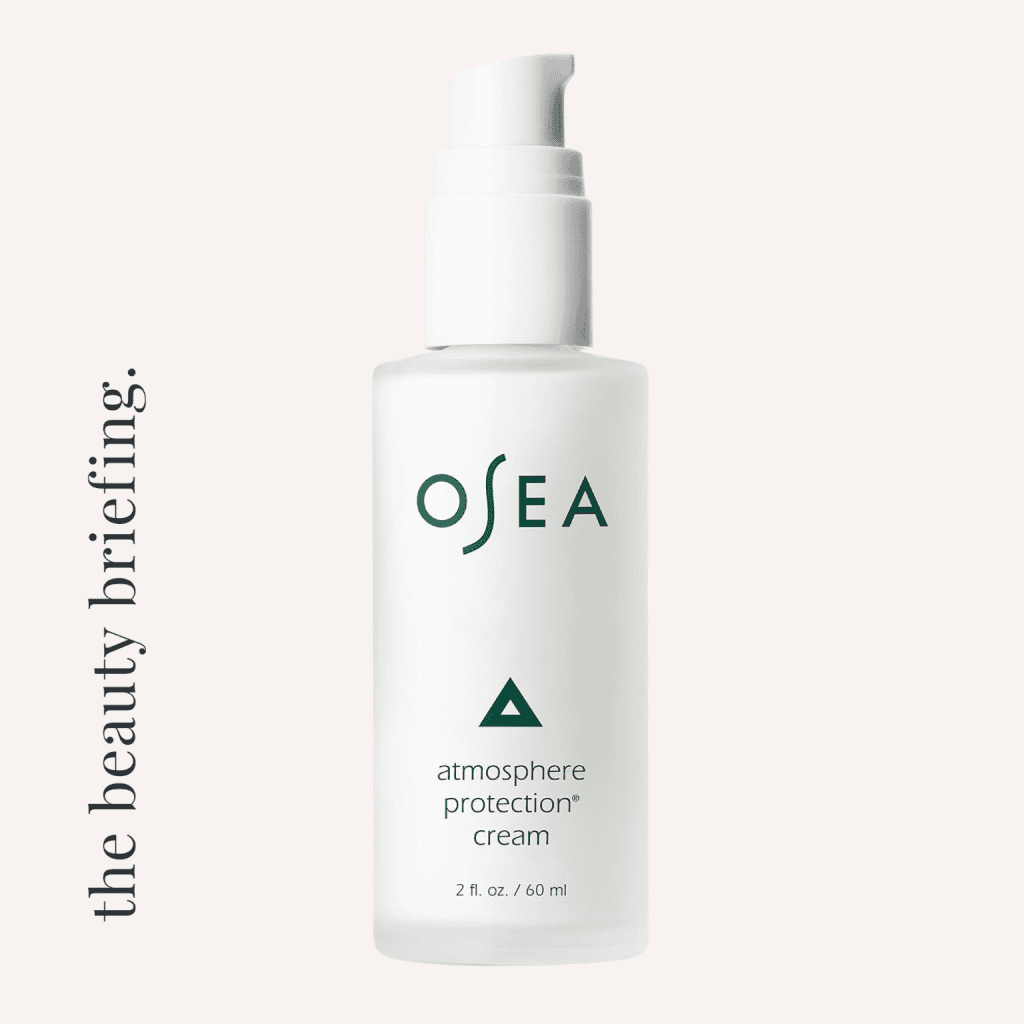
Atmosphere Protection® Cream
Claims check
You get lightweight moisture and a brand-reported single-use pollution-barrier test, but the published evidence does not establish a finished-product microbiome benefit or lasting pollution-related anti-aging results.
Shopper fit
- Normal
- Combination
Formula flags
- Essential oils
Shopper preferences
- Vegan
- Cruelty-Free
Key ingredients
| Glycerin | Helps attract water to the outer layers of skin and supports hydration. |
|---|---|
| Niacinamide | Supports the skin barrier and hydration, giving the cream more to offer than basic moisturization. |
| Shea Butter | Helps soften skin and reduce moisture loss without making the cream especially heavy. |
| Jojoba Oil | Helps soften skin and reduce moisture loss without turning the cream dense or greasy. |
| Undaria Pinnatifida Extract | Seaweed-derived conditioning context; no published product-level microbiome measurement is available. |
Price tier
$$$ Premium
Value check
At the Premium tier, you pay for a fragranced niacinamide moisturizer with a specific short-term pollution-barrier test, not proof of microbiome restoration or superior daily hydration.
Where to buy
We may earn a commission through these links at no additional cost to you. This does not affect our BeautyBrief.
Bottom line
If you enjoy a floral-herbal moisturizer and value a published pollution-barrier test, Atmosphere Protection offers a differentiated Premium option. If you are fragrance-sensitive or want only basic hydration, a simpler unscented cream is the more economical fit.
If you want a lightweight cream for daytime moisture with a botanical scent, OSEA Atmosphere Protection® Cream combines glycerin, niacinamide, shea butter, avocado oil, jojoba oil and seaweed extracts. It is positioned at a Premium price partly because OSEA publishes a test of an immediate protective effect against environmental pollutants.
That measurement is different from proving the cream restores your skin microbiome or prevents pollution-related skin aging over time. Multiple aromatic essential oils also make it a less straightforward choice when you avoid scented skincare.
What it claims
OSEA says Atmosphere Protection Cream instantly creates a barrier against environmental pollutants, hydrates and improves the look of elasticity. The brand also promotes microbiota balance and a smooth finish that sits under makeup and sunscreen.[1]
The brand reports a single-use clinical pollution-barrier study of 21 women ages 19–50. A separate four-week consumer-perception study of 33 women records perceived soothing and hydration, with 88% reporting less noticeable fine lines after two weeks. These study types answer different questions; subjective wrinkle impressions and a short pollution-barrier endpoint do not prove permanent reversal of skin aging.
Claims vs. formula
Glycerin, propanediol and saccharide isomerate provide humectant support, while caprylic/capric triglyceride, coco-caprylate/caprate, shea butter, jojoba and avocado oils supply lightweight-to-moderate emollience. The result is a moisturizer rather than a physical pollution mask or sunscreen.
Niacinamide gives the product a barrier-related and skin-appearance ingredient with an established scientific rationale; a human study of topical nicotinamide describes effects on outer-skin lipids and water loss. That work does not test this OSEA formula or establish pollution protection from niacinamide specifically.[2]
The 21-person product test directly addresses OSEA’s pollution-barrier claim, though the public summary gives limited information about how that barrier was measured or how the finding predicts real-world exposure. The four-week panel supports participants’ impressions of softer-looking skin, not an objective clinical microbiome measurement.
Seaweed and algin extracts, along with inula extract, provide the marine-botanical context for the marketed protective and microbiota claims. The current product page does not publish skin-microbe species counts, diversity measures or another comparable finished-product microbiome outcome.
Ingredients that matter
Glycerin and niacinamide complement the triglyceride-and-plant-oil moisturizer base. The water-binding and emollient ingredients are relevant to everyday surface hydration, while seaweed extracts are not independently proven to account for the pollution test’s outcome.
Rose geranium, lavandin, Roman chamomile and clary sage oils are listed fragrance-bearing components. They make the Essential Oils flag appropriate even though the product’s scent is derived from plants rather than a conventional added perfume blend.
OSEA’s formulation does not substitute for broad-spectrum sunscreen. A laboratory-measured immediate pollution barrier is not evidence of UV protection, reduced lifetime photoaging or treatment of already damaged skin.

Glycerin
If your skin feels dry or tight, glycerin helps your skin hold moisture. You don't need a high percentage or a separate serum when your moisturizer already works well.
Read the IngredientBrief
Niacinamide
If your skin feels dry or uncomfortable, niacinamide can support hydration and reduce water loss in a well-formulated product. It also has evidence for uneven tone and visible oiliness, but…
Read the IngredientBrief
Shea Butter
Shea butter is a well-established emollient and occlusive used to soften dry-feeling skin and add richness to moisturizers. Its value depends on the complete formula, not the ingredient name alone.
Read the IngredientBrief
Jojoba Oil
Jojoba oil is a well-established emollient that softens skin and improves formula slip. Its wax-ester composition is useful, but human evidence does not establish it as an acne treatment or…
Read the IngredientBriefSafety and regulatory context
The natural floral-herbal fragrance is a relevant tradeoff if your skin has reacted to aromatic essential oils. Published dermatology patch-test data identify essential oils among potential sensitizers, but those findings do not establish an irritation rate for this exact cream.[3]
OSEA’s brand-wide policies identify its skincare as vegan and cruelty-free. These purchasing attributes do not resolve the suitability question posed by an essential-oil-scented formula.
What to expect in the short term
You get an easy-spreading, silky moisturizer with a noticeable botanical scent. OSEA’s direct product test measures a short-term pollution-related endpoint; the consumer study reports perceived hydration and skin comfort rather than independently established prevention of environmental damage.
What to expect over time
Continued use supports moisture and a softer-looking surface. Consumer-perception improvements in firmness or fine lines are useful experience reports, but the public data do not establish actual dermal collagen gain or a measurable change in the skin microbiome.
Who it fits
This is most relevant if you have normal or combination skin, enjoy fragrant botanical products and prefer a light cream under daytime sunscreen. You get a familiar emollient-and-humectant formula with extra brand-reported protection testing.
If you avoid essential oils or react to fragrance, a simpler fragrance-free moisturizer is a more direct fit. The Premium price is also difficult to justify solely from the moisturization ingredients when microbiome performance has not been demonstrated.
Compare before you buy
Choose Atmosphere Protection if you value its texture, botanical scent and the reported immediate pollution-barrier test. It is a different purchase decision from OSEA’s fragrance-free Seabiotic Water Cream, which instead emphasizes direct hydration testing.
Choose a standard lightweight moisturizer if your only goal is daily moisture, or an unscented formula if fragrance tolerance limits your routine. Neither OSEA moisturizer replaces sunscreen.
Final Assessment
OSEA Atmosphere Protection® Cream is a Premium choice for normal or combination skin when a lightweight, botanically scented moisturizer and product-level pollution-barrier test are compelling to you. Its niacinamide and emollient base support ordinary hydration, but the unmeasured microbiome claim and essential-oil fragrance narrow its value compared with simpler fragrance-free creams.
Where to buy
Choose a retailer to view current pricing and availability.
We may earn a commission through these links at no additional cost to you.
Last reviewed: October 2026
Sources
- OSEA. Atmosphere Protection Cream. Official U.S. INCI, study summaries and claims. Accessed October 15, 2026.
- Tanno O et al. Nicotinamide increases biosynthesis of ceramides as well as other stratum corneum lipids. British Journal of Dermatology. 2000. Ingredient study, not testing of OSEA Atmosphere Protection Cream.
- Uter W et al. Contact sensitization to essential oils: IVDK data of the years 2010–2019. Contact Dermatitis. 2022. Patch-test evidence, not an OSEA product trial.

