

OSEA Seabiotic® Water Cream Review
BeautyBrief™
Brand
OSEA
Product
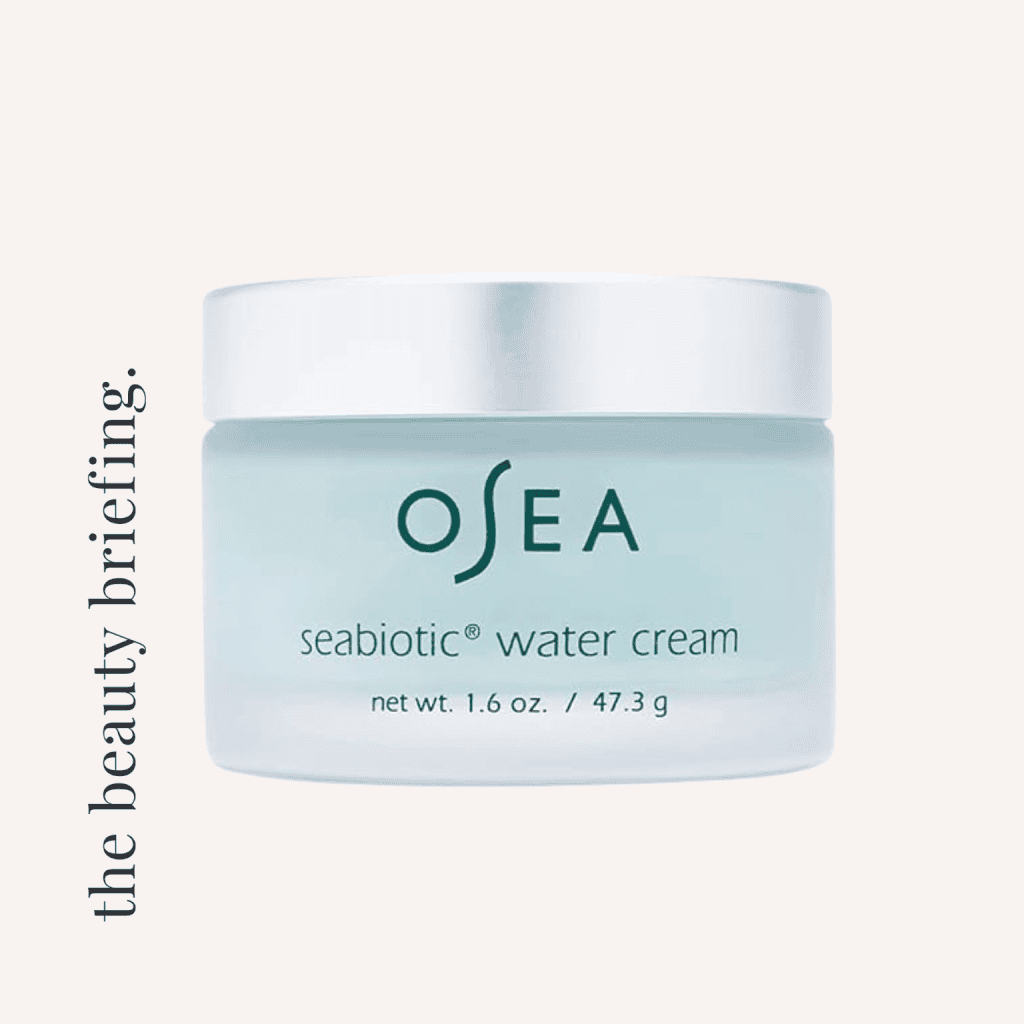
Seabiotic® Water Cream
Claims check
You get measurable brand-reported immediate and extended hydration from a lightweight formula, but no published finished-product microbiome endpoint supports a claim that this cream rebalances your skin flora.
Shopper fit
- Dry
- Normal
- Combination
- Sensitive
Formula flags
- None identified
Shopper preferences
- Vegan
- Cruelty-Free
- Dermatologist-Tested
Key ingredients
| Glycerin | Helps attract water to the outer layers of skin and supports hydration. |
|---|---|
| Squalane | Helps soften skin and reduce moisture loss without making the cream feel especially heavy. |
| Hyaluronic Acid | Helps bind water in the skin. |
| Bisabolol | Adds soothing support. |
| Undaria Pinnatifida Extract | A seaweed-derived conditioning extract; no product-level microbiome change has been demonstrated. |
Price tier
$$$ Premium
Value check
At the Premium tier, you pay for a fragrance-free water-cream texture and finished-product hydration testing rather than proven microbiome treatment benefits.
Where to buy
We may earn a commission through these links at no additional cost to you. This does not affect our BeautyBrief.
Bottom line
If you want light hydration supported by product-specific testing, Seabiotic offers a distinctive Premium water cream. If ordinary moisture is your only goal, less expensive moisturizers can provide comparable basic ingredient functions.
If you want extended hydration without a heavy finish, OSEA Seabiotic® Water Cream combines glycerin, squalane, hyaluronic acid and bisabolol in a light moisturizer. OSEA reports direct finished-product hydration testing, which supports the core moisture claim more clearly than its microbiome marketing.
The Premium tier makes the most sense if a fragrance-free water-cream texture and published hydration results matter to you, not if you expect the product to treat microbiome imbalance.
What it claims
OSEA describes Seabiotic Water Cream as a weightless, fragrance- and essential-oil-free moisturizer that delivers an immediate hydration boost and hydration lasting more than 72 hours. The brand reports a 173% immediate increase in skin hydration, calls the finished formula dermatologist-tested and highlights seaweed and prebiotic and nonviable-probiotic ingredients.[1]
The page also reports consumer-perception results from a third-party four-week study of 31 women, including softer and smoother skin after application. These are brand-published findings, not proof that each shopper will obtain the same percentage increase or that skin’s microbiome was measurably restored.
Claims vs. formula
Glycerin is listed second, giving the cream a strong humectant foundation. Squalane, caprylic/capric triglyceride, isoamyl laurate, fatty alcohols and olive-derived emulsifiers soften skin and contribute to moisture retention while keeping a light, water-cream finish.
Hyaluronic acid and tremella polysaccharide add water-binding components, while bisabolol contributes skin-conditioning support. Scientific reviews of glycerol support its humectant and barrier-related functions, although ingredient research alone cannot establish the 72-hour hydration performance of this exact cream.[2]
The finished-product hydration study is more directly relevant to OSEA’s core promise. By contrast, OSEA’s “microbiome-friendly” positioning centers on seaweed and a prebiotic/nonviable-probiotic story without a disclosed finished-product microbiome endpoint or direct comparison demonstrating a changed microbial community.
OSEA’s probiotic ingredient is nonviable, not a living culture that colonizes skin. Avoid equating that ingredient with a documented probiotic treatment or evidence that this cream repairs microbial imbalance.
Ingredients that matter
Glycerin, hyaluronic acid and tremella polysaccharide support water binding; squalane and the emollient base provide the complementary softness that makes the formula a moisturizer rather than simply a hydrating serum. The exact percentage of each highlighted ingredient is not disclosed.
Seaweed extracts, betulin, lactobacillus ferment and bisabolol add conditioning context, but none is individually established as the reason for the brand’s hydration results. A mixture of botanical extracts is not a clinically demonstrated improvement in your skin microbiome.
The disclosed formula has no added fragrance or essential oils, which can be relevant if you prefer to avoid scent. Even fragrance-free cream can cause an individual reaction, particularly when many botanical extracts are present.

Glycerin
If your skin feels dry or tight, glycerin helps your skin hold moisture. You don't need a high percentage or a separate serum when your moisturizer already works well.
Read the IngredientBrief
Squalane
If your skin feels dry or rough, squalane can make it feel softer and smoother. You don't need a separate oil when your moisturizer already keeps your skin comfortable.
Read the IngredientBrief
Hyaluronic Acid
If your skin feels dry or tight, hyaluronic acid helps your skin hold moisture. You don't need several HA forms or a separate serum when your moisturizer already hydrates well.
Read the IngredientBrief
Bisabolol
Bisabolol is a skin-conditioning ingredient used in sensitive-skin formulas for soothing support. Human evidence is mixed, so the complete formula matters more than the ingredient callout alone.
Read the IngredientBriefWhat to expect in the short term
You get a fast-absorbing, dewy water-cream finish. OSEA reports increased measured moisture after one application, but the brand’s 173% value is a study-group result rather than a guaranteed personal outcome.
What to expect over time
With regular use, the principal benefit is hydration and a smoother, softer-feeling surface. The 31-woman perception study addresses skin comfort and appearance over four weeks, while the 72-hour claim addresses hydration rather than enduring changes in the microbiome, pores or skin aging.
Who it fits
This is most relevant if your skin is normal, dry, combination or sensitive and you prefer an easy-spreading cream instead of a balm. Its lack of added fragrance and essential oils is useful, but does not guarantee that a botanical-rich formula suits every sensitive-skin routine.
If basic moisture at a lower price is enough, compare simpler humectant-and-emollient creams; there is no public finished-product comparison proving that its microbiome ingredients justify the Premium tier. OSEA’s brand-wide vegan and cruelty-free policies cover the cream.[3]
Compare before you buy
Choose Seabiotic when you want a Premium lightweight moisturizer supported by product-specific hydration data and prefer fragrance- and essential-oil-free skincare. The 1.6 oz jar has an identifiable UPC, making it easier to distinguish the exact product from OSEA’s other creams.
Choose a more affordable formula if your priority is routine moisturizing, or a richer cream if you need heavier occlusion. Microbiome-friendly marketing alone is not a reliable basis for a higher-price purchase.
Final Assessment
OSEA Seabiotic Water Cream provides a convincing Premium lightweight hydration option if you want a dewy finish and value the brand’s immediate and 72-hour moisturizing studies. Glycerin, squalane and supporting humectants explain the formula’s purpose, but the microbiome narrative lacks a published finished-product outcome; if you only need everyday moisture, a simpler cream may offer better value.
Where to buy
Choose a retailer to view current pricing and availability.
We may earn a commission through these links at no additional cost to you.
Last reviewed: October 2026
Sources
- OSEA. Seabiotic Water Cream. Current official U.S. INCI, study results and product claims. Accessed October 15, 2026.
- Fluhr JW, Darlenski R, Surber C. Glycerol and the skin: holistic approach to its origin and functions. British Journal of Dermatology. 2008. Ingredient-level research, not a clinical trial of Seabiotic.
- OSEA. Cruelty-Free Skincare. Brand-wide vegan and cruelty-free policy.

