Medicube Zero Pore Pad 2.0 Review
BeautyBrief™
Brand
Medicube
Product
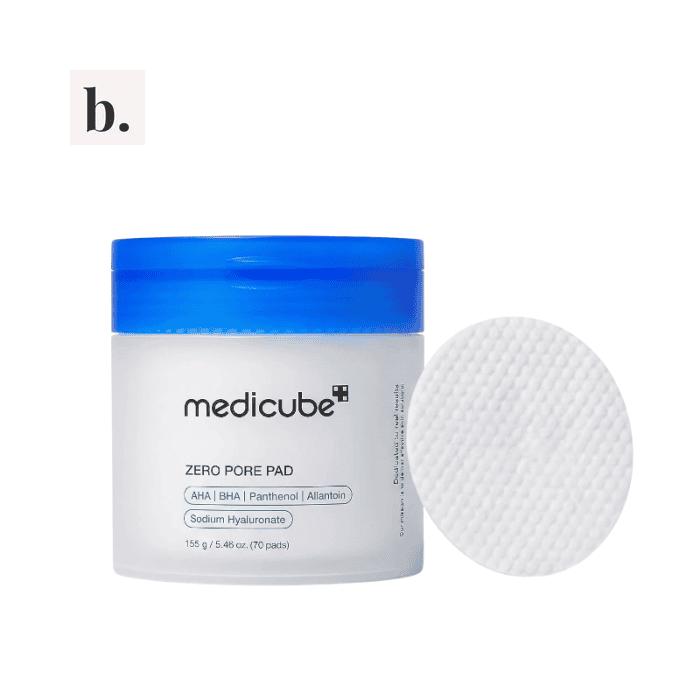
Zero Pore Pad 2.0
Claims check
Lactic and salicylic acids support texture-focused exfoliation, but Medicube's pore and sebum percentages aren't independently established by the published study summary.
Shopper fit
- Combination
- Oily
Formula flags
- Essential oils
- Drying alcohols
- Exfoliating acids
Shopper preferences
- None Found
Key ingredients
| Lactic Acid | Provides AHA exfoliation that helps smooth rough surface texture. |
|---|---|
| Salicylic Acid | Adds pore-focused exfoliating support for visible congestion. |
| Alcohol Denat. | Supports the liquid pad's quick-drying feel but matters for dryness-prone skin. |
| Panthenol | Adds skin-conditioning support alongside the exfoliating ingredients. |
| Citrus Aurantium Bergamia (Bergamot) Fruit Oil | Contributes aromatic botanical character that may matter if your skin reacts to essential oils. |
Price tier
$$ Mid-Range
Value check
Within the Mid-Range tier, pre-soaked AHA/BHA pads offer real convenience, but a simpler liquid exfoliant can serve the same purpose without the extra rubbing.
Where to buy
We may earn a commission through these links at no additional cost to you. This does not affect our BeautyBrief.
Bottom line
For an oily or congested T-zone, these double-sided pads pair lactic and salicylic acids in a convenient exfoliating step. Denatured alcohol and several essential oils make the formula less appealing for reactive skin, while the brand's dramatic pore claims lack detailed public study results.
There’s something satisfying about an easy toner-pad ritual when your nose and forehead feel rough or look shiny. Medicube Zero Pore Pad 2.0 combines lactic acid and salicylic acid with a dual-textured swipe for a smoother-feeling T-zone. Denatured alcohol and aromatic oils make it a more natural fit for oilier, resilient skin than for skin that’s already irritated.
What it claims
Medicube markets the pads for excess oil, rough texture, blackheads, clogged pores and smaller-looking pores. It reports a two-week human application test and self-test results suggesting less oil and “pore waste” alongside changes in moisture readings.[1]
Medicube publishes appealing percentages—including reductions in sebum and what it calls “pore waste”—but the public summary doesn’t explain the comparison, full methods or statistical findings well enough for you to judge the size of the effect independently. Think smoother-looking, less congested skin, not pores that physically disappear.
Claims vs. formula
The formula has a real reason to be in the pore-care aisle. Lactic acid targets dull, uneven surface texture, while salicylic acid is especially relevant when blackheads and clogged pores bother you. The embossed pad adds physical wiping. That combination isn’t automatically better than a liquid exfoliant; it’s a different way of delivering one.
The American Academy of Dermatology’s 2024 guideline conditionally recommends topical salicylic acid for acne, drawing partly on a 12-week trial of a different 0.5% product; topical retinoids and benzoyl peroxide have stronger recommendations.[2] So there’s a research basis for salicylic acid, but not for assuming these cosmetic pads perform like a tested acne treatment.
The percentage needs careful reading: the official U.S. page highlights 0.45% white willow bark extract, not a disclosed 0.45% concentration of free salicylic acid. It doesn’t state the pad’s finished pH either. You can’t reliably compare its strength with a different acid toner from that figure alone.
Ingredients that matter
Lactic acid and salicylic acid are the ingredients that most directly explain the exfoliating purpose. The humectant and conditioning mix—including panthenol, glycereth-26, betaine, allantoin and sodium hyaluronate—helps the liquid feel less bare than an acid-only solution.
But alcohol denat. appears fifth, and the complete INCI includes citrus peel oils, rosemary, eucalyptus, lavender and bergamot oils. Those can influence sensory appeal and tolerance. Conditioning ingredients don’t automatically cancel out the potential discomfort of acids, alcohol and repeated rubbing, especially when your skin is already feeling tight.

Lactic Acid
Lactic acid is a well-studied option for smoothing rough texture and giving dull-looking skin a fresher finish. You don't need the strongest formula: the concentration, pH and how comfortably it…
Read the IngredientBrief
Salicylic Acid
If clogged pores or mild breakouts are your concern, salicylic acid is a useful exfoliating acne ingredient. You don't need to chase 2% or stack several acid products—choose a cleanser…
Read the IngredientBrief
Panthenol
Panthenol, often called provitamin B5, helps your skin hold moisture and feel more comfortable. Human studies support its hydration benefits, but a complete moisturizer matters more than a flashy percentage.
Read the IngredientBrief
Allantoin
Allantoin is a calming addition to many moisturizers, and it also has a regulated skin-protectant role in qualifying OTC products. Choose the finished cream for comfort rather than expecting every…
Read the IngredientBriefSafety and regulatory context
Lactic acid is an AHA, so sun protection matters. The FDA warns that cosmetics containing AHAs can increase sensitivity to sunlight during use and for up to a week afterward, and recommends sunscreen, protective clothing and limiting sun exposure.[3]
Medicube says its pads can be used morning and night, but also recommends easing in if your skin is very sensitive. You don’t need to work up to that frequency to make the product worthwhile. Test a small area, start less often if you’re new to exfoliating pads, and avoid using the pads on freshly shaved, broken or irritated skin or near your eyes. The FDA also advises caution with BHA-containing cosmetics if irritation or prolonged stinging develops.[4]
If your routine already includes a strong retinoid, leave-on salicylic acid or another exfoliant, adding this pad on the same night can make comfort harder to maintain. And if essential oils bother your skin, Medicube’s separate Madecassoside Pad (Mild) isn’t the same formula as this regular Zero Pore Pad 2.0.
What to expect in the short term
The convenience is the attraction: after cleansing, Medicube directs you to swipe with the embossed side, turn to the smooth side and pat in what remains. Your skin might feel smoother quickly, but that doesn’t mean a visible blackhead changes overnight. A gentle pass is enough—rubbing harder or chasing a sting won’t improve the result.
What to expect over time
Over the following weeks, regular, comfortable exfoliation can help keep rough texture and some surface congestion from building up. Don’t judge success by the brand’s percentage chart: look for a T-zone that feels smoother and fewer visibly clogged spots without new dryness. Stubborn inflamed breakouts need a different treatment decision.
Who it fits
This is easiest to justify if you have oily or combination skin, visible blackheads or a rough-feeling T-zone, and prefer an already soaked pad to measuring a separate liquid exfoliant. You can focus on the oilier areas rather than swiping over cheeks that are already dry. If your skin stings easily, or you dislike botanical fragrance, a simpler acid product or fewer exfoliating steps may suit you better.
Compare before you buy
At a Mid-Range price, the main extras are convenience and dual-textured application. A basic liquid lactic or salicylic acid product targets a similar category of concern without single-use pads or added rubbing. Its exact formula, strength and tolerance can still differ, so compare the finished options rather than just their ingredient callouts.
Medicube’s Zero Pore Madecassoside Pad (Mild) is a separate choice marketed for more sensitive skin with a different INCI; don’t assume you’re getting that formula when you order the regular Zero Pore Pad 2.0.
Final Assessment
If your nose and forehead are prone to shine, blackheads and rough texture, Medicube’s dual-sided pads offer a neat, ready-to-use exfoliating step. Their Mid-Range value lies in the convenient, dual-textured format. If your skin stings easily, a gentler exfoliating option may make the ritual more comfortable.
Compare Prices
Choose a retailer to view current pricing and availability.
We may earn a commission through these links at no additional cost to you.
Last reviewed: October 2026
Sources
-
Medicube U.S. Zero Pore Pads. Official current U.S. product information and full INCI, accessed October 2026. Source for identity, use, published formula and brand-reported results. Return to citation.
-
Reynolds RV, Yeung H, Cheng CE, et al. Guidelines of care for the management of acne vulgaris. Journal of the American Academy of Dermatology. 2024;90(5):1006.e1–1006.e30. Ingredient-treatment context, not a study of these cosmetic pads. Return to citation.
-
U.S. Food and Drug Administration. Guidance for Industry: Labeling for Cosmetics Containing Alpha Hydroxy Acids. January 2005. Guidance on potential UV sensitivity and sun-protection advice. Return to citation.
-
U.S. Food and Drug Administration. Beta Hydroxy Acids. FDA advice on irritation and sun-exposure precautions for BHA-containing cosmetics. Return to citation.

